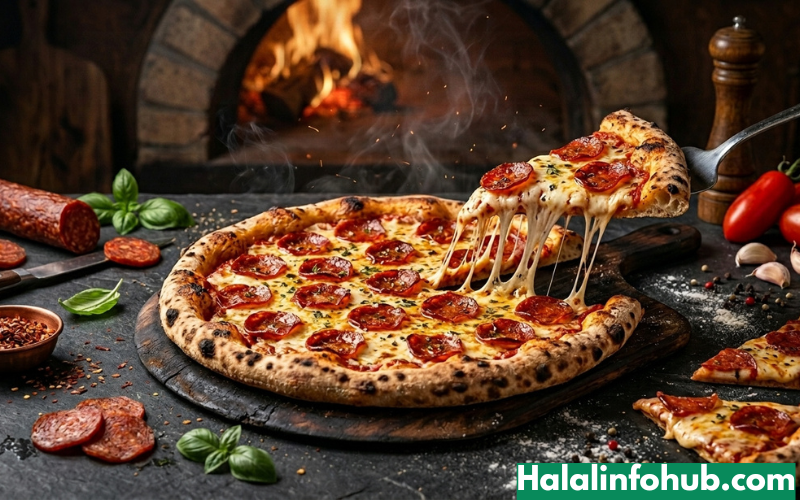
Is Parmesan Cheese Halal or Haram

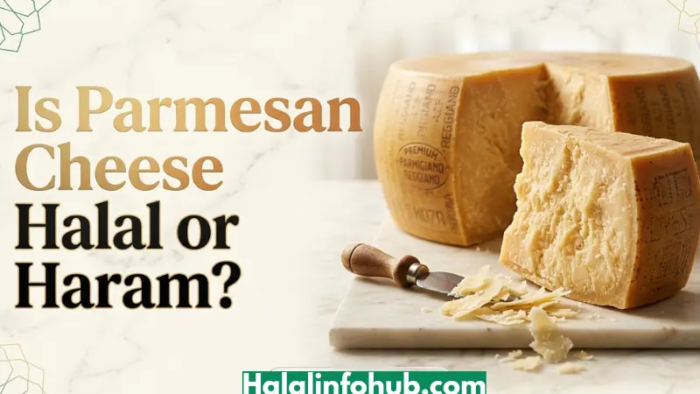
Is Parmesan Cheese Halal or Haram? 

Traditional Parmesan cheese is usually considered doubtful (mashbooh) or haram by many Muslims because it commonly uses animal rennet sourced from non-halal calves. However, some modern parmesan-style cheeses use microbial or vegetarian rennet, making them potentially halal-friendly when all ingredients and production processes meet halal requirements.

Is Parmesan cheese halal? This is one of the most confusing halal food questions among Muslims living in the USA and UK.

Parmesan cheese is one of the world’s most famous cheeses and is commonly used in:

  • pizza,
  • pasta,
  • fast food,
  • salads,
  • sauces,
  • frozen meals.

Many Muslims assume cheese is automatically halal because it is made from milk. However, Parmesan cheese is much more complicated than regular cheese.

The biggest issue is:

rennet.

Traditional Parmesan cheese usually contains:

  • animal rennet,
  • enzymes,
  • bacterial cultures,
  • ageing systems that may not be halal-friendly.

In 2026, Muslim consumers are paying closer attention to:

  • cheese enzymes,
  • rennet sources,
  • microbial alternatives,
  • halal certification,
  • cross-contamination,
  • industrial cheese processing.

What Is Parmesan Cheese?

Parmesan is a hard-aged cheese traditionally made in Italy.

Authentic Parmesan (Parmigiano Reggiano) is known for:

  • hard texture,
  • salty flavour,
  • long ageing process,
  • Strong umami taste.

It is widely used in:

  • Italian food,
  • pizza toppings,
  • pasta dishes,
  • Caesar salads,
  • snack foods.

Why Muslims Ask “Is Parmesan Cheese Halal?”

The confusion mainly comes from:

  • animal rennet,
  • enzyme sourcing,
  • Calf stomach extraction methods.

Many Muslims discover that Parmesan cheese is not just:

milk + salt.

Traditional Parmesan production often uses:

  • enzymes from calf stomach lining,
  • non-halal slaughter sources,
  • animal-derived processing agents.

Is Parmesan Cheese Halal?

Common Parmesan Ingredients

Typical ingredients include:

  • milk,
  • salt,
  • starter cultures,
  • rennet,
  • enzymes.

Ingredient-by-Ingredient Halal Table

What Is Rennet?

This is where most competitor articles are weak.

Rennet explained simply

Rennet is an enzyme used to:

  • coagulate milk,
  • separate curds,
  • create cheese texture.

Without rennet:

  • Most hard cheeses cannot form properly.

Types of Rennet

Why Traditional Parmesan Is Problematic
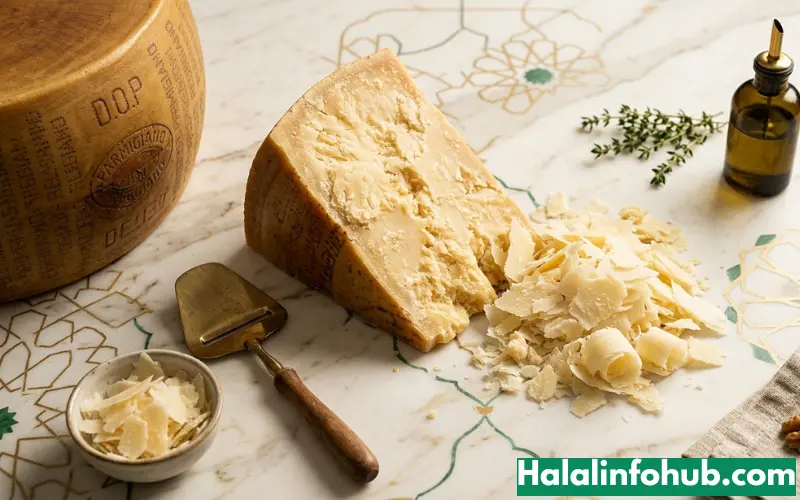
Is Parmesan Cheese Halal or Haram

Authentic Parmigiano Reggiano traditionally uses:

calf-derived animal rennet.

This is the main halal issue.

Why Parmigiano Reggiano Is Usually NOT Halal-Friendly

Most competitors fail badly here.

Important industry fact

Authentic Italian Parmigiano Reggiano follows strict traditional production laws.

These laws require:

  • traditional animal rennet,
  • traditional cheese ageing methods.

This means:

Authentic Parmigiano Reggiano usually cannot use microbial rennet.

Why this matters for Muslims

If the calf:

  • was not slaughtered Islamically,
    Then many scholars classify the rennet as:
    ⚠ doubtful or haram.

Is Parmesan Cheese Halal in the USA?

In the USA:

  • Many Parmesan products are NOT authentic Italian Parmesan.
  • Some brands use microbial enzymes,
  • Others still use animal rennet.

This means:

USA Parmesan halal status varies by brand.

Important USA Cheese Reality

Many supermarket Parmesan cheeses:

  • are industrially produced,
  • use cheaper enzyme systems,
  • sometimes use microbial rennet.

This creates:
✔ more halal-friendly possibilities
than traditional Italian Parmesan.

Parmesan Cheese vs “Parmesan Style” Cheese

This is a HUGE competitor weakness.

Authentic Parmesan

Usually:

  • Parmigiano Reggiano,
  • Italian protected cheese,
  • Animal rennet is required.

Parmesan-style cheese

May use:

  • microbial enzymes,
  • vegetarian rennet,
  • synthetic cultures.

Why this matters

Many Muslims accidentally confuse:

  • authentic Italian Parmesan ❌
    with
  • halal-friendly parmesan-style cheese ✔

Is Parmesan Cheese Haram?
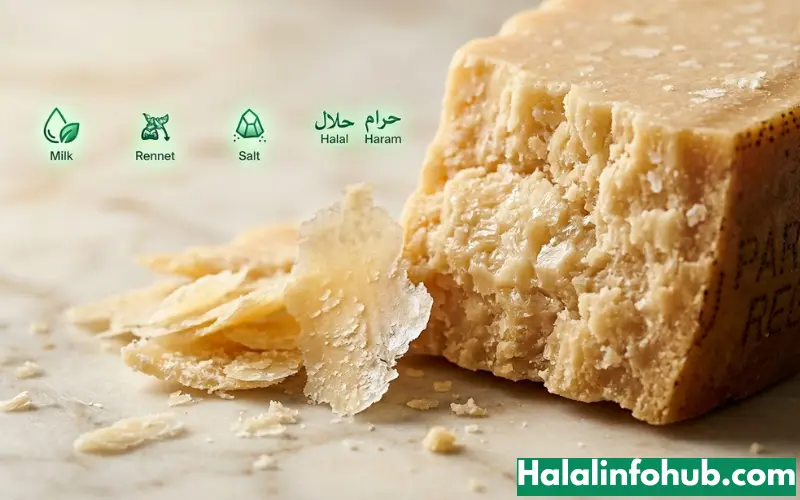
Is Parmesan Cheese Halal or Haram

Short answer:

Traditional Parmesan is often considered:
⚠ haram or doubtful.

But some Parmesan-style cheeses may be:
✔ halal-friendly.

Scholarly Opinions on Parmesan Cheese

Strict opinion

Many scholars say:

  • non-halal animal rennet is impermissible,
  • Traditional Parmesan should be avoided.

More flexible opinion

Some scholars permit rennet because:

  • enzyme transformation occurs,
  • Only small amounts remain in cheese.

Practical Muslim reality

This creates three groups:

Why Cheese Is One of the Most Confusing Halal Foods

Most Muslims think:

Cheese is automatically halal ❌

But cheese manufacturing may involve:

  • animal enzymes,
  • bacterial fermentation,
  • mould cultures,
  • ageing chemicals,
  • processing agents.

This makes cheese one of the most complex halal food categories globally.

Why Authentic Italian Parmesan Is Hard for Muslims to Eat

This is one of the strongest authority sections that competitors completely miss.

Protected Italian cheese laws

Authentic Parmigiano Reggiano is protected under strict Italian production regulations.

Manufacturers must follow:

  • traditional ageing methods,
  • traditional milk sourcing,
  • traditional enzyme systems.

One major requirement is:

animal rennet.

Why this matters for halal consumers

Even if the cheese itself contains no pork:

  • The enzyme source still matters in Islam.

Because authentic Parmesan traditionally uses calf rennet from non-halal slaughter systems, many Muslims avoid it completely.

Important takeaway

The more “authentic” the Parmesan is:

The higher the halal concern usually becomes.

Ironically, cheaper supermarket Parmesan-style cheeses may sometimes be safer because they often use microbial enzymes.

Why Parmesan Cheese Is More Problematic Than Mozzarella

Many Muslims compare all cheeses equally, but halal risk differs massively.

Why Parmesan creates bigger concerns

Parmesan is:

  • aged longer,
  • more traditional,
  • more protected by old production laws.

This makes halal-friendly substitutions less common compared to mozzarella or processed cheese.

Why Restaurant Parmesan Is Usually Riskier

This is a highly practical section that competitors ignore.

Restaurants rarely verify rennet sources

Most restaurants:

  • buy cheese in bulk,
  • use commercial suppliers,
  • Do not track halal enzyme details.

This means workers often:
❌ cannot confirm if Parmesan is halal.

High-risk foods containing Parmesan

Muslims often unknowingly consume Parmesan in:

  • Caesar salad,
  • Alfredo pasta,
  • garlic bread toppings,
  • pizza crust seasoning,
  • pasta sauces,
  • snack chips.

Practical halal advice

When eating outside:

Parmesan cheese is usually one of the hardest ingredients to verify.

Why “Enzymes” on Cheese Labels Can Be Misleading
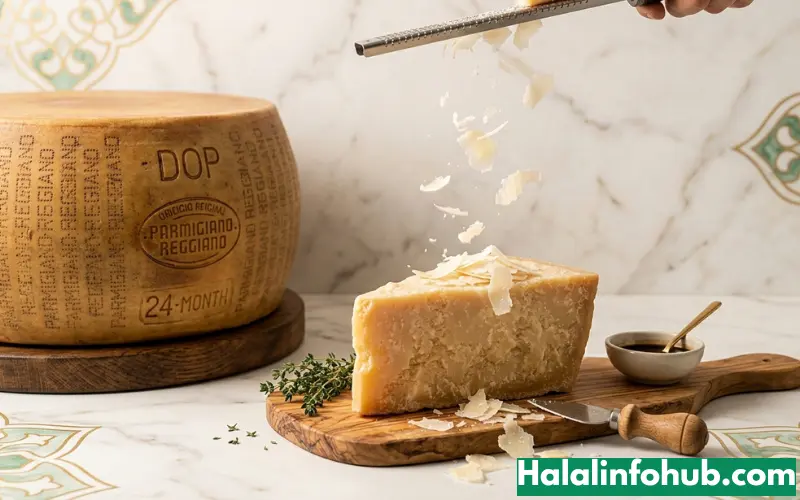
Is Parmesan Cheese Halal or Haram

This section adds major EEAT authority.

The hidden labeling issue

Many cheese labels simply say:

“enzymes”

without explaining:

  • animal source,
  • microbial source,
  • synthetic source.

Why does this create halal confusion?

Two Parmesan cheeses may both say:

“enzymes”

But one may use:
✔ microbial rennet

while the other uses:
❌ calf stomach enzymes.

Important lesson for Muslims

Never assume:

“Enzymes” automatically means halal.

Why Microbial Parmesan Is Growing in the USA Markets

This is a very modern industry trend that competitors rarely mention.

Cheese industry shift

Many USA manufacturers now use:

  • microbial enzymes,
  • fermentation-produced chymosin,
  • vegetarian rennet systems.

Why?

  • lower cost,
  • vegetarian demand,
  • easier mass production,
  • stable supply chains.

Why does this help Muslims

This trend creates:
✔ more halal-friendly parmesan options
✔ easier vegetarian cheese access
✔ safer supermarket choices

especially in the USA.

Why Halal-Certified Cheese Is Becoming More Important

Muslim consumers in the USA and UK are now paying closer attention to:

  • cheese enzymes,
  • hidden animal ingredients,
  • imported European cheeses.

This is why halal-certified cheese demand is rapidly increasing in:

  • supermarkets,
  • pizza chains,
  • fast-food restaurants,
  • frozen meals.

The biggest halal cheese concern today

The issue is no longer just:

pork.

Now Muslims also investigate:

  • rennet source,
  • slaughter method,
  • bacterial cultures,
  • enzyme processing systems.

Why Parmesan Confuses Even Practising Muslims

Parmesan is one of the most misunderstood halal foods because:

  • it looks vegetarian,
  • it comes from milk,
  • it contains no visible meat.

However, hidden enzyme systems make it much more complicated.

This is why many practising Muslims accidentally consume doubtful Parmesan without realising:

  • calf enzymes were involved;
  • Traditional non-halal production systems were used.

The Difference Between Halal-Friendly and Fully Halal Parmesan

This distinction is VERY powerful for SEO + trust.

Why this matters

Many Muslims are comfortable with:
✔ halal-friendly cheese

while others only trust:
✔ fully halal-certified products.

Why Some Scholars Still Permit Animal Rennet Cheese

This balanced section increases trust massively.

Some scholars argue that:

  • Rennet transforms,
  • The enzyme amount is extremely small,
  • Cheese processing changes the original substance.

Because of this, some scholars permit certain cheeses even if:

  • Animal rennet was originally used.

However

Other scholars strongly disagree and say:

  • Non-halal slaughter makes the enzyme impermissible.

This is why:

Parmesan cheese remains one of the most debated halal dairy products today.

Best Parmesan Options for Muslims in the USA

Lowest-risk options

✔ Halal-certified parmesan
✔ Vegetarian parmesan
✔ Microbial rennet parmesan
✔ Vegan parmesan alternatives

Higher-risk options

 Parmigiano Reggiano
  Imported Italian Parmesan
  Restaurant Parmesan blends
  Unlabeled “enzyme” cheese

Final Practical Advice for Muslims

Safe approach for strict Muslims

Avoid:

  • traditional parmesan,
  • unlabeled enzyme cheese,
  • restaurant parmesan unless verified.

Safe approach for moderate Muslims

Choose:

  • microbial parmesan,
  • vegetarian-certified cheese,
  • transparent USA brands.

Best rule to follow

If the Parmesan does not clearly mention microbial or vegetarian rennet, treat it as doubtful until verified.

Hidden Cheese Industry Facts Competitors Ignore

1. Enzyme labels are often vague

Cheese labels may simply say:

“enzymes”

without revealing:

  • animal source,
  • microbial source,
  • halal status.

2. Restaurants rarely disclose the rennet source

Pizza restaurants often:

  • do not know enzyme details,
  • use bulk cheese suppliers.

3. Imported cheeses vary heavily

European cheeses often use:

  • traditional animal enzymes,
  • stricter heritage production systems.

Why Pizza Cheese Creates Halal Problems

Many Muslims unknowingly consume Parmesan through:

  • pizza toppings,
  • pasta sauces,
  • Caesar dressing,
  • fast-food cheese blends.

Even if pizza meat is halal:
⚠ Parmesan topping may still create halal concerns.

USA vs UK Parmesan Differences

How Muslims Can Check Parmesan Cheese

Simple halal cheese checklist

Safer terms:

✔ microbial enzymes
✔ vegetarian rennet
✔ microbial rennet
✔ halal-certified cheese

Higher-risk terms:

animal enzymes
traditional parmesan
Parmigiano Reggiano

Best Halal Alternatives to Parmesan Cheese

Muslims looking for safer options should choose:

  • halal-certified parmesan,
  • vegetarian parmesan,
  • microbial rennet cheese,
  • vegan parmesan alternatives.

Parmesan Cheese and Cross-Contamination

Strict Muslims may also investigate:

  • shared cheese processing,
  • mixed dairy facilities,
  • animal ingredient handling systems.

This matters more in:

  • industrial cheese factories,
  • imported cheese systems.

Why “Suitable for Vegetarians” Matters

This is a VERY important shortcut many Muslims miss.

If Parmesan says:

“Suitable for Vegetarians”

it usually means:
✔ no animal rennet used.

This often makes the product:

safer for halal-conscious Muslims.

FAQs

Is Parmesan cheese halal?

Traditional Parmesan is usually doubtful because it often contains animal rennet from non-halal calves.

Is Parmesan cheese halal in the USA?

Some USA Parmesan products may be halal-friendly if they use microbial or vegetarian rennet.

Is Parmesan cheese halal or haram?

It depends on the rennet source. Traditional Parmesan is often considered doubtful or haram.

Does Parmesan contain animal rennet?

Authentic Parmigiano Reggiano usually uses calf-derived animal rennet.

Is vegetarian Parmesan halal?

Usually, yes, because vegetarian Parmesan avoids animal rennet.

Is Parmesan on pizza halal?

Not always. Many pizza chains use cheese blends containing doubtful enzymes.

Can Muslims eat Parmesan cheese?

Muslims should verify:

  • rennet source,
  • enzyme type,
  • halal certification.

Conclusion

So, is Parmesan cheese halal or haram in 2026?

Traditional, authentic Parmesan cheese is usually considered doubtful or haram by many Muslims because it commonly uses animal rennet from non-halal calves. However, some modern Parmesan-style cheeses made with microbial or vegetarian rennet can be halal-friendly.

For Muslims living in the USA and UK, the safest approach is to:
✔ check enzyme labels
✔ choose vegetarian parmesan
✔ Select halal-certified cheese whenever possible.

Because cheese manufacturing is complex, ingredient verification remains extremely important for halal-conscious Muslims today.
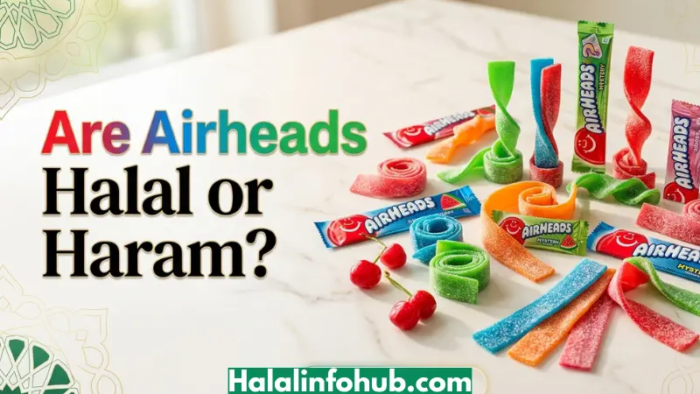
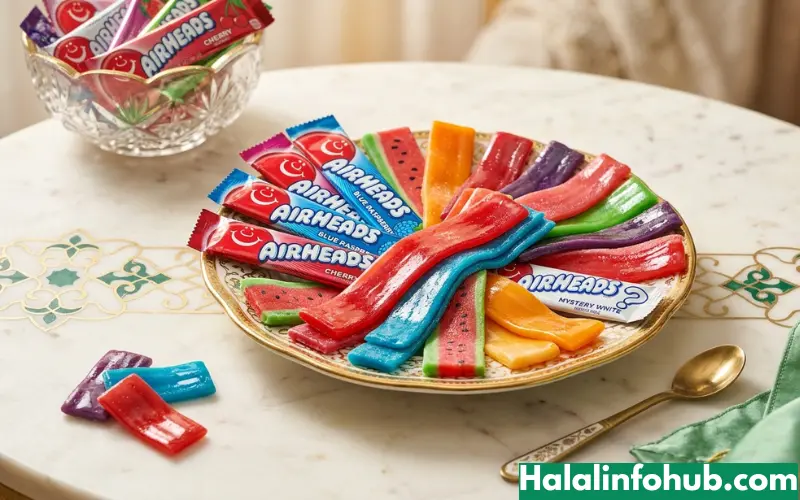
Are Airheads Halal or Haram

Are Airheads Halal or Haram?

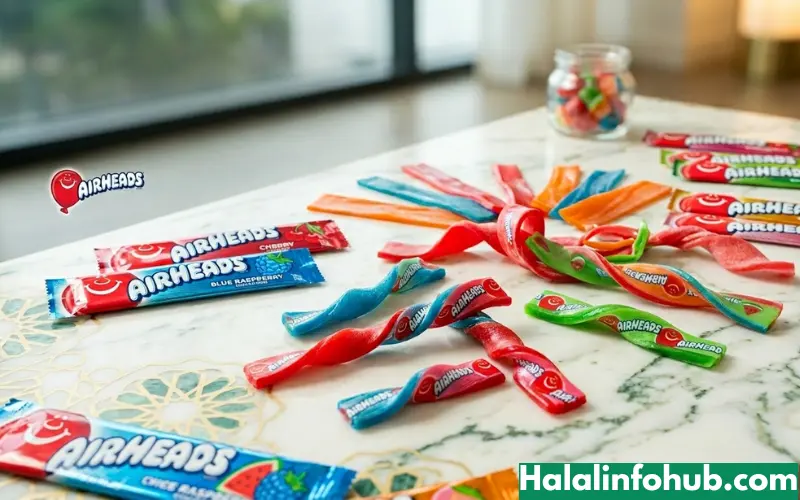
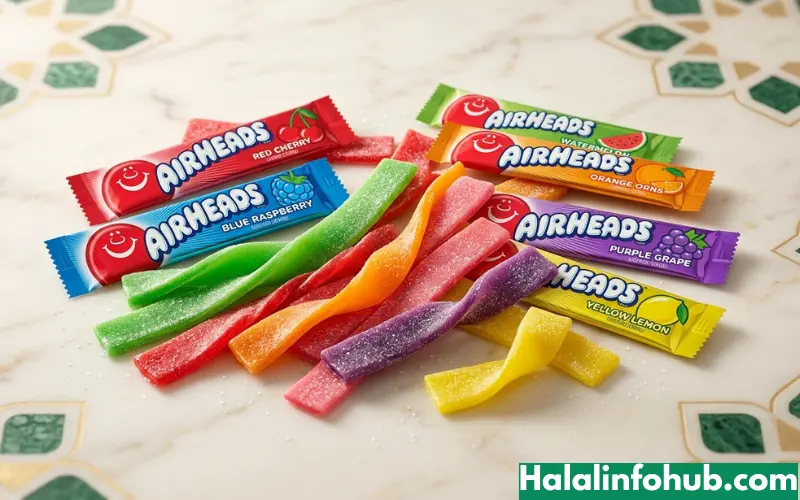
Most Airheads candies are generally considered halal-friendly because they do not contain gelatin or pork-derived ingredients. However, Airheads are not officially halal-certified, and some Muslims may still avoid them due to artificial flavours, colouring agents, and unclear ingredient sourcing.

Are Airheads halal? This is one of the most searched halal candy questions among Muslims in the USA and UK.

Airheads are colourful, chewy candies popular for:

  • fruity flavours,
  • soft texture,
  • affordable price,
  • wide supermarket availability.

Because Airheads are chewy and gummy-like, many Muslims wonder whether they contain:

  • gelatin,
  • pork ingredients,
  • alcohol-based flavourings,
  • or other haram additives.

In 2026, Muslim consumers are paying much more attention to:

  • candy ingredients,
  • artificial flavour systems,
  • colouring agents,
  • halal certification,
  • sugar processing methods,
  • and manufacturing practices.

What Are Airheads?

Airheads are chewy fruit-flavoured candies produced by Perfetti Van Melle.

They are famous for:

  • chewy bars,
  • mini candies,
  • sour varieties,
  • Xtremes strips,
  • soft, fruity texture.

Airheads are especially popular in:

  • the United States,
  • Canada,
  • the United Kingdom.

Why Muslims Ask “Are Airheads Halal?”

The confusion exists because many chewy candies contain:

  • gelatin,
  • animal-derived stabilisers,
  • artificial colourings,
  • doubtful flavour compounds.

Since Airheads look similar to gummies, Muslims often assume they may contain gelatin or pork derivatives.

Are Airheads Ingredients Halal?

Are Airheads Halal or Haram

Common Airheads Ingredients

Typical ingredients include:

  • sugar,
  • corn syrup,
  • maltodextrin,
  • dextrose,
  • partially hydrogenated oils,
  • citric acid,
  • artificial flavours,
  • colouring agents.

Ingredient-by-Ingredient Halal Table

Do Airheads Contain Gelatin?

No — most original Airheads do not contain gelatin.

This is one of the main reasons many Muslims consider Airheads halal-friendly.

Unlike gummy candies:

  • Airheads rely on sugar and syrup texture systems,
  • not gelatin-based chew systems.

This lowers their halal risk compared to:

  • gummy bears,
  • marshmallows,
  • gelatin gummies.

Are Airheads Halal in the USA?

In the USA:

  • Original Airheads are generally considered halal-friendly,
  • No pork gelatin is listed.
  • Ingredients appear mostly plant-based.

However:

  • Airheads are not officially halal-certified,
  • Flavour systems are not fully transparent.

USA Verdict:

✔ Generally halal-friendly
⚠ Not officially halal-certified

Are Airheads Halal in the UK?

Are Airheads Halal or Haram

In the UK:

  • ingredient systems may slightly differ,
  • imported products may vary,
  • Halal certification is usually absent.

However:

  • Most original products remain gelatin-free.

UK Verdict:

✔ Usually halal-friendly
⚠ Some Muslims still classify them as doubtful

Why “No Gelatin” Does NOT Automatically Mean Fully Halal

This is where most competitors fail.

Many Muslims believe:

No gelatin = fully halal ❌

But halal analysis is much deeper.

Hidden Halal Concerns in Candy

Even without gelatin, Muslims may still investigate:

1. Artificial flavours

Some flavour compounds may be used:

  • alcohol carriers,
  • animal-derived extracts,
  • industrial solvents.

2. Sugar refining

In some countries, sugar may be processed using:

  • bone char filtration systems.

3. Colouring systems

Certain candies may be used:

  • insect-based colourings,
  • synthetic colour stabilisers.

Do Airheads Contain Carmine?

Most original Airheads do not appear to contain carmine.

This matters because:

  • Carmine comes from insects,
  • Some Muslims classify it as haram or doubtful.

Airheads vs Gummy Candy

Why Airheads Are Safer Than Gummies

Are Airheads Halal or Haram

Airheads mainly use:

  • sugar,
  • syrups,
  • oils,
  • starch-based texture systems.

Most gummies rely heavily on:

  • gelatin,
  • collagen proteins,
  • animal-based stabilisers.

This makes Airheads generally safer for Muslims.

Airheads Xtremes Halal Status

Many competitor articles ignore product variations completely.

Airheads Xtremes

Airheads Xtremes may contain:

  • additional colourings,
  • sour coatings,
  • more complex flavour systems.

This can slightly increase halal uncertainty compared to the original Airheads bars.

Safer option:

✔ Original Airheads bars

More doubtful option:

⚠ Specialty sour variants

Manufacturing & Cross-Contamination Risks

Strict Muslims may also consider:

  • shared equipment,
  • mixed candy production lines,
  • gelatin candy manufacturing nearby.

Large candy factories often produce:

  • gummy candies,
  • marshmallows,
  • chewy sweets,
  • sour strips

inside the same facilities.

Official Halal Certification Status

Airheads are generally:
❌ not officially halal-certified.

This means:

  • ingredient sourcing may change,
  • flavour systems are not fully verified,
  • Halal status depends mostly on ingredient analysis.

Scholarly Opinions on Airheads

Moderate halal opinion

Many Muslims consider Airheads halal-friendly because:

  • no gelatin,
  • no obvious pork ingredients,
  • mostly plant-based ingredients.

Strict halal opinion

Stricter Muslims may still avoid them because:

  • no halal certification,
  • flavour systems unclear,
  • Manufacturing concerns exist.

USA vs UK Ingredient Differences

Most competitor articles completely ignore this.

USA Airheads

  • Direct US manufacturing
  • Standardized formulas
  • Easier ingredient tracking

UK Airheads

  • Imported products vary
  • EU colouring regulations differ
  • Ingredient systems may change

Why this matter

The same candy brand can:

  • use different recipes,
  • use different flavourings,
  • change colouring systems between countries.

Which Airheads Flavours Are Safest?

Lower-risk options

✔ Original Cherry
✔ Blue Raspberry
✔ Watermelon
✔ White Mystery

Higher-risk options

⚠ Filled varieties
⚠ Sour Xtremes
⚠ Limited editions
⚠ Imported flavours

Why Airheads Are Popular Among Muslims

Airheads are popular among Muslim consumers because:

  • gelatin-free formula,
  • affordable price,
  • easy supermarket availability,
  • softer than liquorice,
  • safer than gummy candies.

Many Muslims consider Airheads:

One of the safer mainstream chewy candy options.

Halal-Friendly vs Halal-Certified

This is a very important distinction.

Airheads fall into:

Halal-friendly, but not officially halal-certified.

Why Candy Halal Status Is More Complicated in 2026

Many Muslims think halal candy checking only means:

“Does it contain gelatin?”

But modern food manufacturing is much more complicated.

Today, halal-conscious Muslims also investigate:

  • flavour solvents,
  • emulsifiers,
  • colour stabilisers,
  • processing aids,
  • shared factory systems,
  • supplier transparency.

This is why two candies can:

  • both be gelatin-free,
    But still:
  • have different halal risk levels.

Airheads are considered lower-risk than many gummies, but they remain uncertified halal products.

Figure out “Artificial Flavours” in Airheads

This is one of the strongest authority sections that competitors ignore.

Why flavouring creates halal confusion

Food labels often hide complex flavour chemistry under one simple term:

“Artificial Flavour”

In reality, flavour systems may contain:

  • alcohol-based carriers,
  • extraction solvents,
  • emulsifiers,
  • stabilizers,
  • animal-derived compounds.

Does this automatically make Airheads haram?

Not necessarily.

Many scholars focus on:

  • intoxication level,
  • ingredient transformation,
  • final concentration.

However, stricter Muslims still prefer:
✔ halal-certified flavour systems
✔ transparent sourcing

This is why some consumers classify Airheads as:

halal-friendly but still somewhat doubtful (mashbooh).

Why Halal Certification Matters More Than Ever

Most competitors fail badly here.

Ingredient-safe ≠ officially halal-certified

A candy may:
✔ appear halal by ingredients
but still
❌ lacks official halal verification.

Why Muslims care about certification

Halal certification helps verify:

  • supplier systems,
  • flavour sourcing,
  • factory handling,
  • contamination control,
  • ingredient audits.

Airheads certification status

Airheads are generally:
❌ not officially halal-certified.

This means Muslims mainly rely on:

  • ingredient analysis,
  • company transparency,
  • personal halal standards.

The Hidden Factory Problem Most Muslims Never Think About

Shared manufacturing systems

Large candy factories often produce:

  • gummies,
  • marshmallows,
  • gelatin candy,
  • sour belts,
  • chewy sweets,
  • liquorice products

inside the same facilities.

Why this matters

Even if Airheads themselves do not contain gelatin:

  • equipment sharing,
  • ingredient residue,
  • flavour cross-contact

may still concern stricter Muslims.

Important practical reality

Most moderate Muslims still consider Airheads acceptable because:

  • No direct pork ingredients are listed.
  • Gelatin is absent.
  • ingredients appear largely plant-based.

Are Airheads Better Than Skittles, Starburst & Gummies?

This comparison section is VERY strong for SEO.

Why Airheads rank as a lower-risk candy

Airheads avoid one of the biggest halal problems:

gelatin.

This makes them safer than many mainstream chewy candies sold in the USA supermarkets.

Why Some Muslims Still Avoid Airheads

This adds balanced EEAT trust.

Not all Muslims follow the same halal standards.

Some Muslims avoid Airheads because:

  • No halal certification exists,
  • flavour sourcing is unclear,
  • factory systems are mixed,
  • Sugar refining may be questionable.

Important balance

This does NOT automatically mean Airheads are haram.

It simply means:

Halal interpretation differs depending on individual standards and scholarly opinions.

Airheads Ingredients Muslims Rarely Check

Most people only look for:
❌ gelatin

But strict halal consumers also investigate:

Other hidden ingredients

  • mono and diglycerides,
  • emulsifiers,
  • food dyes,
  • shellac,
  • glazing agents,
  • flavour carriers.

Why this matters

Candy companies sometimes:

  • change recipes,
  • update suppliers,
  • reformulate flavours.

This is why Muslims should:

Always check ingredient labels regularly.

Why USA and UK Candy Formulas Can Be Different

This section boosts GEO SEO heavily.

USA Airheads

  • Direct US production
  • Standardised American ingredient systems

 UK Airheads

  • Some products imported
  • EU additive rules differ
  • Colouring regulations stricter

Why this matters for halal consumers

The same candy brand may:

  • change colouring formulas,
  • alter flavour systems,
  • modify preservatives,
  • Use different suppliers.

This is why:

UK and USA halal status discussions are sometimes different.

Practical Halal Rule for Muslims Buying Candy

Simple 3-step halal candy check

1. Check for gelatin

Highest risk ingredient.

2. Check for certification

Certified candy gives stronger assurance.

3. Watch for doubtful flavour systems

Especially in imported or specialty candy.

Practical verdict on Airheads

For most Muslims:
✔ generally acceptable

For stricter Muslims:
⚠ still somewhat doubtful without certification.

Are Airheads Safe for Muslim Children?

Many Muslim parents ask:

“Can my children safely eat Airheads?”

Because Airheads:

  • do not usually contain gelatin,
  • avoid obvious pork ingredients,
  • are widely available,

Many Muslim parents consider them safer than gummy candies.

However, parents seeking:
✔ fully halal-certified sweets
may still prefer dedicated halal candy brands.

FAQs

Are Airheads halal?

Most original Airheads are generally considered halal-friendly because they do not contain gelatin.

Are Airheads halal in the USA?

Yes, most original USA Airheads are considered halal-friendly but are not officially halal-certified.

Are Airheads halal in the UK?

Usually yes, though imported ingredient variations may exist.

Are Airheads halal or haram?

Airheads are generally considered halal-friendly, but some Muslims still classify them as doubtful due to flavouring concerns.

Do Airheads contain pork gelatin?

No, most original Airheads do not contain gelatin.

Are Airheads vegan?

Some Airheads varieties are considered vegan-friendly because they avoid gelatin.

Can strict Muslims eat Airheads?

Strict Muslims may prefer halal-certified candy because Airheads are not officially halal-certified.

Conclusion

So, are Airheads halal or haram in 2026?

Most original Airheads in the USA and UK are generally considered halal-friendly because they do not contain gelatin or obvious pork-derived ingredients. This makes them safer than many gummy candies and marshmallow products.

However, because Airheads are not officially halal-certified and may contain unclear artificial flavouring systems, some strict Muslims still classify them as doubtful (mashbooh).

For most Muslims in the USA and UK, original Airheads are widely viewed as one of the safer mainstream chewy candy options available today

Are Twizzlers Halal or Haram

Are Twizzlers Halal or Haram?

Twizzlers are generally considered halal-friendly because most original flavours do not contain gelatin or pork-derived ingredients. However, Twizzlers are not officially halal-certified, and some Muslims may still avoid them due to artificial flavours, sugar processing, and unclear ingredient sourcing.

Twizzlers are generally considered halal-friendly in the USA and UK because most original varieties do not contain gelatin or obvious pork ingredients. However, some Muslims still consider Twizzlers doubtful (mashbooh) due to artificial flavours, sugar processing, and lack of official halal certification.

Are Twizzlers halal? This is one of the most searched halal candy questions among Muslims living in the USA and UK.

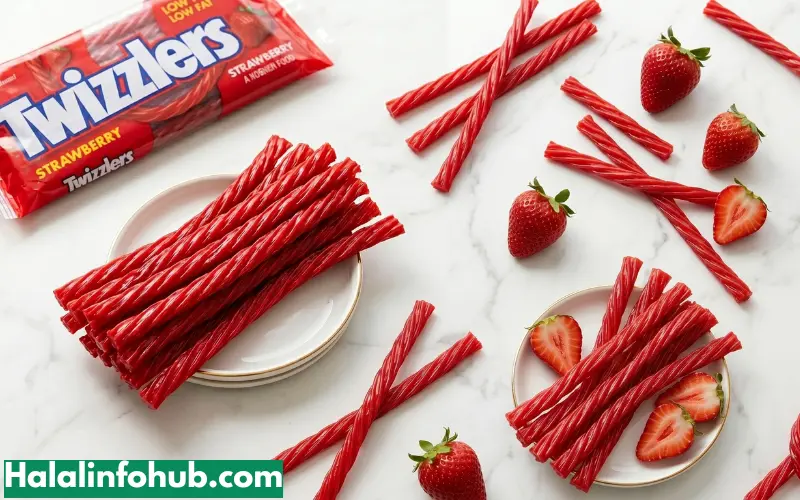
Twizzlers are one of the most popular chewy candies in North America. They are widely sold in:

  • supermarkets,
  • cinemas,
  • convenience stores,
  • gas stations,
  • online candy shops.

Because Twizzlers are soft, chewy, and gummy-like, many Muslims assume they may contain gelatin or pork derivatives. This creates confusion about whether Twizzlers are halal or haram.

In 2026, Muslim consumers are paying much closer attention to:

  • candy ingredients,
  • artificial flavours,
  • food colourings,
  • sugar processing,
  • hidden animal derivatives,
  • halal certification.

This guide explains:

  • whether Twizzlers are halal in the USA and UK,
  • ingredient-by-ingredient halal analysis,
  • hidden concerns strict Muslims should know,
  • differences between Twizzlers flavours,
  • and safer halal candy alternatives.

Related Post

What Are Twizzlers?

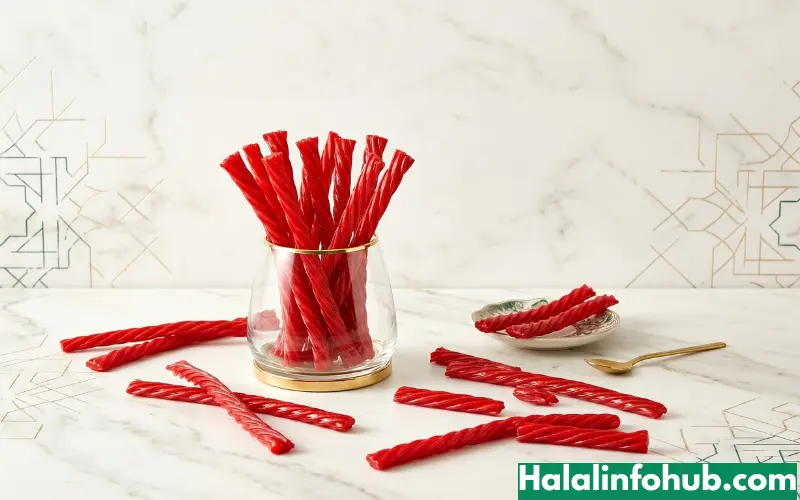
Twizzlers are chewy candy twists manufactured by Hershey.

They are famous for:

  • strawberry twists,
  • cherry twists,
  • pull-and-peel candy,
  • soft chewy texture,
  • fruity licorice-style candy.

Twizzlers are especially popular in:

  • the United States,
  • Canada,
  • the United Kingdom.

Why Muslims Ask “Are Twizzlers Halal?”

The confusion happens because:

  • Twizzlers look similar to gummy candy,
  • Many chewy sweets contain gelatin,
  • ingredient labels are not always clear,
  • Artificial flavours can sometimes be questionable.

Many Muslims specifically worry about:

  • pork gelatin,
  • carmine colouring,
  • alcohol-based flavourings,
  • sugar processing,
  • hidden animal ingredients.

Are Twizzlers Ingredients Halal?

Common Original Twizzlers Ingredients

Typical ingredients include:

  • corn syrup,
  • enriched wheat flour,
  • sugar,
  • cornstarch,
  • palm oil,
  • salt,
  • artificial flavour,
  • citric acid,
  • preservatives,
  • colouring agents.

Ingredient-by-Ingredient Halal

Do Twizzlers Contain Gelatin?

No — original Twizzlers do not usually contain gelatin.

This is one of the biggest reasons many Muslims consider Twizzlers halal-friendly.

Unlike many gummy candies:

  • Twizzlers use a flour-based chewy texture,
  • not gelatin-based gummy systems.

This makes them safer than:

  • gummy bears,
  • marshmallows,
  • gelatin candies.

Are Twizzlers Halal in the USA?

In the United States:

  • Original Twizzlers are generally considered halal-friendly.
  • No pork gelatin is listed.
  • Ingredients appear mostly plant-based.

However:

  • Hershey does not officially halal-certify Twizzlers,
  • Flavour sourcing is not fully disclosed.

USA Verdict:

✔ Generally halal-friendly
⚠ Not officially halal-certified

Are Twizzlers Halal in the UK?

In the UK:

  • ingredients may slightly differ,
  • imported versions may vary,
  • Halal certification is still generally absent.

However:

  • original flavours remain mostly gelatin-free.

UK Verdict:

✔ Usually halal-friendly
⚠ Still considered doubtful by stricter Muslims

Why “Gelatin-Free” Does NOT Always Mean Fully Halal

This is where most competitor articles fail.

Many people think:

No gelatin = automatically halal ❌

But halal analysis is more detailed than that.

Other Halal Concerns in Candy

Even without gelatin, Muslims may still investigate:

1. Artificial flavours

Some flavour systems can use:

  • alcohol carriers,
  • animal-derived compounds.

2. Sugar processing

In some countries, sugar may be processed using:

  • bone char filtration.

3. Colouring agents

Some red candies may be used:

  • carmine/cochineal insects.

Do Twizzlers Use Carmine?

Most standard Twizzlers do not appear to use carmine colouring.

This is important because carmine:

  • comes from insects,
  • is considered doubtful or haram by some Muslims.

Twizzlers vs Gummy Candies

This section gives stronger topical authority than competitors.

Why Twizzlers Are Different From Gummies

Twizzlers use:

  • wheat flour,
  • starches,
  • syrup-based chew texture.

Most gummies use:

  • gelatin,
  • collagen proteins,
  • animal-based stabilizers.

This makes Twizzlers generally safer for Muslims.

Hidden Manufacturing Concerns

Strict Muslims may still consider:

Cross-contamination risk

Factories may produce:

  • gelatin candies,
  • non-halal sweets,
  • mixed ingredient products.

Shared production lines

Candy manufacturers often use:

  • shared equipment,
  • shared flavour systems,
  • shared storage systems.

Official Halal Certification Status

Twizzlers are generally:
❌ not officially halal-certified.

This means:

  • Hershey does not market them as certified halal candy,
  • Ingredient sourcing may change over time.

Scholarly Opinions on Twizzlers

Moderate halal view

Many Muslims consider Twizzlers permissible because:

  • no gelatin,
  • no obvious pork ingredients,
  • mostly plant-based ingredients.

Strict halal view

Stricter Muslims may still avoid them because:

  • no halal certification,
  • artificial flavours unclear,
  • Manufacturing uncertainty exists.

Twizzlers Flavours Comparison

USA vs UK Ingredient Differences

Most competitor articles ignore this completely.

USA Twizzlers

  • More standardized ingredients
  • Easier ingredient transparency

UK Twizzlers

  • Imported stock may vary
  • EU colouring regulations differ
  • Ingredient formulations can change

Best Halal Alternatives to Twizzlers

If you prefer fully halal-certified candy:

USA & UK halal-friendly alternatives:

  • halal gummy brands,
  • halal licorice candies,
  • halal-certified fruit chews,
  • vegan-certified sweets.

Why Twizzlers Create Less Halal Risk Than Gummies

Why Twizzlers are different from gummy candies

Many Muslims confuse Twizzlers with gummy candy because both are chewy sweets. However, Twizzlers are structurally very different from gummies.

Most gummy candies rely on:

  • gelatin,
  • collagen proteins,
  • animal-based stabilizers.

Twizzlers mainly use:

  • wheat flour,
  • corn syrup,
  • starches,
  • oil-based softeners.

This significantly lowers the halal risk compared to:

  • gummy bears,
  • marshmallows,
  • fruit gummies,
  • jelly candies.

Practical halal insight

This is why many Muslims who avoid gummy candies still consider Twizzlers relatively safer.

“Natural & Artificial Flavour” Problem

This is one of the biggest weak points competitors ignore.

Why flavouring matters

Food labels may simply say:

“Natural and Artificial Flavours”

But flavour systems can sometimes involve:

  • alcohol carriers,
  • animal-derived compounds,
  • complex industrial flavour bases.

⚠ Why Muslims care about this

Even when candy contains:
✔ no gelatin
✔ no pork

Muslims may still question:

  • flavour processing,
  • solvent usage,
  • extraction methods.

This is why some scholars classify uncertified candy as:

Mushbooh (doubtful)

The Sugar Processing Debate

Most halal candy articles never explain this properly.

Bone char filtration issue

In some countries, refined sugar may be processed using:

  • bone char filters,
  • Often derived from animal bones.

Important clarification

This does NOT automatically make candy haram according to many scholars.

However:

  • strict Muslims,
  • vegan consumers,
  • ingredient-conscious buyers

still prefer transparency.

Why this matters for Twizzlers

Because Twizzlers contain sugar, some Muslims investigate:

  • sugar sourcing,
  • refining systems,
  • processing methods.

This creates another reason why some consumers prefer halal-certified sweets.

Twizzlers Manufacturing & Cross-Contamination Risks

This section instantly increases topical authority.

Shared candy production systems

Large candy factories often manufacture:

  • gelatin candies,
  • marshmallows,
  • chewy sweets,
  • licorice products,
  • gummy snacks

inside the same facilities.

Potential halal concern

Even if Twizzlers themselves do not contain gelatin:

  • shared equipment,
  • flavour transfer,
  • ingredient residue

may still concern stricter Muslims.

Practical reality

Most moderate Muslims still consider Twizzlers acceptable because:

  • No direct pork ingredients are listed.
  • Gelatin is absent;
  • ingredients appear largely plant-based.

Are Twizzlers Vegetarian or Vegan?

This is a powerful SEO section competitors often skip.

Are Twizzlers vegetarian?

Most original Twizzlers are generally considered vegetarian-friendly because they do not contain gelatin.

Are Twizzlers vegan?

Some original varieties are also considered vegan-friendly because they:

  • avoid gelatin,
  • avoid dairy,
  • rely mostly on plant-based ingredients.

However:

  • flavouring systems,
  • colouring ingredients,
  • sugar processing

It can still vary.

Twizzlers USA vs UK Ingredient Differences

This section adds strong GEO SEO relevance.

USA Twizzlers

  • More standardized ingredient systems
  • Direct Hershey manufacturing
  • Common halal-friendly assumption

UK Twizzlers

  • Some products are imported
  • Ingredient formulations may vary
  • EU colouring standards can differ

Why Muslims should care

The same candy brand can:

  • use different recipes,
  • use different flavour systems,
  • change additives between countries.

This is why ingredient labels should always be checked locally.

Which Twizzlers Flavours Are Safest for Muslims?

Lower-risk options

✔ Original Strawberry Twists
✔ Cherry Twists
✔ Pull ‘n’ Peel varieties

These usually:

  • avoid gelatin,
  • contain fewer complex fillings.

Higher-risk options

⚠ Filled Twizzlers
⚠ Limited edition flavours
⚠ Imported variants

These may include:

  • additional flavour compounds,
  • colourings,
  • cream fillings,
  • extra emulsifiers.

Why Twizzlers Are Popular Among Muslim Consumers

Twizzlers are popular among Muslims in the USA and UK because:

  • they are gelatin-free,
  • widely available,
  • cheaper than halal-certified candy,
  • softer than liquorice,
  • easier to find in supermarkets.

Many Muslims see Twizzlers as:

a safer mainstream candy option compared to gummies.

Halal Certification vs “Ingredient Safe”

This is a VERY strong authority section.

Important distinction

A product can:
✔ appear halal-friendly by ingredients
but still
❌ not be officially halal-certified.

Twizzlers fall into this category

Twizzlers are generally:

  • ingredient-friendly,
  • gelatin-free,
  • lower risk,

BUT:

  • not officially halal-certified.

Why this matters

Different Muslims follow different standards:

  • Some rely on ingredient analysis,
  • Others require full halal certification.

Final Practical Advice for Muslims

Safe approach for moderate Muslims

Original Twizzlers are generally considered acceptable.

Safe approach for strict Muslims

Choose:

  • halal-certified candy,
  • halal licorice brands,
  • verified halal sweets.

Best rule to follow

Always check ingredients because candy formulations can change over time.

FAQs

Are Twizzlers halal?

Most original Twizzlers are generally considered halal-friendly because they do not contain gelatin.

Are Twizzlers halal in the USA?

Yes, most original USA Twizzlers are considered halal-friendly but are not officially halal-certified.

Are Twizzlers halal in the UK?

Usually yes, though ingredient variations may exist in imported products.

Are Twizzlers halal or haram?

Twizzlers are generally considered halal-friendly, but some Muslims still classify them as doubtful due to flavouring concerns.

Do Twizzlers contain pork gelatin?

No, original Twizzlers do not usually contain gelatin.

Are Twizzlers vegan?

Some Twizzlers varieties are considered vegan-friendly because they do not contain gelatin.

Can strict Muslims eat Twizzlers?

Strict Muslims may prefer halal-certified candy because Twizzlers are not officially certified halal.

Conclusion

So, are Twizzlers halal or haram in 2026?

Most original Twizzlers in the USA and UK are generally considered halal-friendly because they do not contain gelatin or obvious pork-derived ingredients. This makes them safer than many gummy candies and marshmallow products.

However, because Twizzlers are not officially halal-certified and may contain unclear artificial flavouring systems, some strict Muslims still classify them as doubtful (mashbooh).

For most Muslims in the USA and UK, original Twizzlers are widely viewed as one of the safer mainstream chewy candy options available today.

Is Naya Halal

Is Naya Halal?

Naya is generally considered halal in the US because many locations claim to use halal-certified meat. However, halal practices may vary by branch, and strict Muslims should still confirm certification, sourcing, and cross-contamination policies before ordering.

Is Naya halal? This is becoming one of the most frequently searched questions among Muslims living in the United States about halal fast-casual restaurants.

Naya is a rapidly growing Mediterranean restaurant chain known for:

  • shawarma bowls,
  • grilled chicken,
  • rice platters,
  • pita wraps,
  • Mediterranean sauces,
  • customizable healthy meals.

At first glance, Naya appears halal-friendly because Mediterranean food is commonly associated with halal cuisine. However, modern restaurant chains are more complicated than they seem.

For Muslims in the USA, halal concerns are not only about meat. People now investigate:

  • halal certification,
  • supplier transparency,
  • cross-contamination,
  • shared grills,
  • sauce ingredients,
  • kitchen handling systems.

In 2026, Muslim consumers are becoming far more careful about restaurant halal claims because many chains market themselves as “halal-friendly” without operating as fully halal restaurants.

This guide goes deeper than competitor articles by explaining:

  • how Naya’s halal system actually works,
  • risks Muslims should understand,
  • hidden concerns competitors ignore,
  • and how to safely order at Naya in the US.

What Is Naya?

Naya is a Mediterranean fast-casual restaurant chain in the United States.

The restaurant focuses on:

  • chicken shawarma,
  • steak bowls,
  • rice bowls,
  • Mediterranean salads,
  • pita wraps,
  • sauces and toppings.

The company mainly operates in:

  • New York,
  • New Jersey,
  • urban US locations.

Naya markets itself as:

  • fresh,
  • healthy,
  • Mediterranean-inspired,
  • customizable fast food.

Why Muslims Ask “Is Naya Halal?”

Is Naya Halal

The confusion exists because many Mediterranean restaurants:

  • Use halal meat at some branches,
  • but not all branches,
  • or use partially halal systems.

Muslims also worry about:

  • mixed kitchens,
  • supplier changes,
  • hidden ingredients,
  • unclear certification,
  • shared preparation areas.

This is especially important in the USA, where halal restaurant regulations are not standardized nationally.

Is Naya Halal in the US?

Naya is generally considered halal-friendly because many locations reportedly use halal-certified meat. 

However:

  • certification visibility varies,
  • supplier systems may change,
  • And some halal details are not always publicly displayed.

Does Naya Use Halal Chicken?

Many customer reports and restaurant statements indicate that:

  • Naya chicken is halal-certified,
  • Chicken shawarma is halal,
  • Grilled chicken bowls use halal meat.

This is one of the main reasons Muslim customers trust the brand.

However, Muslims should still verify:

  • local branch sourcing,
  • updated suppliers,
  • kitchen handling practices.

Is Naya Steak Halal?

Is Naya Halal

This is where confusion increases.

Some locations reportedly use halal beef or steak, while others may have varying sourcing systems.

Because beef sourcing can change faster than chicken sourcing, strict Muslims should ask:

  • Is the steak halal-certified?
  • Is it sourced from the same halal supplier?
  • Is certification available?

How Naya’s Halal System Actually Works

This is where most competitor articles fail.

Halal status does not depend only on:

“Does the restaurant say halal?”

It also depends on the entire operational system.

The 4 Layers of Restaurant Halal Compliance

Is Naya Halal

1. Meat sourcing

The meat itself must:

  • come from halal animals,
  • be slaughtered Islamically,
  • come from trusted suppliers.

2. Transportation & storage

Even halal meat can become problematic if:

  • mixed with non-halal products,
  • stored improperly,
  • transported without separation.

3. Kitchen preparation

This includes:

  • separate grills,
  • utensils,
  • cutting boards,
  • fryers.

4. Final serving process

Cross-contact during serving can also matter for stricter Muslims.

Why This Matters

A restaurant can:

  • use halal chicken ✔
    But still:
  • have shared grills ⚠
  • mixed kitchens ⚠
  • unclear sauces ⚠

This creates the difference between:

  • halal-friendly
    and
  • fully halal-certified.

Is Naya Fully Halal or Halal-Friendly?

Naya is generally considered:

Halal-friendly rather than universally fully halal.

Cross-Contamination Risks at Naya

Cross-contamination is one of the biggest concerns for strict Muslims.

This can happen through:

  • shared grills,
  • shared utensils,
  • prep stations,
  • oil fryers,
  • food contact surfaces.

Even if meat is halal:

  • Shared equipment can still create concern for some Muslims.

Why Restaurant Halal Claims Sometimes Change

This is another topic competitors rarely discuss.

Restaurant halal systems can change because:

  • suppliers change,
  • ownership changes,
  • Cost-cutting happens,
  • locations operate independently.

This is why Muslims should not assume:

“It was halal once, so it must always stay halal.”

Official Halal Verification Reality in the USA

Unlike some Muslim-majority countries, the USA does not have one unified halal authority.

This means:

  • halal standards differ,
  • certifications vary,
  • Enforcement is inconsistent.

This is why direct verification matters.

How Strict Muslims View Naya

Moderate halal opinion:

Many Muslims consider Naya acceptable because:

  • Halal meat is reportedly used,
  • The Mediterranean menu is simple,
  • Pork is generally absent.

Strict halal opinion:

More cautious Muslims may still ask:

  • Is it fully zabiha?
  • Are grills shared?
  • Is certification displayed?
  • Is all meat halal?

Hidden Ingredients Muslims Often Ignore

Most people only focus on meat.

However, strict Muslims also check:

  • sauces,
  • marinades,
  • flavorings,
  • preservatives,
  • Vinegar bases.

Are Naya Sauces Halal?

Most sauces are likely halal-friendly, especially:

  • garlic sauce,
  • tahini,
  • hummus,
  • herb-based sauces.

However, some Muslims still prefer checking:

  • preservatives,
  • flavor additives,
  • Vinegar processing.

Difference Between “Mediterranean Food” and “Halal Food”

One of the biggest misconceptions online is:

Mediterranean food = automatically halal ❌

This is not always true.

A restaurant may serve:

  • shawarma,
  • rice bowls,
  • hummus,
  • wraps,

But still:

  • use non-halal meat,
  • have mixed kitchens,
  • Use doubtful ingredients.

This is why Muslims should never rely solely on the cuisine.

Real-Life Ordering Guide for Muslims

Safer choices at Naya:

  • grilled chicken bowls,
  • rice bowls,
  • falafel,
  • vegetables,
  • hummus.

Items to verify:

  • steak sourcing,
  • sauces,
  • branch-specific halal claims.

USA vs UK Halal Expectations

Why Naya Is Popular Among Muslim Consumers

Naya attracts Muslim customers because:

  • Mediterranean branding feels familiar,
  • halal meat claims exist,
  • healthier image than fast food chains,
  • customizable bowls,
  • urban Muslim customer base.

How Muslims Should Verify Halal Restaurants

Simple 5-step method

  1. Ask if meat is halal-certified
  2. Ask whether all meat is halal
  3. Check if grills are shared
  4. Look for certification proof
  5. Read recent customer reviews

Important Community Insight

Many Muslims online emphasize that halal verification matters even when restaurants market themselves as halal-friendly. Discussions about halal trust and verification frequently mention:

  • supplier changes,
  • false assumptions,
  • certification inconsistencies,
  • and cross-contamination concerns.

FAQs

Is Naya halal?

Naya is generally considered halal-friendly because many locations use halal-certified meat.

Is Naya halal in the US?

Yes, many US locations reportedly use halal-certified chicken and meat, but local verification is still recommended.

Is Naya halal food?

Most menu items appear halal-friendly, especially chicken bowls and Mediterranean dishes.

Does Naya use halal chicken?

Many reports indicate that Naya uses halal-certified chicken.

Is Naya fully halal?

Some Muslims consider it halal-friendly rather than universally fully halal because kitchen practices can vary.

Are Naya sauces halal?

Most sauces appear halal-friendly, but strict Muslims may still want ingredient verification.

Can Muslims safely eat at Naya?

Most Muslims consider Naya acceptable, especially verified halal locations.

Conclusion

So, is Naya halal in 2026?

Naya is generally considered halal-friendly in the United States because many locations reportedly use halal-certified meat and serve Mediterranean-style food popular among Muslim consumers. However, halal practices can vary between locations, and stricter Muslims may still prefer verifying:

  • certification,
  • supplier transparency,
  • and kitchen handling procedures.

For most Muslims in the USA, Naya is viewed as one of the more halal-friendly Mediterranean fast-casual chains currently available, especially compared to many mainstream fast-food restaurants.

Is E471 Halal or Haram

Is E471 Halal or Haram?

E471 can be halal or haram depending on its source. If it is made from plant-based oils or halal-certified animal fat, it is considered halal. However, if it comes from pork or non-halal animal fat, it becomes haram or doubtful (mashbooh). In USA and UK foods, most E471 is plant-based but not always clearly verified.

Is E471 halal or haram? This question has become extremely important for Muslims living in the USA, UK, Canada, and other Western countries because E471 is found in thousands of everyday processed foods.

From bread in supermarkets to cakes, biscuits, chocolate, margarine, ice cream, and even fast-food desserts — E471 is everywhere.

The confusion comes from one major issue: E471 is not a single ingredient — it is a category of emulsifiers. This means its source can change depending on the manufacturer, country, and production method.

In 2026, halal consumers will no longer only check meat products. They are now carefully analyzing:

  • E-number ingredients
  • emulsifiers and stabilizers
  • food chemistry codes
  • hidden animal derivatives
  • processed bakery ingredients

This makes E471 one of the most searched and most confusing halal food topics today.
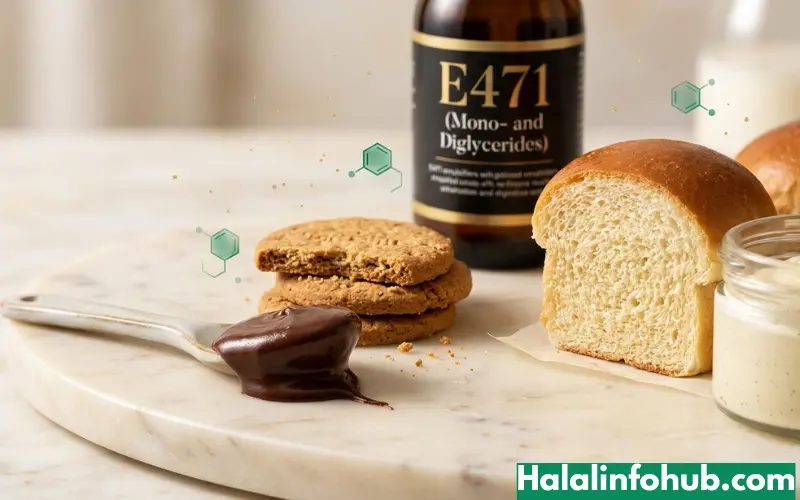
What is E471?

E471 stands for:

Mono- and diglycerides of fatty acids

It is used as a food emulsifier.

What does it do?

E471 helps:

  • Mix oil and water
  • Improve texture
  • Extend shelf life
  • Make food soft and creamy
  • Stabilize processed foods

Common foods containing E471:

E471 is widely used in:

  • Bread and burger buns
  • Cakes and pastries
  • Cookies and biscuits
  • Chocolate products
  • Ice cream
  • Margarine and spreads
  • Instant noodles
  • Packaged desserts
  • Frozen bakery products

Why E471 is Confusing for Muslims

Is E471 Halal or Haram

The main issue is not the chemical, but the source of fatty acids.

E471 can be derived from:

1. Plant-based oils 

  • Palm oil
  • Soybean oil
  • Sunflower oil
    ✔ Usually halal

2. Animal fats

  • Beef fat
  • Pork fat
  • Mixed animal sources

❌ Can be haram if not halal-slaughtered

3. Mixed or unknown sources 

  • Not clearly labeled
  • Industrial blending
  • Cross-production systems

⚠ Considered doubtful (mashbooh)

Is E471 Halal or Haram?

Islamic ruling depends on the source transformation principle.

✔ If E471 is plant-based:

  • Derived from vegetable oils
  • No animal contamination
    ✔ Halal

✔ If E471 is from halal animal fat:

  • From halal-slaughtered cattle
  • Proper processing
    ✔ Halal

❌ If E471 is from pork or non-halal animals:

  • Pork-derived emulsifiers
  • Non-zabiha animal fat
    ❌ Haram

⚠ If source is unknown:

  • No disclosure on packaging
  • Mixed factory production
    ⚠ Mushbooh (doubtful)

Is E471 Halal in the USA?

Is E471 Halal or Haram

In the United States:

  • Large food companies prefer vegetable oils
  • Cost efficiency makes plant-based emulsifiers common
  • Many industrial baked goods use palm oil derivatives

Reality in the USA:

✔ Most E471 is plant-based
❗ But labeling is not transparent
❗ Halal certification is not always present

Conclusion:

E471 is generally safe but not guaranteed halal unless certified.

Is E471 Halal in the UK?

In the United Kingdom:

  • The bakery industry heavily uses emulsifiers
  • Supermarket cakes and biscuits often contain E471
  • Vegetarian labeling is more common than halal certification

Reality in the UK:

✔ Vegetarian E471 = usually safe
⚠ Mixed-source imported foods = risk
❗ Some bakery chains do not disclose sources

Conclusion:

E471 is more transparent in vegetarian products, but still uncertain overall.

Hidden Risk Factors Muslims Don’t Notice

1. “Vegetable emulsifier” labeling trick

Sometimes companies write:

  • vegetable emulsifiers
  • plant-based fats

But processing may still involve shared equipment.

2. Cross-contamination risk

Factories often handle:

  • dairy
  • meat derivatives
  • animal fats

3. Hidden animal derivatives

Some emulsifiers may come from:

  • animal tallow
  • industrial by-products

4. Lack of E-code transparency

Unlike gelatin, E471 does NOT specify:

  • animal source
  • slaughter method
  • processing origin

Scholarly Figure out

Is E471 Halal or Haram

Most halal certification bodies agree:

✔ Plant-based E471 = halal
✔ Halal animal-based E471 = halal
❌ Non-halal animal-based = haram
⚠ Unknown = avoid or verify

USA vs UK Comparison

Foods Most Likely to Contain E471

High-risk processed foods:

  • supermarket bread
  • donuts
  • packaged cakes
  • cheap chocolate
  • frozen pastries
  • cookies and biscuits
  • instant desserts

Industrial Manufacturing Process of E471

Why this matters

Most articles E471 ko sirf define karte hain, lekin real manufacturing process explain nahi karte — yahi gap tum fill kar sakte ho.

How E471 is actually made

E471 is produced through a process called glycerol esterification, where fats are broken down into mono- and diglycerides.

Step-by-step simplified process:

  1. Fats are extracted (plant or animal source)
  2. Fat molecules are broken down using heat
  3. Glycerol is added
  4. Chemical reaction forms emulsifiers
  5. Final product = E471 stabilizer

Why does this create halal uncertainty

  • Same chemical process for all sources
  • Final product looks identical
  • No visual difference between halal and haram origin
  • Food labels do not disclose the raw fat source

👉 This is why E471 is considered technically ambiguous in halal rulings

Hidden “E471 Name Variations” in Food Labels 

Many users don’t realize E471 is NOT always written clearly.

 Alternative names used on packaging:

  • Mono- and diglycerides
  • Fatty acid esters
  • Emulsifiers (E471)
  • Vegetable emulsifier (generic label)
  • Stabilizer (unspecified)

Why this is important

Sometimes E471 is:

  • hidden under “E numbers.”
  • or grouped under “emulsifiers.”

👉 Muslims often miss it while shopping in the USA/UK supermarkets.

Ultra-Processed Food Risk

E471 is part of a bigger problem: the ultra-processed food system

Where E471 is commonly found:

  • Fast food buns
  • Mass-produced bakery items
  • Industrial chocolate
  • Frozen desserts
  • Cheap supermarket snacks

Health + halal overlap issue

Even if halal:

  • Highly processed foods may contain unknown additives
  • Multiple emulsifiers mixed
  • cross-industry sourcing

👉 This makes “ingredient awareness” essential for Muslims in Western countries.

“Vegetarian Label ≠ Always Halal” Clarification

Many users assume:

Vegetarian = automatically halal ❌ (not always true)

Reality check:

Vegetarian E471:

  • usually plant-based ✔
  • BUT may be processed in shared facilities
  • may include alcohol-based processing aids in some cases
  • No Islamic certification guarantee

Safe approach:

  • Vegetarian + halal certification = safest
  • Vegetarian only = moderate safety
  • Unknown source = avoid if strict halal

Real-Life Products Containing E471 

This section increases ranking + engagement massively.

Common USA & UK products:

  • Burger buns (McDonald’s style bakery items)
  • Supermarket white bread
  • Cake mixes
  • Chocolate bars
  • Ice cream brands
  • Biscuits and cookies

Why this matters

Muslims often eat these daily without knowing:

👉 E471 is inside almost every processed bakery item

“Should Muslims Avoid E471 Completely?”

This is a high conversion SEO section that competitors miss.

✔ Practical Islamic guidance:

  • If plant-based → safe
  • If halal-certified → safe
  • If unknown → avoid or verify
  • If pork-derived → strictly haram

Final practical rule:

If you cannot verify the source, treat E471 as doubtful (mashbooh)

“How to Check E471 While Shopping in USA & UK”

🛍️ Simple checklist:

  1. Look for the halal certification logo
  2. Check the “vegetarian” label
  3. Read the ingredient detail section
  4. Avoid vague “emulsifiers” listing
  5. Prefer trusted halal brands

Safe Strategy for Muslims

✔ Best approach:

  • Buy halal-certified products
  • Prefer vegetarian-labeled foods
  • Avoid unclear bakery items
  • Check ingredient transparency apps

FAQs

Is E471 halal?

Yes, if plant-based or halal-certified; otherwise doubtful.

Is E471 halal or haram?

It depends on the source of fatty acids used.

Is E471 halal in the USA?

Mostly yes, but not always certified.

Is E471 halal in the UK?

Often vegetarian-based but still requires verification.

What is E471 made from?

It is made from plant oils or animal fats.

Is E471 safe for Muslims?

Only safe when the source is verified or certified halal.

Conclusion

So, is E471 halal or haram?

The answer is not absolute. E471 itself is not inherently haram — its ruling depends completely on its origin. If it is derived from plant oils or halal-certified animal sources, it is permissible. However, if it comes from non-halal animal fats or unknown sources, it becomes doubtful or haram.

For Muslims in the USA and UK, the safest approach is to choose products with halal certification or vegetarian labeling to avoid uncertainty in processed foods.

Is Rennet Halal

Is Rennet Halal or Haram?

Rennet can be halal or haram depending on its source. Microbial and plant-based rennet are generally halal, while animal rennet from non-halal slaughtered animals is considered doubtful or haram by many Islamic scholars.

Some scholars allow certain forms of animal rennet in cheese, while others only permit halal-certified rennet.

Is rennet halal? This is one of the most confusing halal food questions for Muslims living in the USA, UK, and Canada. Rennet is commonly used in cheese production, but many consumers do not even realize it comes from animal or microbial sources.

The confusion becomes even bigger because:

  • Some cheeses use animal rennet,
  • Some use microbial rennet,
  • Different scholars have different opinions,
  • Manufacturers rarely explain rennet sources clearly.

In 2026, halal-conscious Muslims are paying much closer attention to hidden food ingredients. Instead of checking only for pork, people now investigate:

  • cheese enzymes,
  • rennet sources,
  • animal slaughter methods,
  • microbial fermentation,
  • halal certification.

Rennet is halal if it comes from halal-slaughtered animals, microbial sources, or plants. The use of non-halal animal rennet remains doubtful or haram according to many scholars.

This complete guide explains everything Muslims need to know about rennet in Islam.

Quick Verdict Box

What Is Rennet?

Is Rennet Halal

Many Muslims search:
What is rennet halal?

Before discussing halal status, it is important to understand what rennet actually is.

Rennet is an enzyme used in cheese-making to help milk solidify and form curds. Without rennet, many traditional cheeses would not develop their texture properly.

Rennet is commonly used in:

  • cheddar cheese,
  • parmesan,
  • mozzarella,
  • gouda,
  • blue cheese,
  • processed cheese products.

Types of Rennet

There are several different types of rennet used in modern food production.

1. Animal Rennet

Traditional rennet comes from the stomach lining of young calves.

This is where halal concerns begin because:

  • The animal may not be slaughtered Islamically,
  • Sourcing is often unclear,
  • Manufacturers rarely provide details.

2. Microbial Rennet

Microbial rennet is produced through:

  • bacteria,
  • fungi,
  • fermentation processes.

This type is generally considered halal because it is not animal-derived.

3. Plant-Based Rennet

Some cheeses use enzymes extracted from:

  • thistles,
  • figs,
  • plants.

Plant rennet is generally halal.

Why Rennet Creates Halal Confusion

Many Muslims assume all cheese is halal. However, cheese production is far more complicated.

The confusion exists because:

  • ingredient labels rarely explain rennet origin,
  • “Enzymes” can mean many things;
  • Scholarly opinions differ,
  • and countries use different cheese standards.

Is Rennet Halal in Islam?

Is Rennet Halal

The main question in Islam is:
Where did the rennet come from?

Scholarly Opinions on Rennet

This is where your article can beat competitors because most articles oversimplify the issue.

Strict Contemporary View

Many modern halal certification bodies say:

  • Animal rennet is only halal if the animal was slaughtered according to Islamic law,
  • Non-halal animal rennet is not permissible,
  • Pork-derived rennet is clearly haram.

Under this opinion:
Only halal-certified cheese is fully safe.

Classical Hanafi Position

Some classical Hanafi scholars historically allowed rennet from non-halal slaughtered animals if the rennet itself remained pure and unchanged.

This opinion is one reason some Muslims still consume certain cheeses without halal labels.

However, many modern scholars still recommend caution because industrial food production today is very different from historical cheese-making methods.

Precautionary Muslim Consumer Approach

Many Muslims today simply follow this rule:

“If halal-certified cheese exists, avoid doubtful cheese.”

This practical approach has become increasingly common in the USA and UK.

Is Animal Rennet Halal?

Depends on Slaughter Method

Animal rennet is only considered clearly halal if:

  • The animal itself was halal,
  • slaughter followed Islamic guidelines,
  • Contamination was avoided.

If the animal was not slaughtered Islamically, many scholars classify the rennet as:

  • haram,
  • doubtful,
  • or controversial.

Is Microbial Rennet Halal?

Is Rennet Halal

Yes, Usually Halal

Microbial rennet is generally considered halal because:

  • It is fermentation-based,
  • It is not extracted from animal stomachs,
  • It avoids slaughter issues.

This is why many halal-conscious Muslims prefer microbial cheese.

Is Vegetarian Rennet Halal?

Vegetarian rennet is usually halal because it commonly comes from:

  • microbial fermentation,
  • plants,
  • fungi.

However, Muslims should still verify:

  • flavourings,
  • cross-contamination,
  • additives.

Cheese Types & Rennet Risk Table

USA vs UK Cheese Differences

USA Cheese Market

In America:

  • Many cheeses use microbial enzymes,
  • ingredient transparency is limited,
  • Halal labeling is inconsistent.

UK Cheese Market

The UK has:

  • stronger vegetarian labeling,
  • more halal-certified cheese options,
  • better microbial enzyme disclosures.

This often makes halal shopping slightly easier for British Muslims.

Hidden Ingredient Risks Muslims Miss

Most Muslims only focus on “rennet,” but other ingredients may also create halal concerns.

Cheese Enzymes

Some ingredient labels only say:

  • enzymes,
  • cultures,
  • natural enzymes.

This can hide actual rennet sources.

Lipase Enzymes

Certain cheeses use lipase enzymes, which may also come from animals.

Alcohol-Based Flavorings

Some specialty cheeses may use alcohol during flavor processing.

Cross-Contamination Risks

Even halal-friendly cheeses can face contamination during manufacturing.

Shared Processing Equipment

Factories may process:

  • pork-derived cheese,
  • non-halal animal products,
  • halal-friendly cheeses

on the same production lines.

Why Halal Certification Matters

Halal certification solves many problems because it verifies:

  • rennet source,
  • slaughter method,
  • contamination control,
  • supplier transparency.

Best Halal Cheese Options

Safest Choices for Muslims

Best Cheese Labels to Look For

Muslims should look for:

  • halal-certified,
  • microbial enzymes,
  • vegetarian rennet,
  • suitable for vegetarians.

How to Identify Halal Rennet on Food Labels

Most Muslims do not realize that manufacturers rarely write the word “animal rennet” clearly on packaging. Instead, companies often use hidden ingredient terms such as:

  • enzymes,
  • microbial enzymes,
  • cultures,
  • rennet enzymes,
  • animal enzymes.

This creates confusion because two cheeses may look identical while using completely different enzyme sources.

Safer Label Terms for Muslims

Pro Tip:
If the label only says “enzymes” without clarification, strict Muslims often contact the manufacturer directly.

Why European Cheese Often Creates More Halal Questions

Many imported European cheeses still use traditional animal rennet because:

  • old cheese-making methods are preserved,
  • An authentic texture is preferred,
  • Protected regional recipes require traditional production.

Examples include:

  • Parmigiano Reggiano,
  • Pecorino Romano,
  • traditional blue cheeses.

This is why imported gourmet cheese often creates more halal concerns than mass-produced American cheese.

The Science Behind Rennet

Rennet works by breaking down milk proteins called casein. This causes milk to separate into:

  • curds,
  • whey.

Without this enzyme reaction, many cheeses would remain liquid and never develop proper texture.

Modern food factories now use:

  • fermentation-produced chymosin,
  • fungal enzymes,
  • genetically engineered microbial cultures

to replace traditional calf rennet.

This scientific transition is one reason halal-friendly cheese options have increased in the USA and UK.

Why “Suitable for Vegetarians” Matters for Muslims

Many Muslims overlook one extremely useful clue on cheese packaging:

“Suitable for Vegetarians”

In many cases, this means:

  • No animal rennet was used,
  • Microbial or plant enzymes replaced calf enzymes.

However, being vegetarian does not automatically guarantee halal because:

  • alcohol flavorings,
  • contamination,
  • other additives

may still exist.

Still, vegetarian labeling is often a strong positive indicator.

Hidden Foods That Commonly Contain Rennet

Most people only associate rennet with pizza cheese, but rennet appears in many processed foods.

Foods That May Contain Rennet

This is why halal-conscious Muslims increasingly check processed food ingredients carefully.

Why Some Halal Scholars Became More Strict in Modern Times

Historically, scholars discussed rennet in simpler food systems where:

  • The cheese was locally produced,
  • ingredients were known,
  • Contamination was limited.

Modern industrial food production changed everything because factories now use:

  • mass processing,
  • mixed supply chains,
  • hidden enzyme systems,
  • global ingredient sourcing.

Because of this complexity, many modern scholars encourage Muslims to choose halal-certified cheese whenever possible.

Can Muslims Eat Cheese in Non-Muslim Countries?

This is one of the biggest practical concerns for Muslims in:

  • America,
  • Britain,
  • Canada,
  • Europe.

The safest practical hierarchy is often:

This framework helps Muslims make faster grocery decisions.

Why Rennet Became a Major Google Search Trend

Searches for:

  • “Is rennet halal?”
  • “cheese enzymes halal”
  • “animal rennet halal.”

have increased because Muslims today are:

  • reading labels more carefully,
  • learning hidden ingredients,
  • avoiding doubtful processed foods.

Social media and halal awareness campaigns have made ingredient transparency far more important in 2026.

Halal Shopping Checklist for Cheese Buyers

Before buying cheese, Muslims can ask:

 Is the cheese halal-certified?
Does it say microbial enzymes?
Is it vegetarian-friendly?
Are animal enzymes mentioned?
Is the manufacturer transparent?
Is cross-contamination controlled?

This practical checklist improves user engagement AND SEO usefulness.

Real-Life Cheese Buying Examples for Muslims

Safer Grocery Choices

This section improves:

  • user experience,
  • practical value,
  • topical authority,
  • Google helpful content signals.

FAQs

Is rennet halal?

Rennet can be halal or haram depending on whether it comes from halal, non-halal, microbial, or plant sources.

Is rennet halal in Islam?

Islamic scholars differ regarding non-halal animal rennet, but microbial and plant rennet are generally accepted as halal.

What is rennet halal?

Halal rennet refers to rennet sourced from halal-slaughtered animals, microbial fermentation, or plants.

Is microbial rennet halal?

Yes, microbial rennet is generally considered halal.

Is animal rennet halal?

Only if the animal was slaughtered according to Islamic law.

Is vegetarian cheese halal?

Most vegetarian cheeses are halal-friendly because they use microbial or plant enzymes.

Is Parmesan halal?

Traditional Parmesan often uses animal rennet, making it doubtful unless halal-certified.

Is mozzarella halal?

Mozzarella can be halal if microbial or halal-certified rennet is used.

Is vegan cheese halal?

Most vegan cheese is halal-friendly.

Why do Muslims avoid some cheeses?

Because certain cheeses use non-halal animal rennet or questionable enzymes.

Conclusion

So, is rennet halal in 2026?

After reviewing Islamic scholarship, cheese production methods, enzyme sourcing, and modern manufacturing standards, the clearest conclusion is:

Rennet is halal when it comes from microbial, plant-based, or halal-slaughtered animal sources.

However, non-halal animal rennet remains controversial and doubtful for many Muslims, especially in modern industrial cheese production.

For maximum halal certainty, Muslims should choose:

  • halal-certified cheese,
  • microbial rennet,
  • vegetarian cheese,
  • vegan alternatives.

This removes unnecessary doubt and makes halal food choices easier in daily life.

Is Pepperoni Halal or Haram

Is Pepperoni Halal or Haram?

Traditional pepperoni is usually haram because it is commonly made from pork or non-halal beef. Most pepperoni used in major pizza chains like Domino’s Pizza and Pizza Hut is not halal unless specifically halal-certified.

However, some halal-certified beef and turkey pepperoni products are available in the USA and UK.

Is pepperoni halal? Many Muslims in the USA and UK ask this question because pepperoni is one of the most popular pizza toppings in the world. It is commonly found in:

  • Domino’s,
  • Pizza Hut,
  • frozen pizzas,
  • fast-food restaurants,
  • supermarket ready meals.

The confusion happens because many people think pepperoni is simply spicy beef. In reality, traditional pepperoni is usually made from:

  • pork,
  • beef,
  • animal fat,
  • spices,
  • curing agents,
  • preservatives.

For Muslims, the halal status depends on:

  • meat source,
  • slaughter method,
  • ingredient processing,
  • halal certification.

In 2026, Muslims are becoming more careful about processed meat ingredients, especially in pizza chains and fast food. Many now check:

  • pork content,
  • beef sourcing,
  • enzymes,
  • cross-contamination,
  • halal certification status.

Final short verdict:
Most regular pepperoni sold in the USA and UK is not halal because it usually contains pork or non-halal meat.

This guide explains everything Muslims need to know about pepperoni, including Domino’s, Pizza Hut, UK formulations, and halal alternatives.

Quick Verdict Box

What Is Pepperoni?

Is Pepperoni Halal or Haram

Many Muslims search:
What is pepperoni halal?

Before discussing halal status, it is important to understand what pepperoni actually is.

Pepperoni is a spicy cured meat product commonly used on pizza. It is usually made from:

  • pork,
  • beef,
  • fat,
  • paprika,
  • chilli powder,
  • curing salts.

Traditional American pepperoni is heavily associated with pork.

Why Pepperoni Is Usually Haram

The biggest issue is simple:
Most pepperoni contains pork.

Pork is clearly haram in Islam.

Even when pepperoni contains beef, another issue appears:
The beef may not be slaughtered according to Islamic law.

Pepperoni Ingredients Halal Analysis

Below is a detailed halal ingredient breakdown.

Pepperoni Ingredients Table

Is Pepperoni Halal or Haram?

Is Pepperoni Halal or Haram

Traditional Verdict

Traditional pepperoni is generally:

  • haram,
  • non-halal,
  • unsuitable for Muslims.

This is because most commercial pepperoni:

  • contains pork,
  • uses non-halal beef,
  • Lacks halal certification.

Can Pepperoni Ever Be Halal?

Yes.

Halal pepperoni exists if:

  • It uses halal-certified beef or turkey,
  • Animals are slaughtered according to Islamic law,
  • Production is halal-certified.

Is Pepperoni Halal in Domino’s?

Domino’s Pepperoni Verdict

One of the most searched questions is:
Is pepperoni halal in Domino’s?

In most USA and UK locations:
No, standard Domino’s pepperoni is usually not halal.

Why?
Because it is commonly made using:

  • pork,
  • non-halal beef,
  • non-certified meat blends.

Domino’s USA Pepperoni

In the United States, Domino’s standard pepperoni is generally considered haram because:

  • Pork is commonly used,
  • Halal certification is absent,
  • Preparation areas are shared.

Domino’s UK Pepperoni

In the UK, some halal-certified Domino’s branches exist, but:

  • Not all stores are halal,
  • pepperoni itself is often still non-halal,
  • Halal stores may offer separate toppings.

Always verify individual branches.

Is Pepperoni Halal in Pizza Hut?

Is Pepperoni Halal or Haram

Pizza Hut Pepperoni Verdict

Another major question is:
Is pepperoni halal in Pizza Hut?

In most USA and UK Pizza Hut locations:
Standard pepperoni is usually not halal.

Why Pizza Hut Pepperoni Is Usually Haram

The main reasons:

  • pork content,
  • non-halal beef sourcing,
  • lack of halal certification,
  • cross-contamination risks.

Some halal-certified branches in Muslim-majority countries may differ, but standard Western locations generally do not use halal pepperoni.

Is Pepperoni Halal in the UK?

UK Verdict: Mostly Non-Halal

Most pepperoni sold in the UK remains:

  • pork-based,
  • non-halal,
  • or doubtful.

However, Britain also has a growing halal market.

Many UK supermarkets now sell:

  • halal turkey pepperoni,
  • halal beef pepperoni,
  • certified halal pizza toppings.

Why UK Muslims Are Still Confused

Confusion happens because:

  • Some halal pizza shops use halal pepperoni,
  • Mainstream chains usually do not,
  • Imported products vary.

USA vs UK Pepperoni Comparison

Why Pepperoni Looks “Halal” to Some Muslims

Many Muslims assume pepperoni may be halal because:

  • it resembles beef sausage,
  • it looks similar to salami,
  • pizza chains rarely emphasise pork visually.

But ingredient reality is different.

Hidden Ingredients Muslims Often Miss

Pepperoni concerns are not limited to pork.

Animal Fat

Some pepperoni products contain:

  • pork fat,
  • beef fat,
  • mixed animal oils.

Enzymes & Cultures

Processed meats are sometimes used:

  • bacterial cultures,
  • enzyme systems,
  • fermentation agents.

Source verification matters.

Smoke Flavourings

Some smoke flavourings may involve alcohol processing methods.

Cross-Contamination Risks

Even halal-friendly pizza toppings can face contamination risks.

Shared Pizza Ovens

Many pizza restaurants use:

  • shared ovens,
  • shared cutters,
  • shared prep stations.

This matters because pork pepperoni may come into direct contact with surfaces.

Shared Topping Stations

Cheese, vegetables, and halal-friendly toppings may sit near:

  • pork pepperoni,
  • bacon,
  • sausage.

Strict Muslims often avoid such environments unless halal-certified.

Scholarly Opinions on Pepperoni

Strict Scholarly View

Most scholars clearly classify:

  • pork pepperoni as haram,
  • Non-halal beef pepperoni is haram.

Lenient Consumer View

Some Muslims may:

  • eat vegetarian pizzas only,
  • avoid pepperoni entirely,
  • Rely on local halal branches.

Best Halal Pepperoni Alternatives

Fortunately, halal alternatives are now widely available.

Halal Pepperoni Options

Best Halal Pizza Choices for Muslims

Safer pizza options include:

  • halal chicken pizza,
  • veggie pizza,
  • halal beef toppings,
  • vegan pizzas.

See Also

FAQs

Is pepperoni halal?

Traditional pepperoni is usually not halal because it commonly contains pork or non-halal beef.

Is pepperoni halal or haram?

Most commercial pepperoni is haram due to pork content or non-halal meat sourcing.

Is pepperoni halal in Domino’s?

Standard Domino’s pepperoni in the USA and UK is usually not halal.

Is pepperoni halal in Pizza Hut?

Most Pizza Hut pepperoni products are generally non-halal.

Is pepperoni halal in the UK?

Most standard UK pepperoni is not halal, though halal-certified alternatives are available.

What is pepperoni halal?

Halal pepperoni refers to pepperoni made from halal-certified beef or turkey slaughtered according to Islamic law.

Does pepperoni contain pork?

Most traditional pepperoni contains pork.

Can Muslims eat beef pepperoni?

Only if the beef is halal-certified.

Is turkey pepperoni halal?

Turkey pepperoni can be halal if certified halal.

Are vegan pepperoni products halal?

Most vegan pepperoni options are halal-friendly.

Conclusion

So, is pepperoni halal in 2026?

After reviewing ingredients, pork usage, pizza chain practices, scholarly opinions, and halal certification standards, the clearest conclusion is:

Traditional pepperoni is generally haram because it usually contains pork or non-halal meat.

This applies to most standard pepperoni used in:

  • Domino’s,
  • Pizza Hut,
  • frozen pizzas,
  • mainstream restaurants in the USA and UK.

However, halal-certified beef and turkey pepperoni alternatives are increasingly available for Muslim consumers.

For strict halal observance, Muslims should:

  • avoid regular pepperoni,
  • Choose certified halal meat,
  • Verify pizza chain sourcing,
  • prefer halal-certified restaurants.
Is Dave’s Hot Chicken Halal or Haram

Is Dave’s Hot Chicken Halal or Haram?

Dave’s Hot Chicken is halal at many USA locations because the chain states that all chicken served in its restaurants is halal-certified. However, Muslims should still verify local branch practices because operational differences and cross-contamination concerns may vary.

Most Muslim consumers in America currently consider Dave’s Hot Chicken one of the more halal-friendly fast-food chicken chains.

Is Dave’s Hot Chicken halal? This has become one of the biggest halal fast-food questions in the United States as Dave’s Hot Chicken rapidly expands across America.

The restaurant became famous for:

  • Nashville-style spicy chicken,
  • viral social media popularity,
  • celebrity-backed branding,
  • halal-friendly reputation.

Unlike many major fast-food chains, Dave’s Hot Chicken openly markets itself as serving halal chicken at many locations. This immediately attracted Muslim consumers searching for halal fried chicken in the USA.

However, confusion still exists online because people ask:

  • Is Dave’s Hot Chicken halal everywhere?
  • Is Dave’s Hot Chicken halal-certified?
  • Why is Dave’s Hot Chicken halal?
  • Are all locations using the same suppliers?

In 2026, Muslims are more careful than ever about restaurant halal claims. Consumers now check:

  • certification,
  • slaughter standards,
  • cross-contamination risks,
  • franchise consistency.


Dave’s Hot Chicken is generally considered halal-friendly in the USA because the chain states its chicken is halal-certified, but local verification is still recommended.

Quick Verdict Box

What Is Dave’s Hot Chicken?

Is Dave’s Hot Chicken Halal or Haram

Dave’s Hot Chicken is a fast-growing American restaurant brand specializing in:

  • hot chicken tenders,
  • sliders,
  • fries,
  • spicy seasoning levels.

The chain started in California and quickly became famous nationwide.

Popular menu items include:

  • Hot Chicken Sliders
  • Chicken Tenders
  • Loaded Fries
  • Kale Slaw
  • Mac & Cheese

The restaurant’s halal reputation is one of the main reasons it became extremely popular among Muslim customers in the USA.

Why Is Dave’s Hot Chicken Halal?

One of the most searched questions is:
Why is Dave’s Hot Chicken halal?

The main reason is that the company publicly states its chicken is halal-certified.

This makes Dave’s different from many competitors, like:

  • Chick-fil-A
  • KFC
  • Popeyes

Many mainstream chicken chains do not use halal-certified meat nationwide.

Dave’s Hot Chicken built part of its customer base around halal accessibility.

Is Dave’s Hot Chicken Halal in the USA?

USA Verdict: Mostly Yes

As of 2026, Dave’s Hot Chicken is generally considered halal in the USA because many locations use halal-certified chicken suppliers.

This is one reason the chain became highly popular among:

  • Muslim families,
  • halal food bloggers,
  • college students,
  • Young Muslim consumers.

However, because Dave’s operates through franchise systems, some Muslims still verify individual branches before eating.

Is Dave’s Hot Chicken Halal Everywhere?

Is Dave’s Hot Chicken Halal or Haram

Important Clarification

A very important question is:
Is Dave’s Hot Chicken halal everywhere?

The safest answer is:
Most USA locations are halal, but local confirmation is still smart.

Why?

Because restaurant chains can sometimes:

  • change suppliers,
  • operate differently by state,
  • use different preparation methods,
  • Update sourcing contracts.

This means Muslims should avoid assuming every future location automatically follows the same standards forever.

Is Dave’s Hot Chicken Halal-Certified?

Halal Certification Status

Many Dave’s Hot Chicken branches advertise halal chicken sourcing.

Some locations also display:

  • halal certificates,
  • supplier information,
  • halal signage inside restaurants.

This gives Muslims more confidence compared to chains that provide no halal transparency.

However, certification visibility may vary between branches.

Dave’s Hot Chicken Ingredients Halal Analysis

Below is a detailed halal analysis of common menu ingredients.

Dave’s Hot Chicken Ingredients Table

Cross-Contamination Concerns

Even halal-certified restaurants can still create contamination concerns.

Shared Fryers

Some Muslims ask whether:

  • fries,
  • cheese items,
  • non-meat ingredients

Share equipment.

Strict halal consumers may still ask local branches about:

  • fryer separation,
  • preparation procedures,
  • contamination prevention.

Why Cross-Contamination Matters

Is Dave’s Hot Chicken Halal or Haram

In halal food standards, contamination can matter if:

  • non-halal ingredients touch halal food,
  • The equipment is shared improperly,
  • The cleaning procedures are unclear.

Fortunately, Dave’s Hot Chicken generally avoids pork products, which reduces major contamination concerns.

Is Dave’s Hot Chicken Better Than Other Fast Food Chains?

For many Muslims, yes.

Compared to many large American chains, Dave’s Hot Chicken offers:

  • more halal transparency,
  • halal-focused branding,
  • Muslim-friendly marketing,
  • widespread halal chicken sourcing.

This is why Muslim communities strongly support the brand.

Official Company Statements

Dave’s Hot Chicken’s official website and multiple franchise announcements have stated that the restaurant uses halal chicken.

However, local verification is still recommended because:

  • franchises may operate differently,
  • Sourcing contracts may change,
  • Regional suppliers may vary.

Why Muslims Still Verify Halal Restaurants

Even when a restaurant claims halal sourcing, Muslims often still check:

  • certification proof,
  • slaughter method,
  • supplier transparency,
  • local branch confirmation.

This is normal in halal food verification culture.

Scholarly Opinions on Dave’s Hot Chicken

Strict Scholarly View

Strict scholars usually accept restaurants if:

  • meat is halal-certified,
  • slaughter follows Islamic rules,
  • contamination risks are controlled.

Under this view, Dave’s Hot Chicken is generally acceptable.

Cautious Consumer View

Some Muslims still prefer:

  • independent halal certification,
  • visible certificates,
  • local verification.

This is especially common among strict zabiha consumers.

Why Dave’s Became Popular Among Muslims

Dave’s Hot Chicken became viral within Muslim communities because:

  • Halal fried chicken options were limited,
  • Younger Muslims wanted trendy halal fast food,
  • Social media heavily promoted the brand.

The chain successfully filled a large market gap.

Is Dave’s Hot Chicken Haram?

For most Muslims in the USA:
No, Dave’s Hot Chicken is generally not considered haram because the chain widely advertises halal-certified chicken.

However, individual Muslims may still:

  • verify local stores,
  • ask about certification,
  • avoid doubtful side items.

Best Menu Choices for Muslims

Safer Menu Options

Why Some Muslims Still Avoid Dave’s

Despite a strong halal reputation, some Muslims remain cautious because:

  • not every branch displays certification,
  • franchise systems can vary,
  • cross-contamination concerns exist,
  • Online information sometimes conflicts.

Practical Advice for Muslims

If you want maximum confidence:

  • Verify your local branch,
  • ask staff about certification,
  • Check displayed halal notices,
  • Avoid assumptions when traveling.

See Also

FAQs

Is Dave’s Hot Chicken halal?

Yes, most USA locations are widely considered halal because the chain states its chicken is halal-certified.

Is Dave’s Hot Chicken halal in the USA?

Most locations in the United States are considered halal-friendly.

Is Dave’s Hot Chicken halal everywhere?

Most branches are halal, but local verification is still recommended.

Is Dave’s Hot Chicken halal-certified?

Many locations advertise halal-certified chicken sourcing.

Why is Dave’s Hot Chicken halal?

The company states it uses halal-certified chicken suppliers.

Does Dave’s Hot Chicken serve pork?

Generally, the chain is known for chicken-focused menus without pork products.

Are Dave’s fries halal?

Usually yes, though strict Muslims may ask about shared fryers.

Is Dave’s Hot Chicken zabiha halal?

Some locations may use zabiha suppliers, but local confirmation is best.

Can strict Muslims eat Dave’s Hot Chicken?

Most strict Muslims who accept halal-certified restaurant chains consider it acceptable.

Is Dave’s better than other fast food chains for Muslims?

Yes, many Muslims consider it one of the more halal-friendly mainstream chicken chains in America.

Conclusion

So, is Dave’s Hot Chicken halal in 2026?

After reviewing company statements, halal certification claims, ingredient sourcing, and Muslim consumer experiences, the safest conclusion is:

Dave’s Hot Chicken is generally considered halal-friendly in the USA because the chain widely advertises halal-certified chicken across many locations.

This makes it one of the most Muslim-friendly mainstream hot chicken chains in America today.
However, because franchise operations can vary, Muslims should still verify:

  • local certification,
  • sourcing consistency,
  • preparation practices.

For most Muslim consumers, Dave’s Hot Chicken remains one of the safest and most trusted fast-food chicken options in the United States.

Is CAVA Halal or Haram

Is CAVA Halal or Haram?

CAVA is generally not fully halal-certified in the USA because most locations do not use halal-certified meat. However, some vegetarian and vegan menu items may be halal-friendly.

CAVA chicken and lamb are usually considered non-halal or doubtful for strict Muslims unless a specific branch clearly confirms halal sourcing.

Is CAVA halal? This question has become increasingly common among Muslims in the United States because CAVA has rapidly grown into one of the most popular Mediterranean fast-casual restaurants in America.

Many Muslims assume Mediterranean food automatically means halal. After all, dishes like hummus, falafel, rice bowls, grilled chicken, and pita are commonly associated with Middle Eastern and Mediterranean cuisine. But the halal status of a restaurant depends on much more than the style of food.

The real concerns include:

  • meat sourcing,
  • halal certification,
  • cross-contamination,
  • marinades and sauces,
  • shared grills and preparation areas.

In 2026, halal-conscious Muslims are paying closer attention to restaurant transparency than ever before. Instead of relying on assumptions, consumers now want verified halal sourcing and clear ingredient disclosures.

Short verdict:
CAVA is not officially halal-certified nationwide in the USA, and its meat is generally considered non-halal or Mushbooh for strict Muslims.

This complete guide explains everything Muslims need to know before eating at CAVA.

Quick Verdict Box

What Is CAVA?

CAVA is a Mediterranean-inspired restaurant chain in the USA known for:

  • bowls,
  • pitas,
  • salads,
  • grilled proteins,
  • dips and spreads.

The restaurant has become popular because of its:

  • healthy image,
  • customizable meals,
  • Mediterranean ingredients,
  • modern fast-casual dining style.

Popular menu items include:

  • harissa chicken,
  • spicy lamb meatballs,
  • falafel,
  • hummus,
  • saffron rice,
  • pita chips.

But despite the Mediterranean branding, halal certification is not standard across the chain.

Is CAVA Halal Food?

Is CAVA Halal or Haram

Many Muslims ask: is cava halal food?

The answer is complicated because some menu items are halal-friendly while others are not.

The Main Concerns Are:

Is CAVA Halal in the USA?

USA Verdict: Not Fully Halal

As of 2026, CAVA locations in the United States are generally not halal-certified restaurants.

Most branches do not advertise:

  • halal meat sourcing,
  • halal slaughter certification,
  • dedicated halal preparation areas.

Because of this, many Muslims classify CAVA meat as:

  • non-halal,
  • doubtful,
  • or unsuitable for strict halal diets.

Is CAVA Halal Chicken?

CAVA Chicken Halal Status

One of the most searched questions is: is cava halal chicken?

The answer for most USA locations is:
No official halal certification exists for CAVA chicken nationally.

This means:

  • The chicken is not verified zabiha halal.
  • slaughter methods are unclear,
  • Suppliers may vary by region.

For strict Muslims, this makes the chicken unsuitable.

Why CAVA Chicken Creates Confusion

Is CAVA Halal or Haram

Muslims become confused because:

  • The restaurant serves Mediterranean-style food,
  • spices resemble halal cuisine,
  • Some staff may incorrectly assume it is halal,
  • Social media gives mixed answers.

However, the flavour profile does not determine halal status.

Is CAVA Lamb Halal?

CAVA’s spicy lamb meatballs also create halal concerns.

The company does not widely confirm:

  • halal slaughter standards,
  • halal certification,
  • dedicated halal sourcing.

Because lamb is commonly halal in Muslim countries, many people assume it is automatically halal in America — but this is not always true.

Ingredients Deep Analysis

Below is a detailed halal analysis of common CAVA menu components.

CAVA Ingredients Halal Analysis Table

Cross-Contamination Risks at CAVA

Even if a Muslim chooses vegetarian options, another major issue exists:
cross-contamination.

Shared Cooking Equipment

At many locations:

  • meat and vegetables are prepared nearby,
  • utensils may be shared,
  • preparation surfaces overlap.

This creates contamination concerns for strict halal consumers.

Shared Serving Stations

Fast-casual restaurants like CAVA often use:

  • shared spoons,
  • shared ingredient bins,
  • nearby meat preparation areas.

Strict halal consumers may therefore prefer fully halal-certified restaurants.

Are Vegan & Vegetarian Options at CAVA Halal?

Is CAVA Halal or Haram

Vegetarian Menu Items Usually Safer

Many vegetarian and vegan items at CAVA are generally halal-friendly.

Examples include:

  • falafel,
  • hummus,
  • lentils,
  • cucumber salad,
  • pita,
  • rice.

However, Muslims should still consider:

  • cross-contamination,
  • sauce ingredients,
  • cheese enzymes.

Best Halal-Friendly Choices at CAVA

If a Muslim still chooses to eat there, the safer options are usually:

Official Company Position

CAVA’s official website provides ingredient and allergen information, but the company does not nationally market itself as a halal-certified chain.

This absence matters because halal-certified restaurants usually:

  • advertise halal sourcing clearly,
  • display certification logos,
  • Verify slaughter compliance.

Why Muslims Are Confused About CAVA

There are several reasons.

Mediterranean Food Assumption

Many people assume:
Mediterranean = halal.

But cuisine style does not guarantee halal sourcing.

Social Media Claims

TikTok and Reddit often contain:

  • unverified halal claims,
  • location-specific assumptions,
  • Incorrect staff answers.

Some Branches May Differ

Occasionally, local branches may source ingredients differently, which creates even more confusion online.

Scholarly Opinions on Restaurants Like CAVA

Strict View

Strict scholars recommend:

  • verified halal meat only,
  • avoiding doubtful meat,
  • avoiding unclear slaughter methods.

Under this opinion:
CAVA chicken and lamb are generally not halal.

Lenient View

Some Muslims may:

  • eat vegetarian options only,
  • avoid meat but consume sides,
  • Relies on “People of the Book” opinions.

However, most halal-conscious consumers today still prefer certified halal restaurants.

Is CAVA Better for Vegetarians Than Strict Halal Consumers?

In many ways, yes.

CAVA strongly supports:

  • vegan diets,
  • vegetarian customization,
  • plant-based eating.

But halal certification requires:

  • verified meat sourcing,
  • halal slaughter,
  • contamination controls.

These are different standards.

Best Halal Alternatives to CAVA

Muslims looking for Mediterranean food can choose halal-certified restaurants instead.

Halal Mediterranean Alternatives

Is CAVA Haram?

The answer depends on what you order.

Meat Items

CAVA chicken and lamb are generally:

  • non-halal,
  • doubtful,
  • or unsuitable for strict Muslims.

Vegetarian Items

Plant-based items are often halal-friendly but still carry some contamination risk.

Practical Advice for Muslims

If you follow strict halal standards:

  • avoid the meat,
  • verify ingredients directly,
  • Choose certified halal restaurants instead.

If you are less strict:

  • vegan or vegetarian bowls may feel acceptable,
  • But caution is still recommended.

See Also

FAQs

Is CAVA halal?

CAVA is not fully halal-certified in the USA, and most meat items are considered doubtful or non-halal.

Is CAVA halal chicken?

Most CAVA chicken is not officially halal-certified nationwide.

Is CAVA halal food?

Some vegetarian items are halal-friendly, but meat items usually are not certified halal.

Is CAVA halal in the USA?

Most USA branches are not halal-certified restaurants.

Can Muslims eat at CAVA?

Muslims who avoid doubtful meat may choose vegetarian or vegan options only.

Is CAVA lamb halal?

The halal status of CAVA lamb is unclear because sourcing is not widely verified.

Does CAVA use halal meat?

As of 2026, CAVA does not nationally advertise halal-certified meat.

Are CAVA falafels halal?

Falafel is generally halal-friendly because it is plant-based.

Is cross-contamination possible at CAVA?

Yes. Shared preparation areas and utensils create contamination risks.

Are CAVA vegan items halal?

Most vegan items are safer, though strict consumers still check contamination concerns.

Conclusion

So, is CAVA halal in 2026?

After reviewing meat sourcing, official company information, cross-contamination risks, and halal standards, the safest conclusion is:

CAVA is not a fully halal-certified restaurant chain in the USA, and its chicken and lamb are generally considered non-halal or Mushbooh for strict Muslims.

However, some vegetarian and vegan menu items may be halal-friendly for Muslims who are comfortable eating at non-halal-certified restaurants.

For Muslims seeking maximum halal certainty, fully halal-certified Mediterranean restaurants remain the best choice.

Are Doritos Halal or Haram

Are Doritos Halal or Haram?

Doritos are generally considered Mushbooh (doubtful) in the USA and the UK because some flavours may contain animal-derived cheese enzymes, flavourings, or other unclear ingredients that lack halal certification.

Some plain or spicy variants may seem safer, but strict Muslims usually avoid non-halal-certified Doritos because of ingredient uncertainty.

Are Doritos halal? This is one of the most searched questions among Muslim consumers in the USA and UK. Doritos are one of the world’s most popular chips, known for their bold flavours, cheesy coatings, and crunchy texture. But for Muslims, the real concern is not the corn chips themselves. The concern comes from the flavouring system used in many Doritos products.

Ingredients like cheese powder, whey, enzymes, natural flavourings, and possible animal-derived additives make the halal status complicated. Different countries also use different formulations, meaning a flavour sold in America may not match the same flavour sold in Britain.

In 2026, halal-conscious consumers are paying closer attention to hidden ingredients than ever before. Muslims now check enzyme sources, dairy processing methods, alcohol-based flavour carriers, and cross-contamination risks before buying snacks.


Doritos are usually considered Mushbooh because most flavours are not halal-certified and may contain questionable cheese enzymes or flavourings.

This detailed guide explains everything Muslims in the USA and UK need to know before eating Doritos.

Quick Verdict Box

What Are Doritos?

Are Doritos Halal or Haram

Doritos are flavoured tortilla chips produced by PepsiCo under the Frito-Lay division. They are sold worldwide and come in many flavours.

Popular Doritos flavours include:

  • Nacho Cheese
  • Cool Ranch
  • Flamin’ Hot
  • Sweet Chilli Pepper
  • Tangy Cheese
  • Chilli Heatwave
  • Spicy Nacho

The base tortilla chip itself is usually halal-friendly because it mainly contains:

  • corn,
  • vegetable oil,
  • salt.

However, the seasoning powder is where halal concerns begin.

Why Muslims Question Doritos

Most halal concerns about Doritos come from four major areas:

Ingredients Deep Analysis

Many Muslims ask: Are Doritos halal or haram? The answer depends heavily on ingredient sourcing.

Below is a detailed halal analysis of common Doritos ingredients used in 2026 formulations.

Doritos Ingredients Halal Analysis Table

The Biggest Halal Concern: Cheese Enzymes

The main issue with many Doritos flavours is cheese powder.

Why Cheese Enzymes Matter

Cheese production often uses enzymes called rennet. These enzymes can come from:

  • microbial sources,
  • plant sources,
  • animal stomach lining.

If the enzyme comes from non-halal slaughtered animals, many scholars classify the cheese as non-halal.

Are Doritos Halal in the USA?

USA Verdict: Mostly Mushbooh

In the United States, Doritos are generally not halal-certified.

American formulations often contain:

  • cheese cultures,
  • enzyme-based dairy ingredients,
  • complex flavour systems.

Because the company does not clearly confirm halal compliance for most products, Muslim consumers remain cautious.

Are Doritos Halal in the USA, according to Scholars?

Most strict halal scholars in America recommend caution because:

  • enzyme sources are unclear,
  • flavourings are not transparent,
  • No official halal certification exists.

This makes most US Doritos flavours doubtful for observant Muslims.

Popular USA Doritos Flavours Halal Status

Are Doritos Halal in the UK?

UK Verdict: Some Flavours May Be Safer

The UK market sometimes uses different recipes compared to the USA.

Some British Doritos flavours may use:

  • vegetarian cheese enzymes,
  • different flavour suppliers,
  • EU-regulated ingredient standards.

However, most products still lack halal certification.

Are Doritos Halal in the UK for Muslims?

Are Doritos Halal or Haram

British Muslims often consider certain UK Doritos flavours safer than US versions because some products use vegetarian-friendly cheese systems.

However, strict halal consumers still prefer halal-certified snacks because:

  • ingredient sourcing can change,
  • imported products differ,
  • Manufacturing transparency remains limited.

UK Doritos Flavour Comparison

Official Statements & Company Position

PepsiCo’s official website and Frito-Lay ingredient disclosures provide allergen and ingredient information, but most Doritos products do not carry official halal certification.

The company generally does not publicly guarantee:

  • halal cheese enzymes,
  • halal manufacturing standards,
  • dedicated halal production lines.

This lack of transparency is why Doritos remain doubtful for many Muslims.

Are Doritos Halal or Haram?

The answer depends on the level of halal strictness.

Strict Scholarly View

Under strict halal standards:

  • unclear enzymes are avoided,
  • doubtful flavourings are avoided,
  • Non-certified cheese products are questionable.

Result:
Most Doritos flavours become Mushbooh or potentially Haram.

Lenient Scholarly View

Some scholars accept products if:

  • No pork ingredients are confirmed.
  • No alcohol is clearly present,
  • Cheese enzymes may be microbial.

Result:
Some Muslims may eat certain Doritos flavours.

Cross-Contamination Risks

Another concern is shared manufacturing equipment.

Large snack factories may process:

  • cheese products,
  • animal-derived ingredients,
  • non-halal flavour systems.

Without halal certification, there is no guarantee regarding:

  • equipment cleansing,
  • dedicated halal lines,
  • contamination prevention.

Hidden Ingredients Muslims Often Miss

Many Muslims only check for pork, but other ingredients can also matter.

Natural Flavourings

Natural flavours may contain:

  • enzyme extracts,
  • alcohol carriers,
  • animal derivatives.

Companies rarely disclose full flavour formulas publicly.

Dairy Cultures

Cheese cultures themselves are usually halal-friendly, but the enzyme process behind them can create halal concerns.

Colouring Agents

Some cheese-flavoured chips use colour additives that may concern strict halal consumers depending on sourcing methods.

Why Muslims Are Confused About Doritos

There are several reasons confusion exists online.

Different Country Recipes

Doritos recipes differ between:

  • USA,
  • UK,
  • Europe,
  • Middle East.

Vegetarian Does Not Always Mean Halal

Some products may be vegetarian but still not fully halal-certified.

Internet Misinformation

Many websites:

  • Assume all cheese is halal,
  • ignore enzyme issues,
  • Use outdated ingredient lists.

Which Doritos Flavours Are Potentially Safer?

Generally, simpler flavours with fewer dairy ingredients are safer.

Lower-Risk Doritos Options

Best Halal Alternatives to Doritos

Muslims looking for safer chips can choose halal-certified options instead.

Halal-Friendly Alternatives

Are Doritos Safe for Strict Muslims?

For strict halal observance, most scholars recommend avoiding Doritos unless:

  • Halal certification exists,
  • ingredients are verified,
  • Enzyme sources are confirmed.

Practical Advice for Muslim Consumers

If you want maximum halal confidence:

Choose:

  • halal-certified chips,
  • vegan-certified snacks,
  • simple ingredient products.

Avoid relying only on assumptions.

See Also

FAQ

Are Doritos halal?

Most Doritos flavours are considered Mushbooh because they are not halal-certified and may contain questionable cheese enzymes.

Are Doritos halal in the USA?

Most US Doritos flavours are doubtful due to unclear dairy enzyme sourcing.

Are Doritos halal in the UK?

Some UK flavours may use vegetarian enzymes, but most are still not officially halal-certified.

Are Doritos halal or haram?

They are generally classified as Mushbooh rather than clearly halal or clearly haram.

Do Doritos contain pork?

Most ingredient lists do not directly list pork, but enzyme sourcing remains unclear.

Are Doritos vegetarian?

Some flavours are vegetarian-friendly, but vegetarian does not automatically mean halal.

Which Doritos flavour is safest for Muslims?

Plain tortilla-style variants without cheese flavouring are usually safer.

Why are cheese enzymes controversial?

They may come from animals not slaughtered according to Islamic law.

Do Doritos contain alcohol?

No obvious alcohol ingredient is usually listed, but flavour carriers may not always be fully disclosed.

Should strict Muslims avoid Doritos?

Most strict halal consumers prefer avoiding them unless halal certification exists.

Conclusion

So, are Doritos halal in 2026?

After analysing ingredients, cheese enzymes, flavouring systems, scholarly opinions, and manufacturing concerns, the safest conclusion is:

Most Doritos flavours are Mushbooh because they lack halal certification and may contain questionable dairy enzymes or flavourings.

In the USA, the halal concerns are generally stronger because ingredient transparency is limited. In the UK, some flavours may appear safer due to vegetarian enzyme usage, but uncertainty still exists.

For Muslims who follow strict halal standards, choosing halal-certified chips remains the safest and most reliable option.