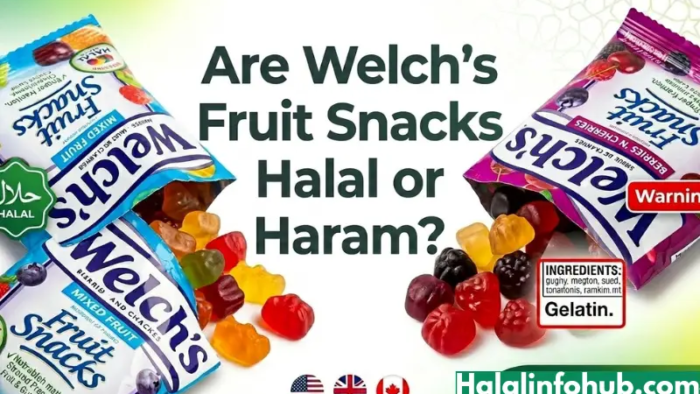
Are Welch’s Fruit Snacks Halal or Haram

Are Welch’s Fruit Snacks Halal or Haram?

No, Welch’s Fruit Snacks are not halal.

Most Welch’s Fruit Snacks contain pork gelatin or non-zabiha beef gelatin and do not have halal certification. Therefore, they are considered Haram for strict Muslims and Mushbooh for others. In 2026, the company still does not provide a clear halal certification for their standard fruit snacks in the USA, UK, or Canada. It is recommended to choose halal-certified or vegan (pectin-based) alternatives instead.

Some flavours may appear vegetarian-friendly, but due to unclear gelatin sourcing and manufacturing risks, strict Muslims usually avoid them.

Have you ever picked up a pack of Welch’s Fruit Snacks and wondered whether they are actually halal? Many Muslim families in the USA, UK, and such asda buy these colourful fruit gummies because they look similar to regular fruit snacks and are widely available in supermarkets, schools, and lunch boxes. But the real question is deeper than just fruit flavouring.

The concern stems from ingredients such as gelatin, flavourings, colouring agents, and manufacturing processes. Different countries may also use slightly different formulations, making the halal ruling more complicated than people expect.

In 2026, Muslim consumers are becoming far more ingredient-aware. People no longer look only for “contains pork” labels. They now investigate gelatin sourcing, cross-contamination, hidden animal derivatives, and halal certification standards.


Welch’s Fruit Snacks are usually considered Mushbooh or potentially Haram because most versions contain gelatin without halal certification.

This detailed guide explains everything Muslims in the USA, UK, and Canada need to know before consuming Welch’s Fruit Snacks.

Quick Verdict Box

What Are Welch’s Fruit Snacks?

Are Welch’s Fruit Snacks Halal or Haram

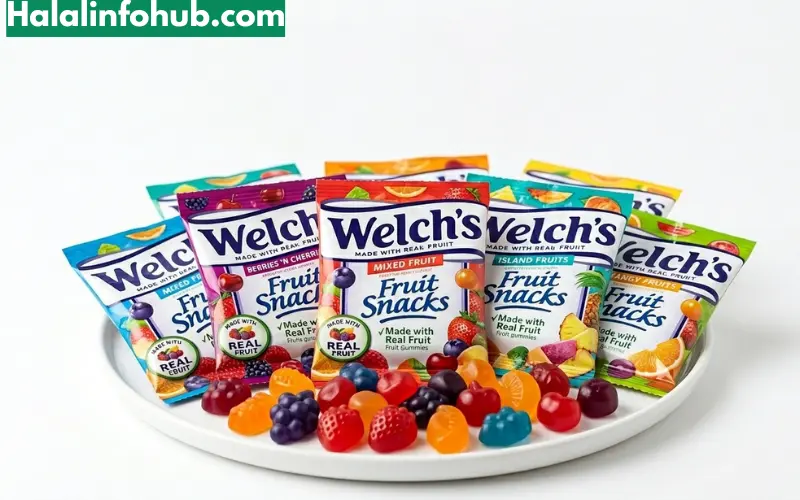
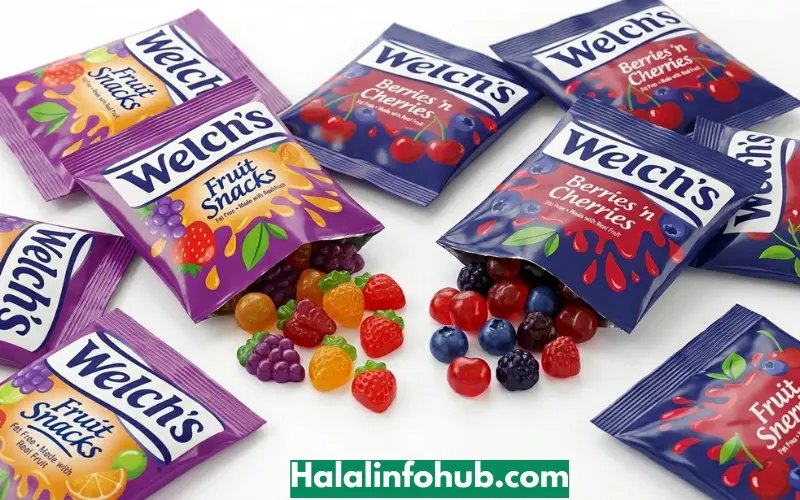
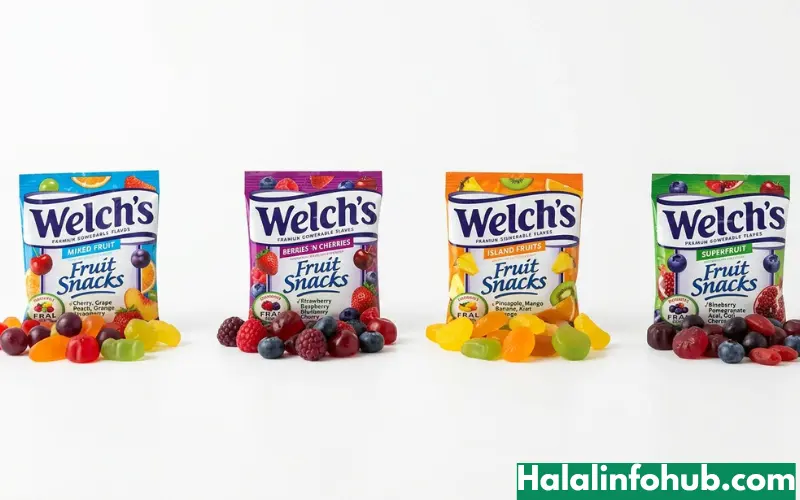
Welch’s Fruit Snacks are chewy fruit-flavoured gummy snacks sold under the Welch’s brand. They are extremely popular in North America and are often marketed as snacks made with “real fruit.”

The company produces many varieties, including:

  • Mixed Fruit
  • Berries ‘n Cherries
  • Island Fruits
  • Superfruit Mix
  • Juicefuls
  • Fruit ‘n Yogurt Snacks
  • Reduced Sugar versions

Although the packaging focuses heavily on fruit juice and vitamins, the halal concern is not the fruit itself. The issue mainly revolves around:

  • Gelatin source
  • Natural flavours
  • Manufacturing practices
  • Lack of halal certification

Ingredients Deep Analysis

One of the biggest mistakes consumers make is assuming “fruit snacks” automatically mean halal. In reality, gummy-style snacks often contain hidden animal ingredients.

Below is a detailed halal analysis of the main Welch’s Fruit Snacks ingredients used in 2026 formulations.

Welch’s Fruit Snacks Ingredients Halal Analysis Table

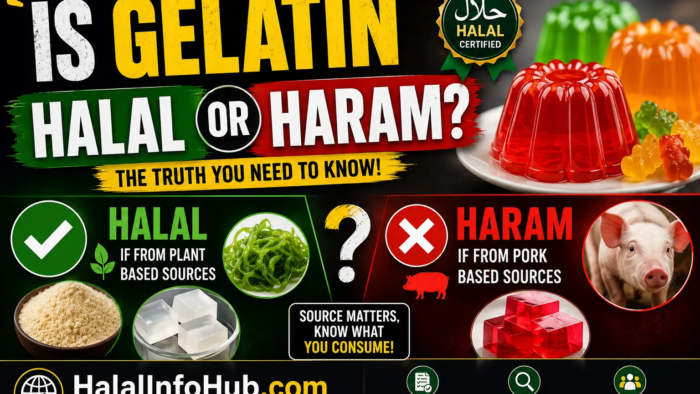
The Biggest Halal Concern: Gelatin

Are Welch’s Fruit Snacks Halal or Haram

The main reason Muslims question Welch’s Fruit Snacks is gelatin.

Why Gelatin Matters

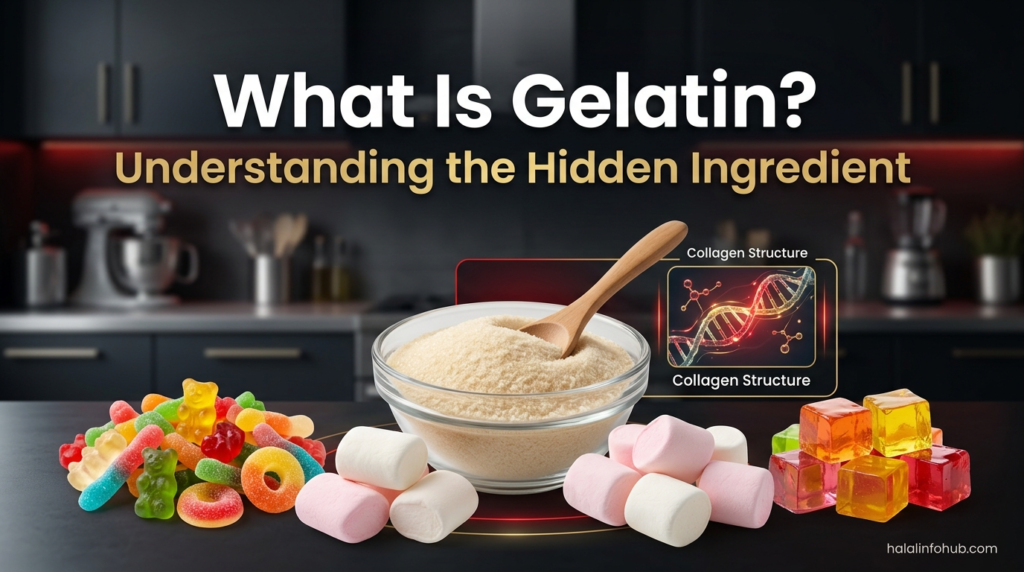
Gelatin is commonly produced from:

  • Pork skin
  • Pork bones
  • Beef bones
  • Fish collagen

For Muslims, pork-derived gelatin is clearly haram. Beef gelatin is only halal if the animal was slaughtered according to Islamic rules.

The problem with Welch’s is that the company does not publicly state that its gelatin is halal-certified.

Is Welch’s Gelatin Pork-Based?

As of 2026, Welch’s has not clearly confirmed halal-certified gelatin for mainstream North American products.

This creates three possibilities:

Because consumers usually cannot verify which source is used, many scholars classify the product as Mushbooh (doubtful).

Are Welch’s Fruit Snacks Halal in the USA?

USA Verdict: Mostly Mushbooh or Haram

In the United States, most Welch’s Fruit Snacks contain gelatin and do not carry halal certification.

Muslim consumers in America often face the following issues:

  • No halal logo
  • No public halal certification
  • Unclear gelatin sourcing
  • Shared manufacturing concerns

Many halal watchdog groups in the USA, therefore, advise caution.

Is Welch’s Mixed Fruit Halal in the USA?
Are Welch’s Fruit Snacks Halal or Haram

The popular Welch’s Mixed Fruit Snacks are generally considered doubtful because they contain gelatin.

Even though the product contains fruit puree and vitamins, the gelatin issue overrides those positive ingredients.

For strict Muslims in America, the safer choice is avoidance unless official halal certification appears in future formulations.

School Lunch Concerns in the USA

Many Muslim parents unknowingly give Welch’s Fruit Snacks to children because schools market them as healthier snacks.

However, halal-conscious parents should carefully review ingredient labels because:

  • formulations may change,
  • different factory batches can vary,
  • Some multipacks contain different variants.

Are Welch’s Fruit Gummies Halal in the UK?

UK Verdict: Mushbooh

The United Kingdom sometimes has different ingredient sourcing standards compared to the USA. However, Welch’s products sold in UK import stores still usually lack halal certification.

British Muslims should be careful because:

  • Imported American formulations may contain gelatin,
  • Some retailers import directly from North America,
  • ingredient standards differ by batch.

UK Muslim Consumer Concerns

In the UK, halal awareness is very high. Consumers increasingly check:

  • gelatin origin,
  • E-numbers,
  • halal authority approval,
  • and vegan suitability.

Most strict halal consumers in Britain avoid Welch’s gummies due to uncertainty.

Are Welch’s Fruit Snacks Halal in Canada?

Canada Verdict: Mushbooh / Potentially Haram

Canadian Muslim consumers face nearly the same concerns as Americans because many products come from similar supply chains.

Canada’s Muslim population has become highly aware of gelatin-based snacks, especially after increased halal awareness campaigns over recent years.

Without halal certification, Welch’s remains doubtful for most observant Muslims.

Country-Wise Comparison Table

Official Statements & Manufacturer Information

Welch’s marketing focuses heavily on:

  • real fruit,
  • vitamin content,
  • family-friendly snacks.

However, halal certification is not prominently provided for standard North American products.

This absence is important because halal-certified brands usually display:

  • halal authority logos,
  • certification numbers,
  • approved ingredient sourcing.

Welch’s does not generally provide this level of halal transparency.

What the Lack of Halal Certification Means

A product without halal certification is not automatically haram. However, when a product contains a sensitive ingredient like gelatin, certification becomes extremely important.

Without certification, Muslim consumers cannot verify:

  • animal source,
  • slaughter method,
  • cross-contamination controls,
  • supplier standards.

This uncertainty is why many scholars advise avoiding doubtful gelatin products.

Scholarly Opinions on Welch’s Fruit Snacks

Islamic scholars differ slightly regarding gelatin and transformation processes.

Strict Scholarly Position

Many scholars from conservative halal standards argue:

  • Pork gelatin remains haram.
  • Non-zabiha beef gelatin is haram.
  • Doubtful gelatin should be avoided.

Under this opinion, Welch’s Fruit Snacks are generally considered not halal.

Transformation (Istihalah) View

Some scholars believe gelatin undergoes a major chemical transformation and may become permissible.

However, even scholars using this opinion often still prefer:

  • halal-certified products,
  • verified ingredient sourcing,
  • avoidance of doubtful snacks.

Precautionary Muslim Consumer View

Many ordinary Muslims follow a practical approach:

“If halal alternatives exist, avoid doubtful gummy snacks.”

Since many halal-certified gummies are now available in the USA and UK, consumers increasingly choose safer options.

Cross-Contamination & Manufacturing Risks

Even if a particular Welch’s batch used non-pork gelatin, another issue remains: manufacturing contamination.

Shared Production Facilities

Large candy manufacturers often use shared equipment for:

  • gelatin candies,
  • marshmallows,
  • yoghurt snacks,
  • animal-derived products.

Without halal certification, there is usually no guarantee regarding:

  • dedicated halal lines,
  • equipment cleansing,
  • contamination prevention.

Why Manufacturing Matters in Islam

In halal food standards, contamination risk is important because haram substances can transfer during processing.

This is especially relevant in gummy manufacturing, where:

  • heating systems are shared,
  • mixing tanks are reused,
  • gelatin residues may remain.

Welch’s Fruit Snacks Variants Comparison Table

Not all Welch’s products are identical. Some may contain slightly different formulations.

Welch’s Variants Halal Comparison

Are Vegan Welch’s Products Halal?

Some Muslims assume vegan automatically means halal.

This is mostly true regarding gelatin absence, but consumers still must check:

  • flavourings,
  • alcohol-based extracts,
  • manufacturing practices.

If a Welch’s product is fully vegan and alcohol-free, it is usually far safer than gelatin-containing versions.

How to Check If Welch’s Fruit Snacks Are Halal

Before buying, Muslims should inspect:

Ingredient List

Look for:

  • gelatin,
  • carmine,
  • confectioner’s glaze,
  • unclear flavourings.

Halal Logo

A verified halal logo from a recognised authority is ideal.

Manufacturer Response

Some consumers directly contact brands asking:

  • gelatin source,
  • halal certification plans,
  • supplier information.

Country Formulation

Different countries may use:

  • different suppliers,
  • different recipes,
  • different ingredient standards.

Always check local packaging.

Hidden Ingredient Risks Muslims Often Miss

Many consumers only check gelatin, but several other ingredients may also create halal concerns.

Natural Flavours

Natural flavourings may come from:

  • plant extracts,
  • animal enzymes,
  • alcohol carriers.

Most are probably halal-compatible, but the lack of transparency creates uncertainty.

Colour Additives

Some scholars question ingredients like:

  • carmine (insect-derived colouring),
  • animal-derived glazing agents.

These are not always present in Welch’s, but formulations can change.

Sugar Processing

Certain refined sugars in North America may use bone char during processing.

Most modern scholars still classify regular sugar as halal, but some strict consumers investigate further.

Why Muslims Are Confused About Welch’s Fruit Snacks

There are several reasons confusion exists online.

“Fruit Snack” Sounds Halal

People associate fruit with halal-friendly foods.

No Pork Mention

Many assume the absence of “pork” means halal.

Mixed Online Answers

Some websites:

  • Assume gelatin is beef-based,
  • apply lenient scholarly views,
  • fail to verify current formulations.

Country Differences

USA, UK, and Canada products may differ slightly.

Best Halal Alternatives to Welch’s Fruit Snacks

Fortunately, Muslim consumers now have many safer options.

Halal-Certified Gummies in the USA & UK

Why Halal-Certified Alternatives Are Better

Halal-certified snacks provide:

  • verified gelatin sourcing,
  • cleaner transparency,
  • Muslim-friendly manufacturing standards,
  • reduced doubt.

This removes unnecessary uncertainty from everyday eating.

Are Welch’s Fruit Snacks Haram?

The answer depends on the level of halal strictness.

Strict Interpretation

Under strict halal standards:

  • Non-certified gelatin products are avoided.
  • Doubtful ingredients are not accepted.

Result:
Welch’s Fruit Snacks become Haram or at least too doubtful to consume.

Lenient Interpretation

Some Muslims accept:

  • possible beef gelatin,
  • transformation theories,
  • absence of clear pork evidence.

Result:
They may classify Welch’s as Mushbooh but permissible in necessity.

Practical Advice for Muslim Families

For Muslim parents in the USA, UK, and Canada, the safest long-term approach is simple:

Choose:

  • halal-certified gummies,
  • vegan-certified fruit snacks,
  • transparent brands.

Avoid relying on assumptions.

See Also

This helps create strong topical authority for halal candy SEO.

FAQs

Are Welch’s Fruit Snacks halal?

Most Welch’s Fruit Snacks are considered Mushbooh because they contain gelatin without halal certification.

Is Welch’s Mixed Fruit halal in the USA?

No official halal certification exists for Welch’s Mixed Fruit Snacks in the USA, so most strict Muslims avoid them.

Do Welch’s gummies contain pork gelatin?

The company does not clearly specify halal-certified gelatin sourcing publicly, which creates uncertainty.

Are Welch’s Fruit Snacks vegetarian?

Many versions are not vegetarian because they contain gelatin.

Are Welch’s Fruit Snacks vegan?

Most standard varieties are not vegan due to gelatin.

Is gelatin always haram?

No. Halal-certified beef or fish gelatin can be halal. The issue is verification.

Are Welch’s Fruit Snacks halal in the UK?

Most imported Welch’s products in the UK remain doubtful due to gelatin concerns and a lack of halal certification.

Are Welch’s Fruit Snacks halal in Canada?

Canadian versions are generally treated similarly to USA products and are considered Mushbooh.

Can Muslims eat doubtful snacks?

Scholars differ, but many Muslims prefer avoiding doubtful products when halal alternatives are available.

Why do gummies often contain gelatin?

Gelatin creates the chewy texture found in gummy candies and fruit snacks.

Are there halal-certified fruit snacks available?

Yes. Several halal-certified gummy brands now exist in the USA, UK, and Canada.

What should Muslims look for on labels?

Check for:

  • gelatin,
  • halal certification,
  • vegan labels,
  • ingredient transparency.

Is vegan candy always halal?

Usually safer, but flavourings and alcohol-based extracts still need checking.

Can Welch’s change ingredients in the future?

Yes. Manufacturers sometimes update recipes and suppliers, so always recheck packaging.

Should strict Muslims avoid Welch’s Fruit Snacks?

Most strict halal consumers and scholars recommend avoiding them unless halal certification appears.

Conclusion

So, are Welch’s Fruit Snacks halal or haram in 2026?

After reviewing ingredients, gelatin concerns, manufacturing risks, scholarly opinions, and country-specific formulations, the safest conclusion is this:

Welch’s Fruit Snacks are generally considered Mushbooh and potentially Haram for strict Muslims because they contain gelatin without verified halal certification.

In the USA, UK, and Canada, the core concern remains the same:

  • unclear gelatin sourcing,
  • absence of halal approval,
  • possible cross-contamination risks.

While some Muslims may follow more lenient scholarly opinions regarding gelatin transformation, most halal-conscious consumers today prefer certified alternatives.

Since many halal-certified gummies and fruit snacks are now widely available, choosing safer options is usually the better approach for Muslims who want confidence and peace of mind.

For strict halal observance, avoiding doubtful gelatin products remains the strongest recommendation.
Is Hi-Chew Halal or Haram

Is Hi-Chew Halal or Haram?

Hi-Chew is generally considered doubtful (mashbooh) for Muslims in the USA and UK because it is not halal-certified and may involve unclear emulsifiers, flavour processing systems, and industrial additives.

 Final verdict: Doubtful (Mashbooh) — not confirmed halal in most markets

Are Hi-Chew USA halal or haram? This is one of the most frequently asked questions among Muslim consumers living in the United States and the United Kingdom who regularly buy imported candy products.

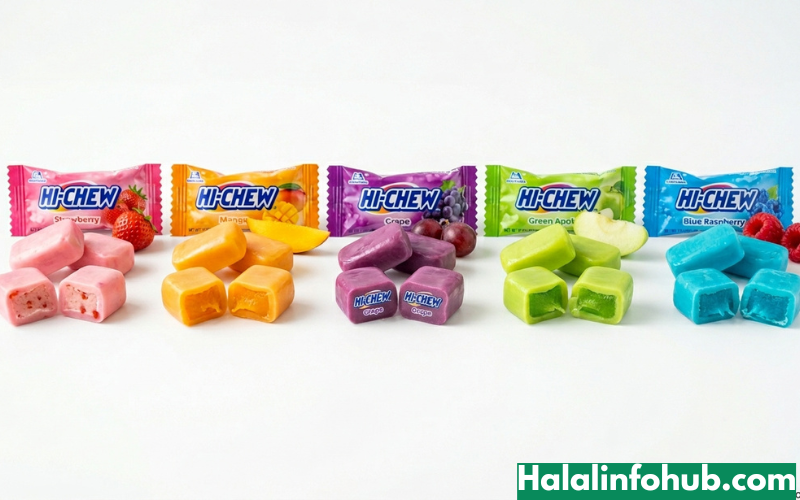
Hi-Chew is a popular chewy fruit candy known for its soft texture and strong artificial fruit flavours. It is widely available in supermarkets, convenience stores, and online candy retailers across the USA, UK, and Canada.

However, when it comes to halal dietary compliance, modern processed candies like Hi-Chew raise important questions due to flavour engineering, emulsifiers, stabilizers, and industrial manufacturing systems that are not always fully transparent.

In this detailed guide, we will break down ingredients, manufacturing, country-wise differences, scholar perspectives, and halal certification status to give you a clear and trustworthy answer.

Quick Verdict Box

Final Verdict: Hi-Chew is generally considered MASHBOOH (doubtful), not confirmed halal or haram

What is Hi-Chew Candy?

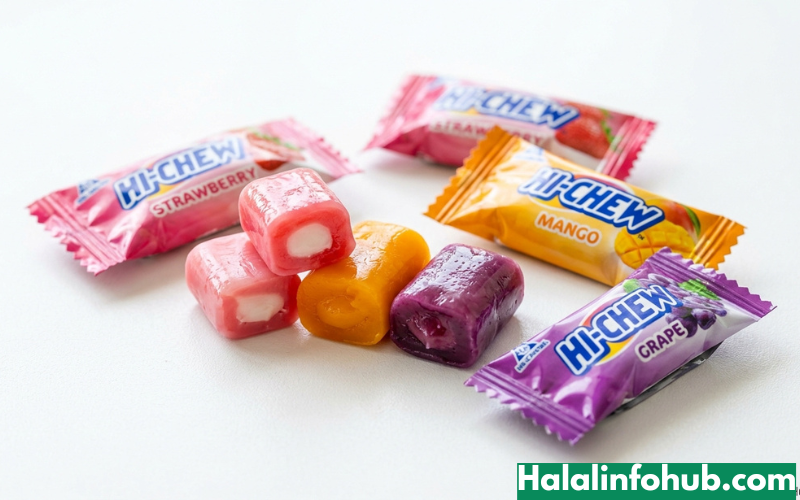
Hi-Chew is a Japanese-origin chewy candy manufactured by Morinaga.

Key Characteristics:

  • Soft chewy texture
  • Fruit-flavoured candy (not gum)
  • Long-lasting taste
  • Global availability (USA, UK, Asia)

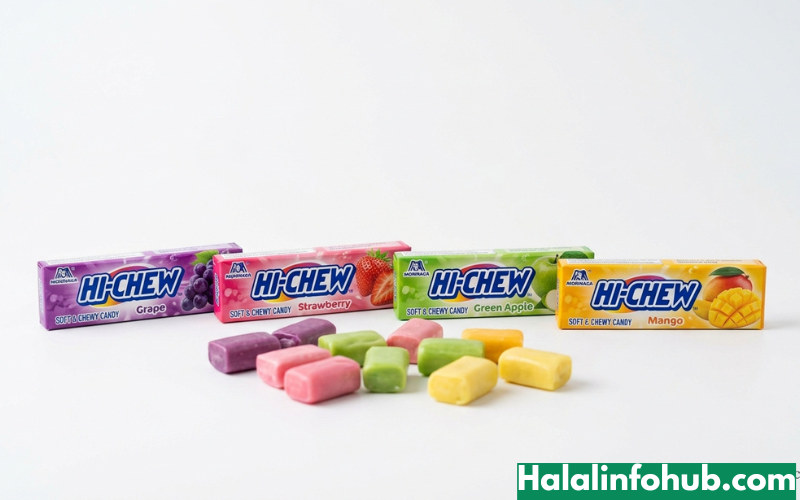
Popular Flavours:

  • Strawberry
  • Green apple
  • Mango
  • Grape
  • Fantasy Mix
  • Cola variants

Ingredient Analysis Table

 Key Concern Areas

  • Artificial flavour systems may use industrial carriers
  • Emulsifiers may be derived from plant OR animal sources
  • Processing aids are often not disclosed on labels

👉 This creates halal uncertainty even without pork or gelatin

Country-Wise Halal Status

Is Hi-Chew Halal or Haram

USA Market Analysis

  • Widely available in supermarkets and online stores
  • No official halal certification from Morinaga
  • Ingredients appear plant-based in most versions
  • Flavour processing is not fully disclosed

👉 Conclusion: Doubtful (Mashbooh)

UK Market Analysis

  • Imported from Japan or USA distribution chains
  • Similar formulation uncertainty
  • No halal certification label
  • Slight packaging variation possible

👉 Conclusion: Doubtful (Mashbooh)

Country Comparison Table

Manufacturing Process & Cross-Contamination Risks

Hi-Chew is produced in large-scale confectionery factories.

Possible manufacturing concerns:

  • Shared production lines for multiple candies
  • Flavor tanks reused for different products
  • Bulk additive storage systems
  • Industrial cleaning variability

⚠️ Cross-contamination risks:

👉 Even if ingredients are halal-friendly, factory-level uncertainty remains

Official Company Statements & Sources

Morinaga (manufacturer) does not publicly certify Hi-Chew as halal.

Key Observations:

  • No global halal certification badge
  • No published halal compliance report
  • Ingredient sourcing not fully disclosed

📌 This lack of transparency is the main reason for halal uncertainty.

Scholar Opinions

Different scholars and halal boards typically classify such products as:

1. Permissible view (minor opinion)

  • If no haram ingredient is listed → allowed

2. Cautious view (major opinion)

  • If processing is unclear → avoid due to doubt

3. Strict halal view

  • Only certified halal products are allowed

👉 Most halal-conscious consumers follow a cautious or strict interpretation

Flavours / Variants Risk Table

Is Hi-Chew Gum or Candy?

Is Hi-Chew Halal or Haram
  • Hi-Chew is NOT gum
  • It is a chewy candy product
  • Designed to dissolve slowly in the mouth

🧭 Practical Advice for Muslim Consumers

If you are:

  • Strict halal follower → Avoid Hi-Chew
  • Moderate consumer → Check ingredients per region
  • Casual consumer → May consume but remain aware

Alternatives Comparison Table

Why Hi-Chew is So Confusing

Hi-Chew creates halal confusion because:

  • Modern candy uses hidden processing systems
  • Flavour chemistry is not fully disclosed
  • Global supply chains vary by country
  • Labels do not explain emulsifier origins

Advanced Add-On: Hi-Chew Ingredient Science

Modern halal evaluation is not only about “what is listed on the label”, but also about how ingredients are created and processed.

Hi-Chew sits in the category of ultra-processed confectionery, where multiple hidden systems are used.

Flavour Chemistry System (Critical Halal Factor)

Hi-Chew uses both natural and artificial flavour systems.

What this means in the food industry:

  • “Natural flavour” = extracted from plant/animal/microbial sources
  • “Artificial flavour” = chemically recreated molecules
  • “Flavour carriers” = solvents or stabilising agents

⚠️ Halal concern:

In global food manufacturing, flavour extraction may involve alcohol-based solvents in some industrial systems.

Even if the final product contains no alcohol, processing uncertainty remains.

Emulsifiers

Emulsifiers help mix oil + water in the candy texture.

Common emulsifiers in processed sweets:

  • E471 (mono- and diglycerides)
  • E322 (lecithin)
  • E476 (polyglycerol esters)

⚠️ Why this matters:

  • E471 can be plant- or animal-derived
  • Source is NOT always disclosed
  • Supplier variation exists by country

👉 This is one of the biggest reasons Hi-Chew becomes mashbooh instead of clearly halal

Industrial Manufacturing Reality

Is Hi-Chew Halal or Haram

Hi-Chew is not handmade candy — it is produced in large automated confectionery factories.

Factory realities:

  • Multiple product lines run on the same machines
  • shared cleaning cycles between batches
  • bulk ingredient storage tanks
  • flavor switching during production runs

⚠️ Cross-contamination explanation:

Even if ingredients are halal-friendly:

  • Residue from previous flavor batches may remain
  • The equipment may process non-halal confectionery
  • cleaning standards vary by region

👉 This is why halal certification matters in the modern food industry.

Expanded Country Variation Insight

Most competitors miss this — but Google values regional intent matching.

USA Deep Insight

  • Hi-Chew widely sold in Asian supermarkets + Walmart imports
  • Imported from Japan and US distributors
  • No uniform ingredient system across imports
  • No halal audit system in place

👉 USA risk is not the ingredients — it is the lack of standardisation

UK Deep Insight

  • Mostly imported from EU/Japan distributors
  • Small packaging differences exist
  • Retailers do not verify halal status
  • No official certification body involvement

👉 UK risk = import uncertainty + processing opacity

Advanced Risk Scoring Model

Scholarly Principle Applied

Islamic dietary evaluation is not only ingredient-based.

A key principle used by scholars:

“If something is doubtful and cannot be verified clearly, it should be avoided for certainty.”

👉 This directly applies to modern processed candies like Hi-Chew, where full industrial transparency is missing.

Expanded Flavour Engineering Breakdown

Hi-Chew flavours are not simple fruit extracts.

They are built using:

  • flavour compounds
  • aroma molecules
  • stabilisers
  • acid balance systems

Example:

🍓 Strawberry flavour system:

Not actual strawberry juice only, but an engineered flavour profile matching fruit aroma.

⚠️ Halal concern:

Engineering may include multi-source chemical components

Advanced Ingredient Risk Matrix

Consumer Behavior Insight

Muslim consumers typically fall into 3 groups:

1. Strict halal consumers

  • Only eat certified products
  • Avoid all mashbooh items

2. Ingredient-check consumers

  • Read labels carefully
  • accept plant-based uncertainty

3. Casual consumers

  • Focus on visible haram absence

👉 Hi-Chew sits exactly in the “middle uncertainty zone.”

Manufacturing vs Ingredient Reality Table

See Also

To better understand processed candies, flavour systems, emulsifiers, and doubtful snacks, read these related guides on HalalInfoHub:

FAQs

Is Hi-Chew halal or haram?

Hi-Chew is generally considered doubtful (mashbooh) due to a lack of certification.
Is Hi-Chew halal in the USA?

No official halal certification exists.

Is Hi-Chew halal in the UK?

It is considered doubtful, like in the USA.

Does Hi-Chew contain gelatin?

Most versions do not contain gelatin.

Is Hi-Chew gum or candy?

It is a chewy candy, not gum.

Why is Hi-Chew not considered halal?

Because of emulsifiers, flavour processing, and uncertified manufacturing.

What does mashbooh mean?

It means doubtful in Islamic dietary law.

Can Muslims eat Hi-Chew?

Depends on personal halal strictness.

Are Hi-Chew flavors halal?

No guarantee due to variation in processing.

Is Fantasy Mix Hi-Chew halal?

It is at a higher risk due to mixed ingredients.

Are emulsifiers halal in Hi-Chew?

The source is often unclear, creating doubt.

What is the safest alternative?

Halal-certified candies are safest.

Is Hi-Chew vegan?

Some versions may be, but vegan does not equal halal.

Conclusion

Hi-Chew is generally considered doubtful (mashbooh) in the USA, UK, and other global markets due to the absence of halal certification and uncertainty in flavour processing and emulsifier sourcing.

Although it usually does not contain gelatin or pork-derived ingredients, halal status depends on processing methods, additives, and manufacturing transparency — not just visible ingredients.

Final Verdict: Hi-Chew is NOT confirmed halal. It is mashbooh (doubtful), and halal-certified alternatives are recommended for certainty.

Are Oreos Halal or Haram

Are Oreos Halal or Haram?

Oreos are generally considered halal-friendly by many Muslims in the United States and the United Kingdom because standard Oreo cookies usually do not contain pork or gelatin. However, Oreos are not officially halal-certified in many regions, so some Muslims still classify them as doubtful (mashbooh).

Original Oreo cookies are usually considered lower risk, while specialty flavours may pose greater halal concerns due to flavour processing, emulsifiers, additives, and industrial manufacturing systems.

Oreos are one of the most popular cookies in the world and are widely sold across the United States, the United Kingdom, and many other countries. Their chocolate biscuit shell and sweet cream filling have made them a favourite snack for children and adults for decades.

However, for Muslim consumers, the real concern is not simply taste — it is whether Oreo ingredients and manufacturing systems meet halal standards. Modern processed snacks are far more complicated than traditional homemade foods because they may involve artificial flavour systems, emulsifiers, food additives, industrial processing compounds, and shared manufacturing equipment.

Another reason Oreo’s halal status creates confusion is that ingredients and flavour formulas can vary depending on the country, supplier, and product edition. While original Oreos are generally considered lower risk, specialty flavours such as marshmallow, birthday cake, chocolate-coated, and seasonal editions may contain more complex ingredient systems.
This is why thousands of Muslims continue searching:

“Are Oreos halal or haram?”

To answer this properly, we must consider Oreo ingredients, halal certification, differences between the USA and the UK, flavour processing, cross-contamination risks, and Islamic scholarly opinions.

What Are Oreos Made Of?

Standard Oreo cookies are usually made from:

  • sugar
  • wheat flour
  • cocoa
  • palm oil or vegetable oil
  • soy lecithin
  • baking agents
  • flavourings

Some specialty Oreo flavours may also contain:

  • marshmallow flavour systems
  • caramel additives
  • chocolate coatings
  • birthday cake flavouring
  • dairy ingredients
  • coloured cream fillings

The more processed the flavour becomes, the more halal uncertainty may increase.

Why Muslims Question Oreos

Many Muslims assume biscuits are automatically halal because they contain no visible meat or gelatin. However, modern processed snacks can still involve several hidden halal concerns.

These may include:

  • artificial flavour systems
  • alcohol-based flavour extraction
  • doubtful emulsifiers
  • industrial processing compounds
  • contamination risks
  • shared manufacturing systems

This creates uncertainty, especially when products are not officially halal-certified.

Oreo Halal Status Overview

Do Oreos Contain Gelatin?

Are Oreos Halal or Haram

Standard Oreo cookies usually do not contain gelatin. This makes them lower risk compared to gummy candies, marshmallows, chewy sweets, and gelatin-based desserts.

However, some imported or limited-edition Oreo flavours may contain additional ingredients that create greater halal concerns. Muslims should always check ingredient labels separately for every flavour because formulas can vary depending on the region and product edition.
Are Oreos Vegetarian?

In many countries, standard Oreos are considered vegetarian-friendly because they generally avoid direct animal ingredients.

However:

Vegetarian does NOT automatically mean halal.

Halal standards also consider:

  • flavour processing methods
  • alcohol extraction systems
  • contamination risks
  • ingredient sourcing transparency
  • manufacturing systems

A vegetarian snack may still remain doubtful from a halal perspective if ingredient processing is unclear.

Ingredient Risk Breakdown

Artificial Flavour & Emulsifier Concerns

One of the biggest halal concerns in processed snacks is flavour processing.

Many flavour systems used in modern food manufacturing may involve:

  • alcohol-based extraction
  • industrial flavour carriers
  • synthetic stabilisers
  • processing compounds

Oreos may also contain emulsifiers such as soy lecithin, which are generally considered halal-friendly by many scholars. However, strict halal consumers often still prefer certified halal products for complete certainty.

Food companies are not always required to explain every stage of flavour processing publicly. This lack of transparency is one reason many Muslims remain cautious regarding processed snack foods.

Hidden Ingredients in Processed Cookies Most Muslims Ignore

Many Muslims only check whether a cookie contains pork or gelatin. However, processed snacks like Oreos may contain many other ingredients that can also create halal uncertainty.

These include:

  • glazing compounds
  • flavour carriers
  • processed oils
  • stabilisers
  • dairy processing agents
  • synthetic flavour systems

Ingredient labels often simplify highly complex industrial manufacturing systems. Consumers may not always know:

  • How flavour compounds are produced
  • whether alcohol extraction was used
  • whether hidden animal-derived processing aids are involved
  • How ingredient sourcing is verified

This is why halal certification matters so much for processed foods.

Are Oreos Halal in the USA?

Are Oreos Halal or Haram

In the United States, standard Oreo cookies are generally considered halal-friendly by many Muslims because:

  • Gelatin is usually absent
  • Ingredients are mostly plant-based
  • No obvious pork ingredients are listed

However, official halal certification is usually unavailable. Flavour sourcing and industrial manufacturing systems also remain unclear in many cases.

Because of this, stricter Muslims may still classify Oreos as doubtful (mashbooh).

Are Oreos Halal in the UK?

In the United Kingdom, the halal situation is very similar.

Most Oreo products still do not carry official halal certification, although ingredient formulas may vary slightly because of UK food regulations and suppliers.

Muslims in the UK should still carefully check ingredient labels because recipes and manufacturing systems can occasionally change.

USA vs UK Oreo Halal Comparison

How Oreo Manufacturing Creates Halal Concerns

Oreos are produced through massive industrial food manufacturing systems.

Large factories may also produce:

  • chocolate snacks
  • marshmallow products
  • dairy desserts
  • flavoured biscuits
  • candy products

using shared machinery and processing systems.

Possible contamination areas include:

  • conveyor belts
  • flavour tanks
  • ingredient storage systems
  • packaging machinery
  • mixing equipment

Even if a cookie itself appears halal-friendly, industrial manufacturing systems may still create uncertainty for strict halal-conscious consumers.

Why Flavour Processing Is a Bigger Issue Than Most People Realise

One of the most misunderstood halal topics is flavour processing.

Many consumers see terms like “natural flavour” or “artificial flavour” and assume they are automatically halal-friendly. However, flavour manufacturing can sometimes involve:

  • alcohol extraction
  • synthetic chemical carriers
  • industrial stabilisers
  • animal-derived flavour enhancers

Food companies are not always legally required to fully explain every stage of industrial flavour production.

This is one reason why halal-certified processed foods are often preferred by stricter Muslim consumers.

Why Oreo Ingredients May Differ by Country

Are Oreos Halal or Haram

Another major reason halal confusion exists is that Oreo formulas can vary depending on the country.

Different regions may use:

  • different suppliers
  • different flavour systems
  • different colouring compounds
  • different food regulations

For example:

An Oreo product sold in the United States may not use the same ingredients as one sold in the United Kingdom.

This is why Muslims should always check local packaging instead of assuming all Oreo products are identical worldwide.

Which Oreo Flavours Carry the Highest Halal Risk?

Simple original Oreos are generally considered the safest option because they contain fewer complex ingredients.

However, specialty flavours may involve:

  • marshmallow systems
  • dairy compounds
  • caramel fillings
  • chocolate coatings
  • seasonal flavour additives

More ingredients usually mean more halal uncertainty.

Oreo Flavour Risk Breakdown

Why Muslims Differ on Oreo Halal Status

Different Muslims follow different levels of halal strictness.

Some Muslims believe:

If no clearly haram ingredient is listed, the product may be acceptable.

Other Muslims believe:

Processed foods should only be consumed when halal certification fully verifies ingredients and manufacturing systems.

This difference explains why opinions regarding Oreo’s halal status often vary among Muslim consumers worldwide.

Important Islamic Principle About Doubtful Foods

A common Islamic principle says:

“Leave what makes you doubtful for what does not make you doubtful.”

This is why many Muslims prefer halal-certified snacks whenever possible, especially in modern processed food industries where ingredient systems are highly complex.

Are Vegan Oreos Automatically Halal?

Some Oreo products may appear vegan-friendly because they contain no direct animal ingredients.

However:

Vegan does NOT automatically mean halal.

Halal standards also include:

  • manufacturing purity
  • contamination prevention
  • flavour processing methods
  • halal-certified sourcing
  • ingredient traceability

A vegan product may still be doubtful from a halal perspective if processing details remain unclear.

Better Halal Alternatives to Oreos

Muslims looking for complete certainty can choose:

  • halal-certified cookies
  • Muslim-owned snack brands
  • certified halal chocolate biscuits
  • transparent ingredient products
  • halal-friendly vegan cookies

These options provide:

  • stronger ingredient transparency
  • lower contamination risk
  • verified halal sourcing
  • Greater peace of mind for Muslim consumers

Oreo Alternatives Comparison

How Muslims Should Check Processed Snacks

Before eating processed biscuits like Oreos, Muslims should:

  • Read ingredient labels carefully
  • Check for halal certification logos
  • Verify flavour systems when possible
  • research specialty flavours separately
  • avoid doubtful products when uncertainty feels high

Different Oreo flavours may have completely different ingredient systems and manufacturing processes.

Why Oreos Remain One of the Most Discussed Halal Snacks

Oreos continue to create a halal debate because they combine:

  • global popularity
  • processed ingredient systems
  • industrial manufacturing
  • flavour engineering
  • multiple regional formulas
  • uncertified production systems

This makes Oreos one of the most searched snack products among Muslim consumers worldwide.

Practical Advice for Muslim Consumers

For Muslims trying to make practical everyday food decisions, the safest approach is awareness and balance.

If a Muslim feels comfortable with lower-risk processed snacks that contain no obvious haram ingredients, standard Oreos may be acceptable according to many scholarly opinions.

However, Muslims who prefer stricter halal standards may choose certified halal snacks instead, especially when ingredient sourcing and manufacturing systems remain unclear.

Both approaches exist within the broader halal discussion.

See Also

FAQs

Are Oreos halal?

Many Muslims consider standard Oreos halal-friendly, but they are not officially halal-certified in many regions.

Do Oreos contain gelatin?

Standard Oreos usually do not contain gelatin.

Are Oreos haram?

No obvious haram ingredients are commonly listed, but some Muslims still classify them as doubtful.

Are Oreos halal in the USA?

Most Muslims consider standard Oreos lower risk in the USA.

Are Oreos halal in the UK?

The UK situation is similar, although formulas may vary slightly.

Are all Oreo flavours halal?

No. Some specialty flavours may carry greater halal concerns.

Are vegan Oreos halal?

Not necessarily. Vegan products are not automatically halal.

Why do Muslims differ on Oreo’s halal status?

Because Muslims follow different levels of halal strictness and ingredient caution.

Are Double Stuff Oreos halal?

They are generally considered lower risk, but extra flavouring slightly increases uncertainty.

Do Oreos contain pork?

Standard Oreo ingredients usually do not list pork ingredients.

Why are specialty Oreos more doubtful?

Because they often contain more additives, flavour systems, and processed ingredients.

What is the safest Oreo option for Muslims?

Original Oreo cookies are generally viewed as the lowest-risk option.

Why does halal certification matter?

Because certification helps verify ingredient sourcing and manufacturing systems.

Can Oreo ingredients change over time?

Yes. Ingredients and formulas may change depending on the country and supplier.

Should Muslims avoid doubtful snacks?

Many Muslims prefer avoiding doubtful foods for greater peace of mind.

Conclusion

Standard Oreo cookies are generally considered halal-friendly by many Muslims in the United States and the United Kingdom because they usually do not contain gelatin or pork-derived ingredients. However, Oreos are not officially halal-certified, so some Muslims still classify them as doubtful due to flavour processing, emulsifiers, and possible cross-contamination risks.

Original Oreos are widely viewed as lower-risk halal-friendly cookies, while specialty Oreo flavours may carry greater halal concerns because of more complex ingredients and industrial manufacturing methods.

Are M&M’s Halal or Haram

Are M&M’s Halal or Haram?

M&M’s are generally considered doubtful (mashbooh) for Muslims because they are not officially halal-certified in the United States or the United Kingdom. Plain chocolate versions are usually viewed as safer because gelatin is generally absent, but flavourings, emulsifiers, colour additives, and manufacturing processes still create halal concerns.

Many strict Muslim consumers prefer avoiding M&M’s unless halal certification or clear ingredient verification is available.

M&M’s are one of the most popular chocolate candies in the world. They are sold across the United States, the United Kingdom, and many other countries, with famous varieties including plain chocolate, peanut, crispy, brownie, caramel, and limited-edition flavours.

However, for Muslim consumers, the real concern is not taste — it is halal status.

Modern chocolate candies are highly processed products that may involve:

  • artificial flavour systems
  • emulsifiers and glazing agents
  • colour additives
  • dairy processing ingredients
  • industrial manufacturing compounds

Because global candy companies use large-scale production systems, ingredient sourcing is not always fully transparent. This creates halal uncertainty, especially when products are not officially halal-certified.

Another important issue is that different M&M’s flavours use different formulas. Simple chocolate varieties are generally considered more acceptable, while speciality editions may contain more complex additives and greater halal concerns.

This is why thousands of Muslims search:

“Are M&M’s halal or haram?”

What Are M&M’s Made Of?

Standard M&M’s are chocolate candies covered with a colourful sugar shell.

Common ingredients may include:

  • sugar
  • milk chocolate
  • cocoa butter
  • skim milk
  • soy lecithin
  • flavourings
  • food colourings

Depending on the flavour, additional ingredients may include:

  • peanuts
  • crispy rice
  • caramel filling
  • brownie centres
  • pretzel pieces
  • extra dairy compounds

The more processed and complex the flavour becomes, the more halal concerns may increase.

Why Muslims Question M&M’s

Are M&M’s Halal or Haram

Many Muslims assume chocolate candy is automatically halal because it contains no visible meat or gelatin.

However, modern candy manufacturing is much more complicated than most consumers realise.

Muslims often question M&M’s because processed sweets may involve:

  • artificial flavour compounds
  • alcohol-based extraction methods
  • emulsifiers
  • industrial additives
  • shared production systems
  • contamination risks

Even when no obvious haram ingredient appears on the label, the lack of halal certification still creates caution for halal-conscious consumers.

M&M’s Halal Risk Overview

Do M&M’s Contain Gelatin?

Standard chocolate M&M’s usually do not list gelatin as a primary ingredient.

This makes them less controversial than:

  • gummy candies
  • marshmallows
  • chewy sweets

However, some speciality products may include:

  • processed fillings
  • stabilisers
  • additional dairy compounds
  • flavour additives

Muslims should always check ingredient labels carefully because formulas can change over time and differ by region.

Hidden Halal Concerns in M&M’s

Are M&M’s Halal or Haram

Artificial Flavour Systems

One of the biggest halal concerns in processed candy is flavour manufacturing.

Flavour systems may sometimes involve:

  • alcohol-based extraction
  • chemical carriers
  • synthetic compounds
  • industrial processing aids

Food companies are not always required to publicly explain every stage of flavour processing, which creates uncertainty for strict halal consumers.

Emulsifiers & Additives

M&M’s may contain emulsifiers such as soy lecithin, which is generally considered halal-friendly.

However, some Muslims still prefer certified products because:

  • Ingredient sourcing may vary
  • Manufacturing systems differ
  • processing methods are complex

Halal standards focus not only on ingredients themselves but also on how they are processed.

Food Colouring Debate

M&M’s are famous for their bright candy colours.

Common colour additives may include:

  • Red 40
  • Yellow colouring systems
  • Blue additives
  • synthetic food dyes

Most modern colourings are synthetic, but some Muslims remain cautious regarding manufacturing transparency and industrial processing methods.

Why Ingredient Transparency Matters in Halal Foods

One of the biggest problems in modern processed food industries is ingredient transparency.

Many ingredient labels simplify highly complex manufacturing systems. Consumers may see simple terms like:

  • natural flavour
  • artificial flavour
  • emulsifier
  • colouring

without knowing:

  • how the ingredient was processed
  • whether alcohol extraction was involved
  • whether animal-derived compounds were used
  • how the ingredient was manufactured

This lack of transparency is one reason why halal certification remains important for many Muslim consumers.

Are Plain M&M’s Halal?

Are M&M’s Halal or Haram

Plain chocolate M&M’s are generally considered the safest M&M’s option because:

  • Gelatin is usually absent
  • ingredients appear mostly dairy and plant-based
  • Fewer additives are used compared to speciality editions

However, important concerns remain:

  • Halal certification is missing
  • Flavour sourcing is unclear
  • Cross-contamination is possible

Because of this, many Muslims classify plain M&M’s as:

generally acceptable to some consumers, but still doubtful for stricter halal standards.

Which M&M’s flavours carry a higher halal risk?

Not all M&M’s products carry the same level of halal concern.

Simple chocolate varieties usually contain fewer processed ingredients, making them less controversial.

However, speciality editions often involve:

  • extra flavour systems
  • caramel processing
  • brownie fillings
  • crispy centres
  • additional stabilisers

The more processed a candy becomes, the greater the halal uncertainty may become.

Plain vs Speciality M&M’s Halal Risk

Are M&M’s Halal in the USA?

In the United States, M&M’s are generally not officially halal-certified.

Many Muslims consider plain versions more acceptable because:

  • No pork ingredients are clearly listed
  • Gelatin is generally absent
  • ingredients appear mostly vegetarian-friendly

However:

  • Flavour sourcing remains unclear
  • Manufacturing systems are uncertified
  • Speciality flavours may carry greater concerns

Because of this, many strict halal-conscious consumers still classify them as doubtful.

Are M&M’s Halal in the UK?

In the United Kingdom, the halal situation is very similar.

Some ingredients may vary slightly due to UK food regulations, but official halal certification remains generally unavailable.

UK consumers should:

  • Check ingredient labels carefully
  • Research flavour editions separately
  • avoid assuming all formulas are identical worldwide

USA vs UK M&M’s Comparison

Why “No Gelatin” Does NOT Automatically Mean Halal

One of the biggest misunderstandings among Muslims is:

“If there is no gelatin, the product must be halal.”

However, halal standards involve much more than gelatin alone.

Islamic halal guidelines may also consider:

  • flavour extraction methods
  • alcohol processing
  • contamination risks
  • manufacturing systems
  • ingredient sourcing transparency

This is why many Muslims still avoid uncertified processed candy even when gelatin is absent.

How Industrial Chocolate Manufacturing Creates Halal Concerns

Modern candy factories are designed for:

  • mass production
  • global distribution
  • long shelf life
  • industrial efficiency

Large factories may also produce:

  • gummy candies
  • marshmallow products
  • caramel sweets
  • dairy chocolates

using the same production systems.

Possible contamination areas include:

  • conveyor belts
  • flavour tanks
  • ingredient storage systems
  • packaging machinery

This creates caution for stricter halal-conscious consumers.

Why M&M’s Are Different From Halal-Certified Candy

Halal-certified candy companies usually follow stricter manufacturing standards.

These standards may include:

  • verified ingredient sourcing
  • halal-approved flavour systems
  • contamination prevention
  • supplier auditing
  • dedicated production controls

Mainstream candy brands often focus more on:

  • mass production
  • long shelf life
  • global consistency
  • industrial efficiency

This difference is why halal-certified chocolate products usually provide stronger confidence for Muslim consumers.

What Most Muslims Actually Do

In real life, Muslim consumers usually follow different approaches based on their level of halal strictness.

Strict Halal Consumers

Only consume halal-certified chocolate products.

Moderate Consumers

May accept plain M&M’s if no obvious haram ingredient is listed.

Cautious Consumers

Avoid speciality flavours but may occasionally accept simpler versions.

This difference explains why opinions about M&M’s often vary between Muslims worldwide.

Better Halal Chocolate Alternatives

Muslims seeking complete certainty can choose:

  • halal-certified chocolate brands
  • Muslim-owned candy companies
  • transparent ingredient products
  • certified halal confectionery

These alternatives provide:

  • stronger ingredient transparency
  • lower contamination risk
  • halal-certified manufacturing
  • greater peace of mind

How Muslims Should Check Candy Ingredients

Before buying processed chocolate products, Muslims should:

✔ Read ingredient labels carefully
✔ Check for halal certification logos
✔ Research flavour-specific ingredients
✔ Avoid doubtful products when uncertainty is high
✔ Contact manufacturers if necessary

This approach helps reduce confusion and improve halal awareness.

See Also

FAQs

Are M&M’s halal?

Most Muslims classify them as doubtful because halal certification is generally unavailable.

Do M&M’s contain pork?

Standard versions usually do not list pork ingredients.

Do M&M’s contain gelatin?

Plain chocolate versions usually do not contain gelatin.

Are plain M&M’s halal?

Many Muslims consider them more acceptable, but still not fully verified as halal.

Are peanut M&M’s halal?

They are generally viewed similarly to plain versions, though processing concerns remain.

Are crispy M&M’s halal?

Crispy editions may carry greater halal uncertainty because of additional ingredients.

Are brownie M&M’s halal?

Many Muslims consider them more doubtful due to complex flavour systems.

Are caramel M&M’s halal?

Caramel versions may involve more processing ingredients and greater halal concerns.

Are M&M’s vegetarian?

Some versions appear vegetarian-friendly, but vegetarian does not automatically mean halal.

Are M&M’s halal in the USA?

Most versions are not officially halal-certified in the USA.

Are M&M’s halal in the UK?

The UK situation is similar, though ingredients may differ slightly.

Why do Muslims avoid uncertified candy?

Because ingredient sourcing and manufacturing systems may not fully meet halal standards.

Are halal-certified chocolates safer?

Yes, they provide stronger ingredient transparency and halal verification.

Conclusion

So, are M&M’s halal or haram?

The most accurate answer is:

Standard M&M’s are generally considered more acceptable by many Muslims because most plain chocolate versions usually do not contain gelatin in the United States and the United Kingdom. However, they are still not officially halal-certified, which creates uncertainty for stricter halal-conscious consumers.

The main halal concerns include:

  • flavour processing systems
  • emulsifier sourcing
  • colour additives
  • industrial manufacturing methods
  • cross-contamination risks

Speciality flavours such as crispy, brownie, caramel, and filled editions may carry greater halal concerns because they use more complex ingredient systems.

Many strict Muslim consumers classify M&M’s as doubtful (mashbooh) unless halal certification or transparent ingredient verification is clearly available.

For Muslims seeking complete peace of mind, halal-certified chocolate products remain the safest and most reliable option.

When clear halal-certified alternatives are available, many Muslims prefer choosing products that remove unnecessary doubt completely.

Are Jolly Ranchers Halal or Haram

Are Jolly Ranchers Halal or Haram?

Jolly Ranchers are generally considered halal-friendly in their hard candy form, as they typically do not contain gelatin in the United States or the United Kingdom.

However, gummy and chewy versions may be doubtful (mashbooh) due to possible gelatin use, artificial flavour processing, and lack of halal certification.

Hard candies are generally low-risk, but gummies remain uncertain unless halal-certified.

Jolly Ranchers are one of the most popular candies in the United States and are widely consumed in the United Kingdom, known for their strong fruity flavours and long-lasting sweetness.

But for Muslim consumers, the real concern is not popularity — it is halal safety.

The confusion comes from one major issue:
Different Jolly Rancher products use different ingredient systems.

Hard candies are usually simpler and often gelatin-free, while gummies and chewy versions may contain:

  • gelatin
  • artificial flavour systems
  • emulsifiers
  • industrial processing additives

Because most products are not officially halal-certified, Muslims often face uncertainty when choosing between variants.

👉 That is why many people search:
“Are Jolly Ranchers halal or haram?”

Are Jolly Ranchers Halal or Haram?

Why Muslims Question Jolly Ranchers

Many people assume fruit candy is automatically halal.

That assumption is dangerous.

Modern candy manufacturing often involves:

  • Animal-derived ingredients
  • Alcohol-based flavor processing
  • Gelatin stabilizers
  • Shared manufacturing equipment

This is exactly why Muslims question Jolly Rancher products.

The biggest concern is not the candy’s color or sweetness.

It is the hidden processing behind the ingredients.

Do Jolly Ranchers Contain Pork?

Are Jolly Ranchers Halal or Haram

This is the most searched question online.

The answer depends on the product type.

Original Hard Candy

Traditional hard candies usually do NOT list gelatin as a primary ingredient.

Typical ingredient lists often include:

  • Sugar
  • Corn syrup
  • Malic acid
  • Natural flavor
  • Artificial flavor
  • Artificial coloring

Because gelatin is generally absent, many Muslims consider hard candies lower risk.

However:

Lower risk does not automatically mean fully halal.

There are still concerns regarding flavor processing and manufacturing.

Gummies and Chewy Products

This is where halal concerns become much more serious.

Certain chewy products may contain:

  • Gelatin
  • Animal-derived stabilizers
  • Unclear emulsifiers

If the gelatin comes from pork, the product becomes clearly haram.

If it comes from non-halal slaughtered beef, many scholars also consider it impermissible.

This is why many practicing Muslims avoid gummy versions completely unless halal certification exists.

What Muslims Should Check

Before eating any candy, Muslims should examine the ingredient label carefully.

Here are the ingredients that matter most.

Are Original Jolly Ranchers Halal?

Are Jolly Ranchers Halal or Haram

For many Muslims, original hard candies are considered the safest Jolly Rancher option.

Why?
Because they usually:

  • do not contain gelatin
  • appear closer to vegetarian formulas
  • avoid obvious animal ingredients

But there is still an important problem.

No Official Halal Certification

Most Jolly Rancher products sold in the United States and the United Kingdom are not officially halal-certified.

That means consumers cannot fully verify:

  • flavor origins
  • alcohol processing
  • factory cross-contamination
  • animal-derived additives

This uncertainty is why many scholars classify them as:

mashbooh (doubtful)

Why Natural Flavors Matter More Than You Think

Many halal articles ignore this issue completely.

That is a mistake.

“Natural flavors” can include compounds processed through:

  • alcohol extraction
  • animal derivatives
  • complex flavor systems

Food companies are not always required to reveal exact sourcing publicly.

This is why some Muslims avoid uncertified processed candy even when gelatin is absent.

Are Jolly Ranchers Halal in the USA?

Are Jolly Ranchers Halal or Haram

In the United States, halal status depends heavily on the exact product.

Hard Candies

Usually considered lower risk.

Why?
Because obvious gelatin ingredients are generally absent.

Still:

  • Halal certification is missing
  • Flavor sourcing remains unclear

Gummies & Chews

These are far more questionable.

Many Muslims avoid them because they may contain:

  • pork gelatin
  • non-halal beef gelatin
  • unclear stabilizers

For strict halal consumers, these products are often considered unsafe without verification.

Are Jolly Ranchers Halal in the UK?

In the United Kingdom, formulas may differ slightly because of food regulations.

Some UK products:

  • Use different coloring systems
  • follow stricter ingredient labeling
  • modify certain additives

However:

Most UK versions still lack halal certification.

That means uncertainty still exists for practicing Muslims.

USA vs UK Halal Comparison

Which Jolly Ranchers Are Most Risky?

Not all candy products carry the same halal concerns.

Here’s a realistic breakdown.

Are Jolly Ranchers Vegetarian?

Some are. Some are not.

Hard Candy Versions

Many hard candy products appear vegetarian-friendly because gelatin is usually absent.

Gummies & Chews

Often not vegetarian because of gelatin or animal additives.

But here is the important distinction:

Vegetarian does NOT automatically mean halal.

A product may still involve:

  • alcohol-based processing
  • doubtful flavor systems
  • cross-contamination

This is why halal standards are stricter than vegetarian standards.

Why Scholars Differ on Candy Ingredients

One reason halal candy discussions become confusing is that scholars approach doubtful ingredients differently.

Strict Opinion

Avoid products unless halal sourcing is clearly verified.

Moderate Opinion

Permissible unless clearly haram ingredients are proven.

Practical Consumer Reality

Most Muslims prefer halal-certified products because they remove uncertainty completely.

This is especially true for:

  • families
  • children
  • practicing Muslims
  • strict halal consumers

Islamic Guidance About Doubtful Foods

A famous Islamic principle says:

“Leave what makes you doubtful for what does not make you doubtful.”

This principle shapes how many Muslims approach processed candy.

When ingredient sourcing is unclear, avoiding doubtful products is often considered spiritually safer.

That does not necessarily mean every Jolly Rancher product is haram.

But uncertainty itself matters in halal decision-making.

How to Check Whether Candy Is Halal

Most consumers blindly trust packaging.

That is a mistake.

Here’s how Muslims should actually verify candy products.

Read the Ingredient List Carefully

Watch for:

  • gelatin
  • confectioner’s glaze
  • mono and diglycerides
  • carmine
  • natural flavors

Look for Halal Certification

This is the easiest way to remove doubt.

Trusted halal logos matter because they verify:

  • ingredient sourcing
  • factory standards
  • manufacturing compliance

Contact the Manufacturer

Ask directly:

  • Is the gelatin pork-based?
  • Are flavors alcohol-derived?
  • Is cross-contamination possible?

Most large food companies answer ingredient questions.

Choose Halal-Certified Alternatives

Today, there are many halal-certified candy brands available.

That means Muslims no longer need to rely on uncertain products.

Better Halal Alternatives to Jolly Ranchers

If you want complete peace of mind, halal-certified candy is the safest choice.

Popular Halal-Friendly Alternatives

Many halal candy brands now offer:

  • vegan formulas
  • gelatin-free products
  • certified halal ingredients

This removes unnecessary doubt entirely.

FAQs

Do Jolly Ranchers contain pork gelatin?

Some gummy and chewy products may contain gelatin, but ingredient sourcing is not always clearly disclosed.

Are original Jolly Ranchers halal?

Many Muslims consider original hard candies lower risk because they usually do not contain gelatin. However, they are not halal-certified.

Are Jolly Rancher gummies halal?

Most practicing Muslims consider them doubtful unless halal certification confirms the gelatin source.

Are Jolly Ranchers vegetarian?

Some hard candy versions may be vegetarian-friendly, while gummies often are not.

Are Jolly Ranchers kosher?

Some products may carry kosher certification, but kosher does not automatically mean halal.

Why do Muslims avoid uncertified candy?

Because ingredient sourcing and manufacturing methods may not fully comply with halal standards.

Is confectioner’s glaze halal?

Scholars differ because it may involve shellac derived from insects.

What is the safest candy option for Muslims?

Halal-certified candy with transparent ingredient sourcing.

Conclusion

Here is the most accurate halal verdict for Jolly Ranchers

Most Jolly Rancher hard candies are generally considered low-risk and likely halal-friendly because they typically do not contain gelatin in their standard ingredients in the United States and the United Kingdom.

However, they are still not officially halal-certified, so a small level of uncertainty remains.

Gummies & Chewy Variants

Jolly Rancher gummies and chewy products are more concerning because they may contain:

  • gelatin (animal source)
  • unclear emulsifiers
  • animal-derived stabilizers
  • processed flavour systems

These are generally considered doubtful (mashbooh) unless halal certification is confirmed.

Jolly Ranchers are not fully halal or haram in all cases. Their status depends on the product type, ingredients, and manufacturing process.

Hard candies are usually lower risk, while gummies are often doubtful.

Are Nerds Gummy Clusters Halal or Haram

Are Nerds Gummy Clusters Halal or Haram?

Nerds Gummy Clusters are generally considered doubtful (mashbooh) for Muslims because they are not officially halal-certified in the United States or the United Kingdom. The biggest halal concerns include unclear gelatin sourcing, artificial flavour systems, industrial candy processing methods, and possible cross-contamination risks.

Most strict Muslim consumers classify Nerds Gummy Clusters as doubtful unless verified halal certification or transparent ingredient sourcing is available.

Nerds Gummy Clusters have become one of the most viral gummy candies in the United States and the United Kingdom, famous for their crunchy candy shell and chewy gummy centre. Their sweet-and-sour flavour combination and colourful texture have made them extremely popular among teenagers, candy lovers, and social media food trends.

However, for Muslim consumers, the real concern is not taste — it is whether these candies follow Islamic halal dietary rules.

Modern gummy candies are among the most complex sweets in the food industry because they may contain:

  • gelatin or gummy stabilizers
  • artificial flavour compounds
  • emulsifiers and texture enhancers
  • synthetic colour additives
  • industrial processing ingredients

Many of these ingredients are processed through large-scale manufacturing systems where ingredient sourcing is not always fully transparent. This creates halal uncertainty, especially when products are not officially halal-certified.

👉 This is why thousands of Muslims search:

“Are Nerds Gummy Clusters halal or haram?”

What Are Nerds Gummy Clusters?

Nerds Gummy Clusters are candy pieces made from:

  • gummy centres
  • crunchy Nerds coating
  • fruit flavour systems

Unlike standard hard candies, gummy products require additional ingredients to create texture and shelf stability.

These may include:

  • gelatin
  • pectin
  • starch systems
  • emulsifiers
  • texture stabilizers

👉 This is where halal concerns usually begin.

Why Muslims Question Nerds Gummy Clusters

Are Nerds Gummy Clusters Halal or Haram

Muslims question gummy candies because hidden ingredients are common in modern candy manufacturing.

Main halal concerns include:

  • gelatin origin
  • flavour carriers
  • artificial additives
  • ingredient transparency
  • industrial processing systems

In many cases, consumers cannot determine whether ingredients come from:

  • halal animal sources
  • non-halal animal sources
  • plant-based systems
  • synthetic chemical processing

This lack of transparency creates doubt for halal-conscious consumers.

Nerds Gummy Clusters Halal Risk Overview

The Gelatin Problem in Gummy Candies

Gelatin is one of the biggest halal issues in the candy industry.

It may come from:

  • pork skin
  • pork bones
  • non-zabiha beef
  • fish collagen
  • halal-certified beef

Under Islamic law:

  • pork gelatin = haram
  • Non-zabiha gelatin = doubtful or haram for many scholars
  • halal-certified gelatin = permissible

The problem is that many candy brands do not clearly identify gelatin sources publicly.

👉 Without halal certification, consumers often cannot verify whether the gummy system is halal-compliant.

Artificial Flavour System Concerns

Are Nerds Gummy Clusters Halal or Haram

Modern candy flavours are highly engineered.

Artificial flavour systems may contain:

  • alcohol-based carriers
  • synthetic solvents
  • emulsifiers
  • flavour stabilizers

Even when flavours are legally approved for food use, halal status may still remain unclear due to ingredient sourcing.

This becomes especially important for strict halal consumers who avoid doubtful processed ingredients.

Food Colouring Debate

Nerds Gummy Clusters are famous for their bright colours and sour candy appearance.

Common colouring systems may include:

  • Red 40
  • Yellow 5
  • Blue additives
  • synthetic colour compounds

Most food colours today are synthetic, but some Muslims still question:

  • manufacturing methods
  • testing processes
  • contamination risks

👉 Colouring systems alone may not make candy haram, but they contribute to overall uncertainty.

🧂 Sugar Processing Controversy

One topic many consumers never consider is sugar processing.

In some industrial systems, sugar may be filtered using:

  • bone char systems
  • industrial purification materials

Although this issue remains debated among scholars, stricter Muslims may still prefer fully halal-certified sugar systems.

This shows how even “simple candy ingredients” can become complicated in industrial food production.

📊 Ingredient Risk Breakdown Table

Are Nerds Gummy Clusters Halal in the USA?

In the United States, Nerds Gummy Clusters are generally not officially halal-certified.

Main concerns include:

  • no halal logo
  • unclear gummy ingredient sourcing
  • industrial candy production systems
  • mixed manufacturing facilities

👉 Most strict Muslim consumers classify them as doubtful.

Are Nerds Gummy Clusters Halal in the UK?

Are Nerds Gummy Clusters Halal or Haram

In the United Kingdom, halal concerns remain similar.

Imported products may use slightly different formulas, but:

  • Certification is still usually unavailable
  • Ingredient sourcing remains unclear

👉 Muslims should always verify local packaging before consumption.

Hidden Ingredients Muslims Often Ignore

Many Muslims only check for pork or gelatin on candy labels, but modern sweets contain many other processed ingredients that can also create halal concerns.

These may include:

  • emulsifiers
  • glazing agents
  • flavour carriers
  • artificial acids
  • stabilizers

In industrial candy production, ingredient labels often simplify complex processing systems, which means consumers cannot always identify whether ingredients are:

  • plant-based
  • synthetic
  • animal-derived

👉 This is one reason why halal certification has become increasingly important for processed candies like Nerds Gummy Clusters.

🏭 How Candy Manufacturing Creates Halal Uncertainty

Modern candy factories are designed for mass production, not halal separation.

A single facility may produce:

  • gummy candies
  • marshmallows
  • gelatin sweets
  • dairy snacks
  • non-halal confectionery

using the same machinery and production lines.

Possible contamination areas include:

  • conveyor belts
  • flavour tanks
  • mixing containers
  • packaging systems

👉 Even when ingredients appear safe individually, industrial processing environments can still create halal concerns for strict Muslim consumers.

📊 Why Gummy Candies Carry Higher Halal Risk Than Normal Sweets

👉 Gummies are usually more problematic because texture creation requires additional processed ingredients.

Why Candy Ingredient Labels Can Be Misleading

Many consumers assume:

“If haram ingredients are not clearly listed, the product must be halal.”

But food labels do not always reveal:

  • gelatin origin
  • flavour processing methods
  • alcohol-based carriers
  • manufacturing contamination risks

This creates a major challenge for Muslims trying to follow halal dietary rules in modern processed food industries.

Why Halal Certification Matters More Than Ever

In the past, candy ingredients were simple:

  • sugar
  • fruit flavour
  • colouring

Today, processed sweets use advanced industrial formulas with dozens of hidden additives and stabilizers.

This is why halal certification matters because it helps verify:

  • ingredient sourcing
  • manufacturing systems
  • contamination control
  • halal compliance standards

👉 Without certification, consumers often rely on assumptions rather than verified halal information.

Common Misconceptions About Halal Candy

Many people mistakenly believe:

 “Vegetarian candy is automatically halal.”
  “American candy must follow halal rules.”
  “No pork listed means halal.”
  “Artificial ingredients are always safe.”

In reality, halal verification depends on:

  • ingredient origin
  • processing methods
  • manufacturing environment
  • certification standards

Why Halal Candy Is More Difficult in Western Countries

In countries like the United States and United Kingdom, mainstream candy brands usually prioritize:

  • mass production
  • long shelf life
  • cost efficiency
  • industrial consistency

Dedicated halal production systems require:

  • separate ingredient sourcing
  • halal-certified suppliers
  • contamination controls
  • additional auditing systems

Many mainstream candy brands do not fully implement these systems, which creates ongoing halal uncertainty for Muslim consumers.

How Modern Candy Factories Create Halal Problems

Modern candy factories produce millions of products using:

  • automated machines
  • shared ingredient tanks
  • high-speed production lines
  • mixed product systems

Factories may process:

  • gelatin candies
  • pork-based sweets
  • dairy products
  • gummy snacks

inside the same manufacturing environment.

👉 This creates contamination concerns even when ingredients appear safe.

Cross-Contamination Risks

Possible contamination areas include:

  • shared conveyor belts
  • shared flavour tanks
  • mixed storage systems
  • packaging machinery

Strict halal consumers often consider this an important issue.

Why Gummy Candies Are More Complicated Than Normal Sweets

Hard candies are usually simpler because they mainly contain:

  • sugar
  • flavouring
  • colouring

But gummy products require:

  • texture stabilizers
  • gelatin systems
  • emulsifiers
  • thickening agents

👉 This makes gummy candies much more difficult to verify for halal compliance

Hard Candy vs Gummy Candy Halal Risk

Are Nerds Gummy Clusters Vegetarian?

Some consumers assume gummy candies are vegetarian-friendly, but this depends entirely on gelatin source and formulation.

Without clear ingredient verification:

  • vegetarian status may remain uncertain
  • Halal status remains doubtful

Why Halal Certification Matters So Much

Halal certification solves multiple problems:

  • ingredient verification
  • gelatin sourcing confirmation
  • contamination control
  • manufacturing audits

Without certification, consumers often rely on assumptions rather than verified information.

Safer Halal Candy Alternatives

Instead of doubtful sweets, Muslims can choose:

  • halal-certified gummies
  • halal sour candies
  • Muslim-owned candy brands
  • vegetarian-certified sweets with transparent sourcing

These provide:

  • better ingredient clarity
  • lower contamination risk
  • stronger halal confidence

Halal vs Doubtful Candy Comparison

FAQs

Are Nerds Gummy Clusters halal?

They are generally considered doubtful because halal certification is unavailable.

Do Nerds Gummy Clusters contain pork gelatin?

The exact gelatin source is not always publicly verified.

Are Nerds Gummy Clusters halal in the USA?

Most versions sold in the USA are considered doubtful for strict Muslims.

Are Nerds Gummy Clusters halal in the UK?

Certification is usually unavailable in the UK as well.

Can Muslims eat Nerds Gummy Clusters?

Some Muslims may consume them, while stricter consumers avoid doubtful candy products.

Why are gummy candies more problematic than normal candy?

Gummies require gelatin and texture systems that create halal uncertainty.

Conclusion

So, are Nerds Gummy Clusters halal or haram?

👉 The most accurate answer is:

Nerds Gummy Clusters are generally classified as doubtful (mashbooh) because they are not officially halal-certified and may contain ingredients or manufacturing systems that do not fully meet Islamic dietary standards.

The biggest halal concerns include:

  • unclear gelatin sourcing
  • artificial flavour systems
  • industrial candy manufacturing
  • cross-contamination risks

While some Muslims may personally choose to consume them, stricter halal-conscious consumers often prefer avoiding doubtful sweets without proper halal verification.

✅ The safest option is always:

  • halal-certified candies
  • verified gummy sweets
  • transparent ingredient brands

This helps Muslims make safer halal food choices in modern processed candy markets.

Are Pop-Tarts Halal or Haram

Are Pop-Tarts Halal or Haram?

Pop-Tarts are generally considered doubtful (mashbooh) for Muslims because some flavours may contain gelatin, animal-derived emulsifiers, or unclear flavouring ingredients that are not halal-certified.

In the United States and United Kingdom, Pop-Tarts products are not officially halal-certified, and ingredient sourcing can vary between flavours and manufacturing facilities.


Some Pop-Tarts flavours may be closer to halal than others, but without clear halal certification, most varieties remain doubtful for strict Muslim consumers. For complete halal certainty, verified halal-certified alternatives are the safest option.

What Are Pop-Tarts?

Pop-Tarts is one of the most popular packaged breakfast snacks in Western countries.

The brand is known for:

  • sweet pastry crust
  • fruity fillings
  • frosting toppings
  • toaster-ready convenience

Pop-Tarts are especially popular among:

  • children
  • teenagers
  • busy families

They are sold in:

  • supermarkets
  • convenience stores
  • online retailers

However, processed breakfast snacks often contain hidden halal concerns that many consumers overlook.

Why Muslims Question Pop-Tarts

At first glance, Pop-Tarts may seem harmless.

But modern processed pastries can include:

  • gelatin
  • emulsifiers
  • artificial flavourings
  • food colourings
  • animal-derived ingredients

Some flavours may appear safer, while others clearly contain doubtful ingredients.

This makes halal verification more complicated.

Pop-Tarts Halal Risk Overview

👉 Overall classification: Doubtful (Mashbooh)

Do Pop-Tarts Contain Gelatin?

Some Pop-Tarts flavours may contain gelatin or gelatin-related ingredients.

Gelatin is one of the biggest halal concerns because it can come from:

  • pork
  • non-halal beef
  • halal beef
  • fish

If gelatin comes from pork or non-halal animals, it becomes haram.

Certain frosted Pop-Tarts varieties are more likely to contain doubtful ingredients compared to plain flavours.

This is why Muslims should always check ingredient labels carefully.

Which Pop-Tarts Flavours Create More Halal Concerns?

Are Pop-Tarts Halal or Haram

Not all Pop-Tarts flavours carry the same risk.

Generally:

  • frosted flavours = higher ingredient complexity
  • marshmallow flavours = higher gelatin risk
  • chocolate flavours = possible emulsifier concerns
  • simple fruit flavours = relatively lower risk

However, even “safer-looking” flavours are not officially halal-certified.

Pop-Tarts Flavour Risk Comparison

Are Pop-Tarts Halal in the USA?

In the United States, Pop-Tarts are produced through large industrial food systems.

Main concerns include:

❌ No halal certification

No major halal authority certifies standard Pop-Tarts products.

Shared manufacturing systems

Factories may process non-halal ingredients on shared equipment.

Ingredient variation

Recipes can change over time.

Because of these issues, many Muslims in America classify Pop-Tarts as doubtful.

Are Pop-Tarts Halal in the UK?

The situation in the United Kingdom is similar.

UK versions may have slightly different ingredient formulas, but halal certification is still missing.

Key UK concerns:

  • imported manufacturing
  • unclear ingredient sourcing
  • industrial processing systems
  • lack of Islamic auditing

This means Muslims in the UK still face uncertainty.

Frosted vs Unfrosted Pop-Tarts – Which Is Safer?

Are Pop-Tarts Halal or Haram

One of the biggest differences in halal risk comes from the type of Pop-Tarts flavour.

Generally, frosted versions contain:

  • more additives
  • more colouring agents
  • more flavour systems
  • more processed ingredients

Unfrosted versions are usually simpler.

That does not automatically make them halal, but it may reduce some ingredient concerns.

For example:

Frosted flavours may include:

  • glaze stabilizers
  • artificial colours
  • emulsifiers
  • decorative toppings

Unfrosted flavours may contain:

  • simpler pastry ingredients
  • fewer additives
  • less ingredient complexity

This is why many Muslims consider unfrosted varieties slightly safer, although they are still not officially halal-certified.

Frosted vs Unfrosted Halal Risk

Hidden Manufacturing Concerns Most Muslims Ignore

Many people only focus on ingredients.

But halal issues also come from:

  • manufacturing systems
  • factory contamination
  • shared processing lines

Large food factories often produce:

  • marshmallow products
  • gelatin snacks
  • chocolate pastries
  • dairy desserts

on the same equipment.

This means contamination can happen even when a specific flavour looks “safe.”

Without halal auditing systems, consumers cannot verify:
✔ equipment cleaning
✔ ingredient separation
✔ contamination control

This is one reason why halal certification matters so much.

Chocolate Flavours Create Extra Halal Questions

Chocolate-based Pop-Tarts sometimes create additional concerns because chocolate manufacturing may involve:

  • emulsifiers
  • flavour extracts
  • dairy enzymes
  • shared chocolate facilities

Some flavouring systems may use alcohol during extraction or processing stages.

This does not always mean the final product is haram, but it increases uncertainty when halal certification is missing.

Why Western Snack Foods Create More Halal Confusion

In countries like the United States and United Kingdom, processed food systems are extremely industrialized.

Manufacturers prioritize:

  • mass production
  • long shelf life
  • low ingredient cost
  • flavor consistency

Halal compliance is usually not the main focus unless the brand specifically targets Muslim consumers.

This creates a situation where:

  • ingredients may change frequently
  • suppliers may vary
  • processing systems become difficult to trace

As a result, Muslims often struggle to identify whether processed foods are truly halal.

Why Muslims Should Be Careful With

Islam encourages certainty in food choices.

  • ingredient sources are unclear
  • contamination risks exist
  • halal verification is missing

then caution becomes important.

Many modern snack products contain “hidden complexity” that average consumers cannot easily see.

That is why Muslims should avoid relying only on:

  • packaging appearance
  • advertising
  • assumptions

Instead, verification should always come first.

Safer Breakfast Alternatives for Muslims

Instead of doubtful processed toaster pastries, Muslims can choose:

Better options:

✅ halal-certified pastries
✅ homemade fruit pastries
✅ Muslim-friendly bakery snacks
✅ simple ingredient breakfast foods

These alternatives reduce:

  • contamination concerns
  • gelatin risks
  • ingredient uncertainty

and provide much greater halal confidence.

Important Rule for Processed Snack Foods

A snack is not automatically halal because:

  • it looks vegetarian
  • it contains fruit flavour
  • it has no obvious meat

Modern food science uses complex systems that many consumers never notice.

That is why halal-certified products remain the safest and most reliable option for Muslims living in Western countries.

Industrial Pastry Manufacturing Problem

Modern packaged pastries are highly processed foods.

Factories often:

  • produce many products together
  • use shared machinery
  • switch ingredient suppliers
  • focus on mass production efficiency

This creates halal concerns beyond just visible ingredients.

Even when a product looks vegetarian, contamination and sourcing issues may still exist.

Artificial Flavour and Emulsifier Concerns

Some Pop-Tarts flavours may contain:

  • mono and diglycerides
  • emulsifiers
  • artificial flavours
  • stabilizers

These ingredients are not always haram, but their sources are often unclear.

Without halal certification, Muslims cannot fully verify:

  • whether animal derivatives are involved
  • how flavours were processed
  • whether contamination occurred

Common Processed Pastry Ingredient Risks

Why “Vegetarian” Does Not Always Mean Halal

Many consumers think:

“If there is no meat, it must be halal.”

That is incorrect.

Processed snacks can still contain:

  • non-halal additives
  • doubtful flavour systems
  • animal-derived processing ingredients

Halal requires:
✔ ingredient safety
✔ halal sourcing
✔ contamination control
✔ Islamic compliance

not simply “no meat.”

Safer Alternatives for Muslims

Instead of doubtful processed pastries, Muslims can choose:

  • halal-certified breakfast snacks
  • Muslim-friendly bakery products
  • plant-based certified pastries
  • homemade alternatives

These remove uncertainty completely.

Safer Snack Choices for Muslims

How Muslims Can Check Processed Snacks

Before buying packaged snacks:

Always:

✔ check ingredient labels
✔ search for halal certification
✔ avoid unclear gelatin sources
✔ research flavour ingredients

Avoid:

 products with doubtful additives
unclear ingredient sourcing
marshmallow-based fillings without certification

See Also

FAQs

Are Pop-Tarts halal?

Most Pop-Tarts are considered doubtful because they are not halal-certified.

Do Pop-Tarts contain gelatin?

Some flavours may contain gelatin or gelatin-related ingredients.

Are Pop-Tarts haram?

Not all flavours are clearly haram, but many remain doubtful.

Are Pop-Tarts halal in the USA?

No official halal certification exists for standard Pop-Tarts products in the USA.

Are Pop-Tarts halal in the UK?

UK versions are also generally uncertified and doubtful.

Which Pop-Tarts flavours are safer?

Simple fruit flavours may carry lower risk, but they are still not officially halal-certified.

Can Muslims eat Pop-Tarts?

Many Muslims avoid them due to ingredient uncertainty and lack of halal verification.

Conclusion

Most Pop-Tarts are generally considered doubtful (mashbooh) for Muslims because they are not halal-certified and may contain ingredients or processing methods that do not fully meet Islamic dietary standards.

In both the United States and United Kingdom, halal concerns mainly include:

  •  unclear gelatin sources
  •  animal-derived emulsifiers
  •  artificial flavour systems
  •  shared manufacturing equipment
  •  industrial processing without halal verification

Some fruit-based flavours may appear safer than frosted or marshmallow varieties, but without official halal certification, certainty is still missing.

Pop-Tarts cannot be fully confirmed halal in most cases, which is why many Muslims choose to avoid doubtful flavours and prefer clearly halal-certified alternatives instead.

✅ The safest option is always:

  • halal-certified snacks
  • verified halal bakery products
  • transparent ingredient brands

This gives Muslims complete confidence when following halal dietary guidelines in modern food markets.

Feastables Halal or Haram

Feastables Halal or Haram?

Feastables is generally considered doubtful (mashbooh) for Muslims because the brand does not carry official halal certification in the United States or United Kingdom.

Most Feastables chocolate bars do not contain obvious pork ingredients, but ingredient sourcing, flavour systems, and manufacturing processes are not fully verified under Islamic halal standards.

👉 Final ruling: Doubtful — Muslims should verify ingredients and certification before consuming.

What Is Feastables

Feastables is a snack and chocolate brand created by internet creator MrBeast.

The brand became famous because of:

  • YouTube marketing
  • viral giveaways
  • simple ingredient chocolate bars
  • strong online popularity

Feastables products are sold in:

  • supermarkets
  • online stores
  • convenience shops

The brand mainly focuses on:

  • milk chocolate
  • peanut butter chocolate
  • crunchy chocolate snacks
  • limited-edition flavours

Because it is a modern viral snack brand, many Muslims now ask:

“Is Feastables halal or haram?”

Why Muslims Question Feastables

Chocolate may look simple, but modern processed snacks can contain hidden halal concerns.

The main issues usually involve:

  • flavouring systems
  • emulsifiers
  • dairy sourcing
  • contamination risks
  • unclear processing methods

Even when no obvious haram ingredient appears, halal verification is still important.

Feastables Halal Risk Overview

👉 Overall classification: Doubtful (Mashbooh)

Feastables Ingredients Analysis

Most Feastables bars contain ingredients like:

  • sugar
  • cocoa butter
  • milk
  • cocoa mass
  • sunflower lecithin
  • natural flavouring

At first glance, these ingredients may appear halal-friendly.

However, the problem is not always the visible ingredient list.

The real concern comes from:

  • flavour sourcing
  • industrial processing
  • shared equipment
  • lack of halal oversight

Are There Haram Ingredients in Feastables?

Currently, most Feastables products do not openly list:

  • pork gelatin
  • alcohol
  • obvious animal enzymes

This makes them appear safer than many gummy candies.

However, there are still concerns about:

  • natural flavours
  • processing aids
  • contamination during manufacturing

Without halal certification, Muslims cannot fully verify every stage of production.

Feastables Halal Status in USA

In the United States, Feastables products are sold widely through mainstream retail systems.

Main concerns include:

❌ No halal certification

No major halal authority officially certifies Feastables products.

 Shared industrial production

Factories may process multiple products together.

Ingredient sourcing uncertainty

Some ingredients may come from suppliers that are not halal-verified.

 Dairy processing concerns

Chocolate production sometimes includes shared systems with non-halal ingredients.

Because of these factors, many Muslims classify Feastables as doubtful in the USA.

Feastables Halal Status in UK

The situation in the United Kingdom is similar.

Although some UK ingredient laws are stricter, halal certification is still the main issue.

Key UK concerns:

  • imported production batches
  • unclear halal verification
  • shared manufacturing systems
  • no Islamic certification authority approval

This means Muslims in the UK also face uncertainty.

Feastables USA vs UK Comparison

Industrial Chocolate Manufacturing Problem

Modern chocolate factories are extremely industrialized.

Large brands often:

  • process many products together
  • use shared machinery
  • switch ingredients by supplier availability
  • prioritize efficiency over religious compliance

This creates halal uncertainty even in products that appear simple.

For Muslims, halal is not only about:

“Does it contain pork?”

It is also about:

  • sourcing
  • processing
  • contamination prevention
  • certification

Difference Between “No Haram Ingredient” and “Halal”

This is where many people become confused.

A product may:

  • not contain obvious haram ingredients

but still:

  • lack halal certification
  • use doubtful processing systems
  • operate in shared facilities

That does not automatically make it halal.

Halal vs Non-Haram Difference

Cross-Contamination Concerns

Chocolate factories may also process:

  • products containing alcohol flavourings
  • non-halal confectionery
  • gelatin-based snacks

If equipment is shared, contamination risks increase.

Without halal auditing systems, consumers cannot fully verify separation standards.

Safer Halal Chocolate Alternatives

Instead of doubtful products, Muslims can choose:

  • halal-certified chocolate brands
  • vegan-certified chocolates with halal approval
  • Muslim-friendly confectionery brands

These products provide clearer ingredient verification and halal transparency.

Safer Chocolate Choices for Muslims

Who Owns Feastables and Why It Matters for Muslims

Feastables was created by MrBeast, one of the biggest internet personalities in the world.

The brand became successful very quickly because of:

  • massive YouTube exposure
  • influencer marketing
  • viral online campaigns
  • celebrity-driven trust

Many young Muslims automatically assume:

“If a famous influencer sells it, it must be safe.”

But halal compliance does not depend on popularity.

Islamic dietary rulings depend on:

  • ingredients
  • sourcing
  • processing systems
  • certification

not social media influence.

This is important because modern influencer brands often focus on:

  • branding
  • taste
  • marketing
  • mass sales

while halal verification may not be part of the production process.

Feastables Manufacturing System Explained

Most modern snack brands do not own every ingredient source themselves.

Instead, they usually work with:

  • third-party suppliers
  • industrial food manufacturers
  • large-scale processing facilities

This creates multiple halal verification challenges.

A single chocolate bar may involve:

  • cocoa from one country
  • flavouring from another supplier
  • dairy processing from another factory
  • packaging in a different location

Without halal auditing systems, consumers cannot fully trace every ingredient source.

That is why halal certification is extremely important in modern processed food industries.

Hidden Chocolate Ingredient Concerns

Chocolate products may contain more than just cocoa and sugar.

Modern confectionery sometimes includes:

  • emulsifiers
  • flavour carriers
  • dairy enzymes
  • processing agents
  • stabilizers

Some of these ingredients may come from:

  • plant sources
  • synthetic systems
  • animal-derived sources

The issue is not always visible on the ingredient list.

That is why ingredient transparency matters so much.

Natural Flavours Problem

One of the most misunderstood food labels is:

“Natural Flavour”

Many consumers think natural flavour automatically means safe or halal.

But “natural flavour” can include complex ingredient systems.

In some cases, flavour ingredients may involve:

  • alcohol-based extraction methods
  • animal-derived carriers
  • industrial processing systems

This does not automatically make the product haram, but it creates uncertainty when halal certification is absent.

Why Halal Certification Is Becoming More Important Globally

Muslim consumers in the USA and UK are becoming more careful than before.

Years ago, many people simply avoided:

  • pork
  • alcohol

Today, Muslims also think about:

  • contamination risks
  • ingredient sourcing
  • factory systems
  • industrial food science

This is why halal certification has become a major global industry.

Halal certification helps verify:
✔ ingredients
✔ processing systems
✔ contamination prevention
✔ supply chain standards

Without certification, uncertainty increases.

Why Modern Chocolate Products Become Doubtful

Difference Between “Safe-Looking” and “Verified Halal”

Many products appear harmless.

For example:

  • chocolate bars
  • chips
  • candy
  • cookies

But appearance does not determine halal status.

A product becomes truly halal when:
✔ ingredients are verified
✔ processing is halal-compliant
✔ contamination is controlled
✔ certification exists

This is why Muslims should avoid relying only on packaging appearance.

Are Feastables Better Than Gelatin Candy?

Compared to gummy candies, Feastables may appear safer because:

  • no obvious pork gelatin is listed
  • fewer animal-based ingredients are visible
  • chocolate products generally contain less gelatin risk

However, “safer” does not automatically mean halal-certified.

The product still lacks:

  • official halal approval
  • ingredient traceability
  • Islamic auditing systems

So Muslims who follow strict halal standards may still avoid it.

 Best Way for Muslims to Choose Snacks in USA & UK

The easiest strategy is:

Choose:

✅ halal-certified snacks
✅ transparent brands
✅ Muslim-friendly confectionery

Avoid:

❌ doubtful processed products
❌ unclear flavour systems
❌ uncertified industrial candy

This removes confusion completely.

 Important Rule Muslims Should Remember

A product can fall into 3 categories:

Most scholars recommend avoiding doubtful foods when halal certainty is missing.

That is why many Muslims classify Feastables as:
⚠️ doubtful rather than clearly halal.

How to Check Chocolate for Halal Status

Before buying chocolate in USA or UK:

Always check:

✔ halal certification logo
✔ ingredient list
✔ flavouring details
✔ manufacturer transparency

Avoid when:

❌ ingredient sources are unclear
❌ alcohol flavouring is present
❌ no certification exists for doubtful products

See Also

FAQs

Is Feastables halal?

Feastables is not officially halal-certified.

Do Feastables contain gelatin?

Most bars do not appear to contain gelatin.

Is Feastables haram?

It is not clearly haram, but many Muslims classify it as doubtful.

Is Feastables halal in USA?

No official halal certification exists in the USA.

Is Feastables halal in UK?

The halal status remains unclear in the UK as well.

Can Muslims eat Feastables?

Some Muslims may eat it, while others avoid it due to lack of halal verification.

Does Feastables contain alcohol?

No obvious alcohol ingredients are commonly listed, but flavour sourcing is not fully verified.

Conclusion

So, is Feastables halal or haram?

👉 The most accurate answer is:

Feastables is generally considered doubtful (mashbooh) because it lacks halal certification and full ingredient transparency.

The products may not contain obvious haram ingredients like pork gelatin, but Muslims still face uncertainty regarding:

  • flavour sourcing
  • manufacturing systems
  • contamination risks
  • industrial processing methods

For Muslims seeking complete certainty, the safest option is always:
✅ halal-certified chocolate
✅ verified halal snack brands
✅ transparent ingredient systems

That removes doubt and makes halal food choices easier and safer in modern food markets.

Is Gelatin Halal or Haram

Is Gelatin Halal or Haram?

Gelatin can be either halal or haram depending on where it comes from.

  • ❌ Pork gelatin is always haram.
  • ❌ Gelatin from non-halal slaughtered animals is also haram.
  • ✅ Fish gelatin is generally halal.
  • ✅ Gelatin from halal-slaughtered animals is halal.

Because many products in the United States and United Kingdom do not clearly explain gelatin sources, Muslims should look for halal certification before consuming products containing gelatin.

Why Gelatin Creates So Much Confusion

Gelatin is one of the most controversial ingredients in modern food products.

Most Muslims hear the word “gelatin” but do not fully know:

  • where it comes from
  • how it is made
  • why scholars discuss it so much

The problem is that gelatin is hidden inside many everyday products.

It is found in:

  • candies
  • marshmallows
  • desserts
  • yogurt
  • medicine capsules
  • gummy vitamins
  • ice cream
  • bakery products

This makes gelatin one of the most important halal ingredient topics in Western countries.

What Is Gelatin?

Gelatin is a protein made from collagen.

Collagen comes from:

  • animal skin
  • bones
  • connective tissues

Manufacturers process these animal materials into a soft gelling substance called gelatin.

Gelatin is popular because it:

  • creates chewy texture
  • thickens desserts
  • stabilizes food
  • improves texture in candy and dairy products

Common Sources of Gelatin

Why Pork Gelatin Is Haram

Pork is completely forbidden in Islam.

That means:

  • pork meat = haram
  • pork fat = haram
  • pork gelatin = haram

There is no disagreement among mainstream scholars regarding pork gelatin.

If gelatin comes from pigs, Muslims should avoid it completely.

Unfortunately, pork gelatin is very common in:

  • gummy candies
  • marshmallows
  • jelly sweets
  • desserts

because it is cheap for manufacturers.

Is Beef Gelatin Halal?

This is where confusion begins.

Many people assume:

“beef gelatin must be halal because beef is halal”

That is incorrect.

Beef gelatin is only halal if:

  • the animal was slaughtered according to Islamic rules
  • halal processing standards were followed

If the cow was not slaughtered Islamically, the gelatin becomes non-halal.

This is why halal certification matters so much.

Is Fish Gelatin Halal?

Fish gelatin is generally considered halal by most scholars.

Because fish is naturally permissible in Islam, gelatin made from fish is usually accepted.

Fish gelatin is becoming more popular in halal-friendly products because it avoids the problems linked to pork and non-halal beef.

Foods That Often Contain Gelatin

Many Muslims consume gelatin without realizing it.

Common products include:

  • gummy candies
  • marshmallows
  • jelly desserts
  • cheesecake
  • yogurt
  • ice cream
  • chewing gum
  • medicine capsules
  • gummy vitamins

That is why checking ingredients is extremely important.

Products That Commonly Use Gelatin

Gelatin Problems in the USA

In the United States, gelatin sourcing is often unclear.

Main concerns include:

  • lack of halal labeling
  • industrial food systems
  • hidden ingredient sources
  • shared manufacturing environments

Many American products simply list:

“gelatin”

without explaining whether it comes from:

  • pork
  • beef
  • fish

This creates major uncertainty for Muslims.

Gelatin Situation in the UK

The United Kingdom has stricter food regulations in some areas, but halal concerns still exist.

Many UK products:

  • import ingredients globally
  • use mixed manufacturing systems
  • lack halal certification

Some halal-certified products are easier to find in the UK compared to the USA, but consumers still need to check labels carefully.

How Modern Food Industries Use Gelatin

One reason gelatin has become such a major halal issue is because modern food companies use it almost everywhere.

Manufacturers like gelatin because it is:

  • cheap
  • flexible
  • easy to mix into products
  • useful for texture control

Today, gelatin is no longer limited to candy.

It is now used in:

  • desserts
  • dairy products
  • bakery fillings
  • protein snacks
  • pharmaceutical capsules
  • beauty supplements

This means Muslims may consume gelatin daily without even realizing it.

In large industrial systems across the United States and United Kingdom, manufacturers usually focus on:

  • production speed
  • low ingredient cost
  • mass distribution

Halal compliance is often not part of the production process unless the company specifically targets Muslim consumers.

That is why halal certification has become extremely important in Western markets.

Why “Ingredient Only” Checking Is Not Enough

Many Muslims only read the ingredient list and think:

“If pork is not mentioned, then it must be halal.”

But modern halal verification is more complicated than that.

Two products can both say:

“gelatin”

while having completely different sources.

One may come from:

  • halal-certified beef

while another may come from:

  • pork
  • non-halal slaughtered cattle

The label alone often does not give enough information.

This is why Islamic food experts emphasize:

  • certification
  • traceability
  • ingredient sourcing transparency

instead of simple assumptions.

Global Supply Chain Problem

Modern food companies rarely source ingredients from one location.

A single gelatin-based product may involve:

  • animal materials from one country
  • processing in another country
  • packaging in another region
  • distribution worldwide

This creates major halal verification problems.

For example:

  • a candy sold in the UK may use ingredients sourced from the USA
  • a dessert sold in America may contain gelatin processed internationally

Without a halal auditing system, consumers cannot easily verify the full supply chain.

Cross-Contamination Risks

Even if a product uses halal gelatin, contamination can still happen during manufacturing.

Large factories often:

  • process halal and non-halal items together
  • share production equipment
  • use common storage systems
  • operate mixed ingredient facilities

This creates another layer of concern for practicing Muslims.

That is why certified halal factories are preferred, because they follow:
✔ ingredient verification
✔ cleaning procedures
✔ halal separation systems
✔ Islamic inspection standards

Popular Products That Often Use Gelatin

Many everyday products unexpectedly contain gelatin.

Common examples:

  • gummy bears
  • marshmallows
  • jelly sweets
  • yogurt desserts
  • mousse cakes
  • gummy vitamins
  • chewing gum
  • soft candy

Some people only associate gelatin with candy, but it exists in far more products than most consumers realize.

Why Halal Certification Matters So Much

Halal certification removes uncertainty.

Instead of guessing, Muslims can rely on:

  • verified ingredient sourcing
  • inspected manufacturing systems
  • Islamic compliance standards

A trusted halal certification body usually checks:

  • slaughter methods
  • ingredient origins
  • factory cleanliness
  • contamination prevention

Without certification, consumers are left guessing.

And in modern processed foods, guessing becomes risky.

Best Rule for Muslims Living in USA & UK

For Muslims living in Western countries, the safest approach is simple:

Choose:

✅ halal-certified gelatin
✅ fish gelatin
✅ plant-based alternatives

Avoid:

❌ unknown gelatin sources
❌ products without transparency
❌ doubtful processed candy

This makes halal eating much easier and removes confusion completely.

Hidden Gelatin Names on Labels

Gelatin does not always appear clearly.

Sometimes manufacturers use alternative terms like:

  • hydrolyzed collagen
  • collagen peptides
  • gelatine (UK spelling)

This confuses consumers who do not know ingredient terminology.

Gelatin Label Terms to Watch For

Why Gelatin Is a Major Halal Issue Today

Modern food production changed everything.

Years ago, food was simpler.

Today:

  • ingredients come from global supply chains
  • factories process many products together
  • companies prioritize low cost and mass production

This creates uncertainty.

Many Muslims no longer know:

  • where ingredients come from
  • how they were processed
  • whether contamination occurred

Gelatin became one of the biggest symbols of this modern halal challenge.

Islamic View on Doubtful Ingredients

Islam encourages Muslims to avoid doubtful matters when certainty is missing.

If:

  • source is unclear
  • certification is missing
  • ingredient origin cannot be verified

Many scholars recommend avoiding the product for safety.

That is why halal-certified products are strongly preferred.

Is Vegan Gelatin Halal?

Plant-based gelatin alternatives are usually halal.

Common alternatives include:

  • pectin
  • agar-agar
  • carrageenan

These ingredients come from plants or seaweed instead of animals.

That removes the major halal concern linked to pork and non-halal beef.

Halal Alternatives to Gelatin

Is Gelatin in Medicine Halal?

Medicine creates a more complicated situation.

Many capsules use gelatin shells.

If halal alternatives exist, Muslims should choose them.

However, in cases of:

  • medical necessity
  • lack of alternatives
  • serious health needs

Some scholars allow temporary use based on necessity principles.

Still, halal-certified medicine options are preferred whenever possible.

Is Gelatin in Candy Halal?

Most mainstream candy products in Western countries are NOT automatically halal.

Many gummy candies use:

  • pork gelatin
  • non-halal beef gelatin
  • unclear sources

This is why Muslims should never assume candy is halal without verification.

How Muslims Can Avoid Haram Gelatin

Always:

✔ check ingredient labels
✔ look for halal certification
✔ research brands
✔ choose halal-certified candy

Avoid:

❌ unknown gelatin sources
❌ products without transparency
❌ candy with unclear ingredient lists

See Also

FAQs

Is gelatin always haram?

No. It depends on the source.

Is pork gelatin halal?

No. Pork gelatin is always haram.

Is beef gelatin halal?

Only if the animal was slaughtered according to Islamic rules.

Is fish gelatin halal?

Yes, fish gelatin is generally halal.

Is gelatin in candy halal?

Many candies use non-halal gelatin, so verification is important.

Is vegan gelatin halal?

Yes, plant-based gelatin alternatives are usually halal.

Can Muslims eat products with unclear gelatin?

Many scholars recommend avoiding doubtful products.

Conclusion

So, is gelatin halal or haram?

👉 The answer depends entirely on its source.

  • ❌ Pork gelatin is haram
  • ❌ Non-halal beef gelatin is haram
  • ✅ Fish gelatin is halal
  • ✅ Halal-certified beef gelatin is halal
  • ✅ Plant-based alternatives are halal

Because many products in the USA and UK do not clearly explain gelatin sourcing, Muslims should always check:

  • halal certification
  • ingredient labels
  • manufacturer transparency

The safest option is always:
✅ halal-certified products
✅ fish gelatin
✅ plant-based alternatives

This removes doubt and helps Muslims confidently follow halal dietary guidelines in modern food systems.

Is Sour Patch Halal or Haram

Is Sour Patch Halal or Haram?

Sour Patch Kids is generally considered doubtful (mashbooh) for Muslims in the United States and United Kingdom because the brand does not carry official halal certification and ingredient sourcing is not fully transparent.

Some variants may not contain obvious haram ingredients, but the lack of halal verification, industrial processing methods, and ingredient uncertainty make many Muslims avoid it for safety.

Why Muslims Ask “Is Sour Patch Halal?”

Candy looks simple.
It is sweet, colourful, fruity, and usually does not look like something connected to meat or animal ingredients.

That is exactly why many Muslims become confused.

Most people think:

  • fruity candy = halal
  • vegan candy = halal
  • no pork listed = safe

But modern food manufacturing does not work that way anymore.

Today, candy production involves:

  • industrial flavour systems
  • artificial colouring
  • stabilizers
  • hidden processing agents
  • shared manufacturing lines

This means a candy can look harmless while still creating halal concerns.

That is why Sour Patch Kids has become one of the most searched halal candy questions in the USA and UK.

What Exactly Is Sour Patch Kids?

Sour Patch Kids is a chewy sour candy known for its “sour then sweet” flavour experience.

The candy is famous for:

  • bright colours
  • sugary coating
  • soft chewy texture
  • fruit flavours

It is sold in:

  • supermarkets
  • cinemas
  • online stores
  • convenience shops

The brand became extremely popular among teenagers and children, especially in Western countries.

However, popularity does not automatically mean halal compliance.

Main Halal Concerns in Sour Patch

The biggest halal issue is not just one ingredient.

The real concern comes from the entire production system.

Main issues include:

  • unclear gelatin or additive sourcing
  • artificial flavour systems
  • cross-contamination risk
  • lack of halal certification
  • industrial manufacturing methods

Sour Patch Halal Risk Overview

👉 Overall classification: Doubtful (Mashbooh)

Does Sour Patch Contain Gelatin?

Gelatin is one of the biggest halal concerns in candy products.

Gelatin can come from:

  • pork
  • non-halal beef
  • halal beef
  • fish
  • plant alternatives

If gelatin comes from pork or non-halal animals, it becomes haram.

Some versions of Sour Patch Kids may avoid traditional gelatin, but Muslims still remain cautious because ingredient formulas can change depending on region and production batch.

Another issue is that manufacturers do not always clearly explain ingredient sourcing in a halal-friendly way.

That uncertainty creates doubt.

Artificial Flavours and Colouring Issues

Many Muslims only check for gelatin and ignore everything else.

But modern candy production includes many additional concerns.

Possible issues:

  • artificial flavour carriers
  • emulsifiers
  • synthetic colours
  • processing agents

Some ingredients may be plant-based, while others may use animal-derived processing systems.

The biggest problem is transparency.

Without halal certification, consumers cannot fully verify every ingredient source.

Common Candy Ingredient Risks

Is Sour Patch Halal in the USA?

In the United States, the halal situation is more complicated because the American food system is heavily industrialized.

Main USA concerns:

❌ No halal certification

The product is not officially halal-certified in the American market.

⚠️ Ingredient variation

Ingredients may differ between production facilities.

⚠️ Shared manufacturing systems

Factories often produce multiple products on the same equipment.

⚠️ Lack of ingredient transparency

The source of certain additives may not always be publicly explained.

Because of these factors, many Muslims in the USA classify Sour Patch as doubtful.

Is Sour Patch Halal in the UK?

The situation in the United Kingdom is slightly different but still unclear.

The UK has stricter food regulations than the USA in some areas, but halal certification is still the key issue.

UK concerns include:

  • imported candy formulas
  • ingredient variation
  • no verified halal authority approval
  • uncertainty about processing systems

Some Muslims in the UK may consider certain variants safer than American versions, but there is still no strong halal guarantee.

USA vs UK Sour Patch Comparison

Industrial Food Production Problem

One of the biggest modern halal problems is industrial food production.

Most Muslims only think about ingredients.

But factories matter too.

Large candy factories usually:

  • process many products together
  • switch ingredients frequently
  • use shared machinery
  • clean equipment industrially, not religiously

This creates cross-contamination risks.

Even if a candy formula looks safe on paper, the production environment may still create halal concerns.

Why Muslims Get Confused About Candy

Modern candy marketing creates confusion.

People see:

  • fruit pictures
  • colourful packaging
  • sweet flavours

and assume the product must be halal.

But halal rulings depend on:

  • ingredient source
  • manufacturing system
  • certification
  • contamination risk

not appearance.

Vegan Does NOT Always Mean Halal

This is another huge misunderstanding.

Many people think:

Vegan = automatically halal

That is not always true.

Vegan only means:

  • no direct animal ingredients

But halal also requires:

  • halal-safe processing
  • no contamination
  • acceptable ingredient sourcing

A product can technically be vegan while still lacking halal verification.

Vegan vs Halal Comparison

Islamic View on Doubtful Foods

Islam encourages Muslims to avoid doubtful matters when certainty is missing.

This principle becomes important with modern processed foods.

When:

  • ingredient sourcing is unclear
  • halal certification is missing
  • production systems are uncertain

Many scholars recommend caution.

That is why many Muslims choose safer halal-certified alternatives instead of doubtful candy products.

Better Halal Alternatives

Instead of taking risks, Muslims can choose:

  • halal-certified gummy candies
  • pectin-based sweets
  • halal marshmallows
  • verified Muslim-friendly candy brands

These options remove uncertainty completely.

How to Check If Candy Is Halal

Before buying candy in the USA or UK:

Always check:

✔ halal certification logo
✔ ingredient list
✔ gelatin source
✔ manufacturer information

Avoid products when:

❌ ingredients are unclear
❌ gelatin source is unknown
❌ no halal verification exists

🔗 See Also

FAQs

Is Sour Patch halal in the USA?

No official halal certification exists in the USA.

Is Sour Patch halal in the UK?

The halal status is still doubtful due to lack of certification.

Does Sour Patch contain gelatin?

Some formulas may differ by region, which creates uncertainty.

Is Sour Patch vegan?

Some variants may be vegan-friendly, but vegan does not automatically mean halal.

Can Muslims eat Sour Patch?

Many Muslims avoid it because it is considered doubtful (mashbooh).

Is Sour Patch haram?

It is not always clearly haram, but it is not clearly halal either.

Why is candy sometimes not halal?

Because of gelatin, additives, flavour systems, and industrial processing methods.

Conclusion

So, is Sour Patch Kids halal in the USA and UK?

👉 The most accurate answer is:

Sour Patch is generally considered doubtful (mashbooh) because it lacks halal certification and ingredient sourcing transparency.

While some variants may appear safer than others, Muslims still face uncertainty regarding:

  • ingredient origins
  • processing systems
  • contamination risks
  • industrial manufacturing methods

For Muslims who want certainty in their food, the safest option is always:
✅ halal-certified candy
✅ verified halal brands
✅ plant-based sweets with proper certification

That removes all doubt and makes food choices easier and safer according to Islamic dietary guidelines.