

Gelatin can be either halal or haram depending on where it comes from.
- ❌ Pork gelatin is always haram.
- ❌ Gelatin from non-halal slaughtered animals is also haram.
- ✅ Fish gelatin is generally halal.
- ✅ Gelatin from halal-slaughtered animals is halal.
Because many products in the United States and United Kingdom do not clearly explain gelatin sources, Muslims should look for halal certification before consuming products containing gelatin.
Related Post: Is Sour Patch Halal or Haram?
Why Gelatin Creates So Much Confusion
Gelatin is one of the most controversial ingredients in modern food products.
Most Muslims hear the word “gelatin” but do not fully know:
- where it comes from
- how it is made
- why scholars discuss it so much
The problem is that gelatin is hidden inside many everyday products.
It is found in:
- candies
- marshmallows
- desserts
- yogurt
- medicine capsules
- gummy vitamins
- ice cream
- bakery products
This makes gelatin one of the most important halal ingredient topics in Western countries.
What Is Gelatin?
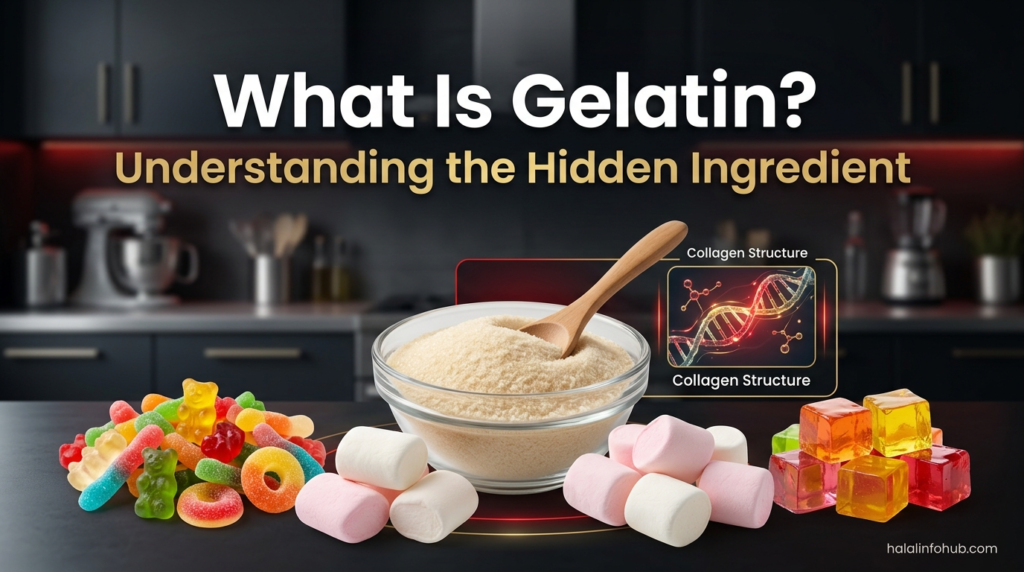
Gelatin is a protein made from collagen.
Collagen comes from:
- animal skin
- bones
- connective tissues
Manufacturers process these animal materials into a soft gelling substance called gelatin.
Gelatin is popular because it:
- creates chewy texture
- thickens desserts
- stabilizes food
- improves texture in candy and dairy products
Common Sources of Gelatin
| Gelatin Source | Halal Status |
| Pork | ❌ Haram |
| Non-halal beef | ❌ Haram |
| Halal-slaughtered beef | ✅ Halal |
| Fish | ✅ Halal |
| Plant-based alternatives | ✅ Halal |
Why Pork Gelatin Is Haram
Pork is completely forbidden in Islam.
That means:
- pork meat = haram
- pork fat = haram
- pork gelatin = haram
There is no disagreement among mainstream scholars regarding pork gelatin.
If gelatin comes from pigs, Muslims should avoid it completely.
Unfortunately, pork gelatin is very common in:
- gummy candies
- marshmallows
- jelly sweets
- desserts
because it is cheap for manufacturers.
Is Beef Gelatin Halal?
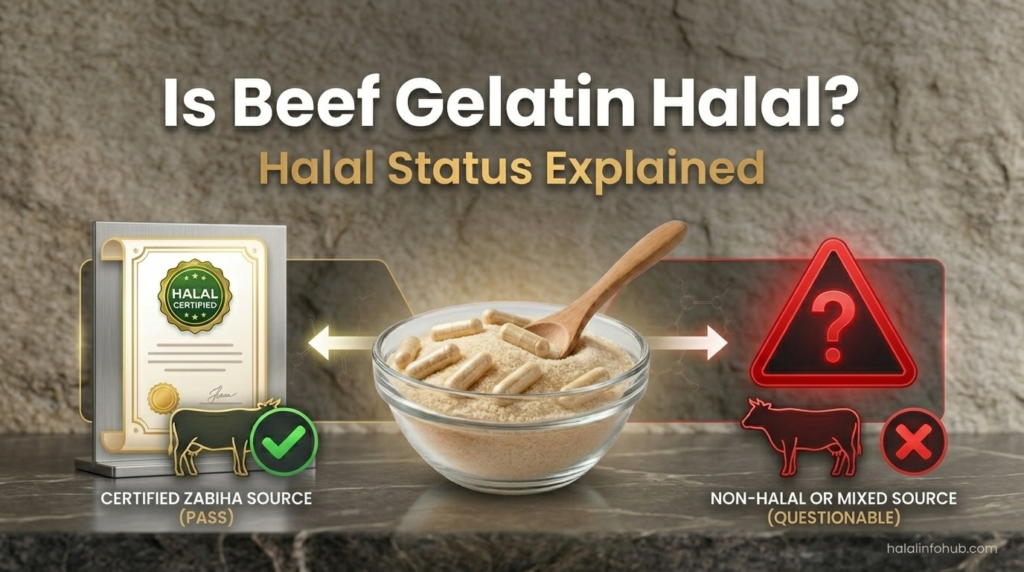
This is where confusion begins.
Many people assume:
“beef gelatin must be halal because beef is halal”
That is incorrect.
Beef gelatin is only halal if:
- the animal was slaughtered according to Islamic rules
- halal processing standards were followed
If the cow was not slaughtered Islamically, the gelatin becomes non-halal.
This is why halal certification matters so much.
Is Fish Gelatin Halal?
Fish gelatin is generally considered halal by most scholars.
Because fish is naturally permissible in Islam, gelatin made from fish is usually accepted.
Fish gelatin is becoming more popular in halal-friendly products because it avoids the problems linked to pork and non-halal beef.
Foods That Often Contain Gelatin
Many Muslims consume gelatin without realizing it.
Common products include:
- gummy candies
- marshmallows
- jelly desserts
- cheesecake
- yogurt
- ice cream
- chewing gum
- medicine capsules
- gummy vitamins
That is why checking ingredients is extremely important.
Products That Commonly Use Gelatin
| Product Type | Usually Contains Gelatin? |
| Gummy Candy | Yes |
| Marshmallows | Yes |
| Jelly Desserts | Often |
| Yogurt | Sometimes |
| Ice Cream | Sometimes |
| Medicine Capsules | Often |
| Cheesecake | Sometimes |
Gelatin Problems in the USA
In the United States, gelatin sourcing is often unclear.
Main concerns include:
- lack of halal labeling
- industrial food systems
- hidden ingredient sources
- shared manufacturing environments
Many American products simply list:
“gelatin”
without explaining whether it comes from:
- pork
- beef
- fish
This creates major uncertainty for Muslims.
Gelatin Situation in the UK
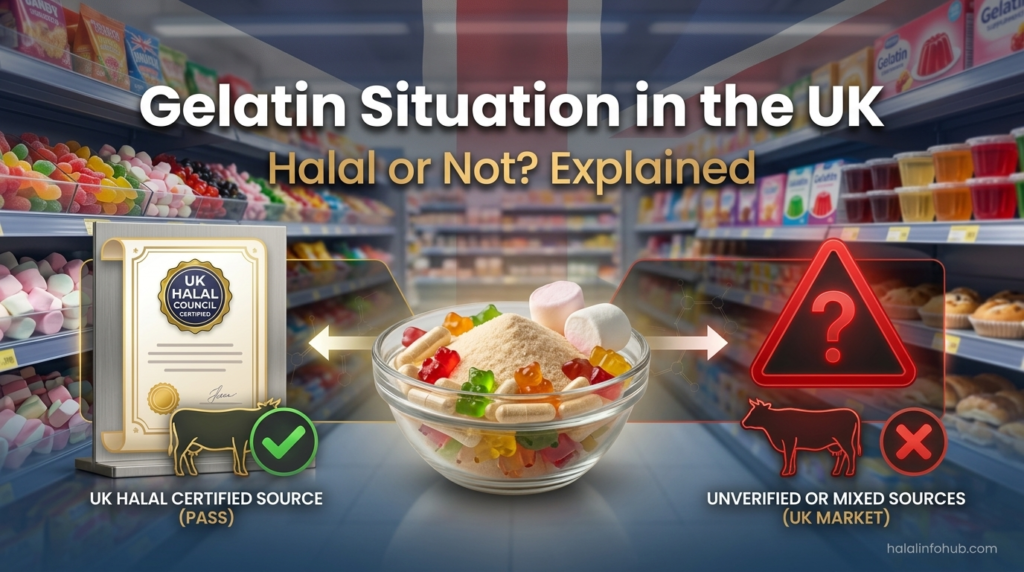
The United Kingdom has stricter food regulations in some areas, but halal concerns still exist.
Many UK products:
- import ingredients globally
- use mixed manufacturing systems
- lack halal certification
Some halal-certified products are easier to find in the UK compared to the USA, but consumers still need to check labels carefully.
How Modern Food Industries Use Gelatin
One reason gelatin has become such a major halal issue is because modern food companies use it almost everywhere.
Manufacturers like gelatin because it is:
- cheap
- flexible
- easy to mix into products
- useful for texture control
Today, gelatin is no longer limited to candy.
It is now used in:
- desserts
- dairy products
- bakery fillings
- protein snacks
- pharmaceutical capsules
- beauty supplements
This means Muslims may consume gelatin daily without even realizing it.
In large industrial systems across the United States and United Kingdom, manufacturers usually focus on:
- production speed
- low ingredient cost
- mass distribution
Halal compliance is often not part of the production process unless the company specifically targets Muslim consumers.
That is why halal certification has become extremely important in Western markets.
Why “Ingredient Only” Checking Is Not Enough
Many Muslims only read the ingredient list and think:
“If pork is not mentioned, then it must be halal.”
But modern halal verification is more complicated than that.
Two products can both say:
“gelatin”
while having completely different sources.
One may come from:
- halal-certified beef
while another may come from:
- pork
- non-halal slaughtered cattle
The label alone often does not give enough information.
This is why Islamic food experts emphasize:
- certification
- traceability
- ingredient sourcing transparency
instead of simple assumptions.
Global Supply Chain Problem
Modern food companies rarely source ingredients from one location.
A single gelatin-based product may involve:
- animal materials from one country
- processing in another country
- packaging in another region
- distribution worldwide
This creates major halal verification problems.
For example:
- a candy sold in the UK may use ingredients sourced from the USA
- a dessert sold in America may contain gelatin processed internationally
Without a halal auditing system, consumers cannot easily verify the full supply chain.
Cross-Contamination Risks
Even if a product uses halal gelatin, contamination can still happen during manufacturing.
Large factories often:
- process halal and non-halal items together
- share production equipment
- use common storage systems
- operate mixed ingredient facilities
This creates another layer of concern for practicing Muslims.
That is why certified halal factories are preferred, because they follow:
✔ ingredient verification
✔ cleaning procedures
✔ halal separation systems
✔ Islamic inspection standards
Popular Products That Often Use Gelatin
Many everyday products unexpectedly contain gelatin.
Common examples:
- gummy bears
- marshmallows
- jelly sweets
- yogurt desserts
- mousse cakes
- gummy vitamins
- chewing gum
- soft candy
Some people only associate gelatin with candy, but it exists in far more products than most consumers realize.
Why Halal Certification Matters So Much
Halal certification removes uncertainty.
Instead of guessing, Muslims can rely on:
- verified ingredient sourcing
- inspected manufacturing systems
- Islamic compliance standards
A trusted halal certification body usually checks:
- slaughter methods
- ingredient origins
- factory cleanliness
- contamination prevention
Without certification, consumers are left guessing.
And in modern processed foods, guessing becomes risky.
Best Rule for Muslims Living in USA & UK
For Muslims living in Western countries, the safest approach is simple:
Choose:
✅ halal-certified gelatin
✅ fish gelatin
✅ plant-based alternatives
Avoid:
❌ unknown gelatin sources
❌ products without transparency
❌ doubtful processed candy
This makes halal eating much easier and removes confusion completely.
Hidden Gelatin Names on Labels
Gelatin does not always appear clearly.
Sometimes manufacturers use alternative terms like:
- hydrolyzed collagen
- collagen peptides
- gelatine (UK spelling)
This confuses consumers who do not know ingredient terminology.
Gelatin Label Terms to Watch For
| Ingredient Name | Possible Concern |
| Gelatin | Direct gelatin |
| Gelatine | UK spelling |
| Hydrolyzed Collagen | May come from animals |
| Collagen Peptides | Animal-derived source possible |
Why Gelatin Is a Major Halal Issue Today
Modern food production changed everything.
Years ago, food was simpler.
Today:
- ingredients come from global supply chains
- factories process many products together
- companies prioritize low cost and mass production
This creates uncertainty.
Many Muslims no longer know:
- where ingredients come from
- how they were processed
- whether contamination occurred
Gelatin became one of the biggest symbols of this modern halal challenge.
Islamic View on Doubtful Ingredients
Islam encourages Muslims to avoid doubtful matters when certainty is missing.
If:
- source is unclear
- certification is missing
- ingredient origin cannot be verified
Many scholars recommend avoiding the product for safety.
That is why halal-certified products are strongly preferred.
Is Vegan Gelatin Halal?
Plant-based gelatin alternatives are usually halal.
Common alternatives include:
- pectin
- agar-agar
- carrageenan
These ingredients come from plants or seaweed instead of animals.
That removes the major halal concern linked to pork and non-halal beef.
Halal Alternatives to Gelatin
| Alternative | Source | Halal Status |
| Pectin | Fruit | ✅ Halal |
| Agar-Agar | Seaweed | ✅ Halal |
| Carrageenan | Seaweed | ✅ Halal |
| Xanthan Gum | Fermentation | ✅ Halal |
Is Gelatin in Medicine Halal?
Medicine creates a more complicated situation.
Many capsules use gelatin shells.
If halal alternatives exist, Muslims should choose them.
However, in cases of:
- medical necessity
- lack of alternatives
- serious health needs
Some scholars allow temporary use based on necessity principles.
Still, halal-certified medicine options are preferred whenever possible.
Is Gelatin in Candy Halal?
Most mainstream candy products in Western countries are NOT automatically halal.
Many gummy candies use:
- pork gelatin
- non-halal beef gelatin
- unclear sources
This is why Muslims should never assume candy is halal without verification.
How Muslims Can Avoid Haram Gelatin
Always:
✔ check ingredient labels
✔ look for halal certification
✔ research brands
✔ choose halal-certified candy
Avoid:
❌ unknown gelatin sources
❌ products without transparency
❌ candy with unclear ingredient lists
See Also
FAQs
Is gelatin always haram?
No. It depends on the source.
Is pork gelatin halal?
No. Pork gelatin is always haram.
Is beef gelatin halal?
Only if the animal was slaughtered according to Islamic rules.
Is fish gelatin halal?
Yes, fish gelatin is generally halal.
Is gelatin in candy halal?
Many candies use non-halal gelatin, so verification is important.
Is vegan gelatin halal?
Yes, plant-based gelatin alternatives are usually halal.
Can Muslims eat products with unclear gelatin?
Many scholars recommend avoiding doubtful products.
Conclusion
So, is gelatin halal or haram?
👉 The answer depends entirely on its source.
- ❌ Pork gelatin is haram
- ❌ Non-halal beef gelatin is haram
- ✅ Fish gelatin is halal
- ✅ Halal-certified beef gelatin is halal
- ✅ Plant-based alternatives are halal
Because many products in the USA and UK do not clearly explain gelatin sourcing, Muslims should always check:
- halal certification
- ingredient labels
- manufacturer transparency
The safest option is always:
✅ halal-certified products
✅ fish gelatin
✅ plant-based alternatives
This removes doubt and helps Muslims confidently follow halal dietary guidelines in modern food systems.