

A reader searching for travel hacks cwbiancavoyage usually wants tricks that make a trip cheaper, lighter, or less stressful. Search results promise packing methods, flight rules, stay comparisons, and airport routines under one name. The difficulty is that most pages repeat one another, attach precise figures to ordinary advice, and present habits as tested findings.
This guide first establishes what CWBiancaVoyage actually is, groups the repeated hacks by trip stage, and gives one test routine for any hack. No hack is presented as guaranteed to save money, and no percentage counts as a measured result unless a source shows how it was measured.
Quick Answer
Travel hacks cwbiancavoyage are practical travel tips published under the CWBiancaVoyage name, covering flights, stays, packing, airports, and travel on arrival. CWBiancaVoyage.org describes itself as a travel blog offering practical guides and easy-to-follow resources, with hack material covering affordable flights, accommodation booking, digital documents, luggage space, lower expenses, staying connected abroad, and protecting valuables.
The limit matters. The site’s own hack section lists topics rather than a dated test record for each tip, while third-party pages using the same keyword add figures and personal stories the publishing site does not show. A hack is therefore an idea to test against the actual trip, airline rule, hotel term, or total price, not a result that repeats for every reader.
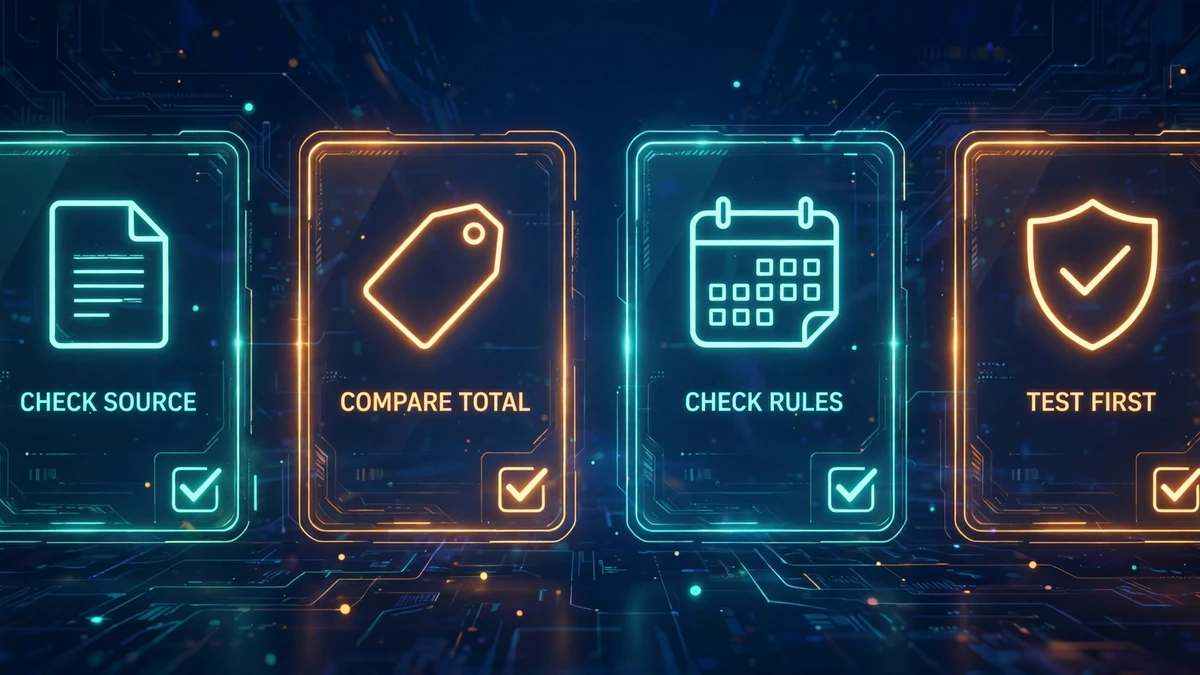
The test is short: state the exact claim, find the rule or total that would prove it, compare the trip with and without the hack, and check the failure case. A packing method that fits the bag or a fare comparison showing a lower total passes. A day-of-week rule, browser trick, or ticketing shortcut that cannot be checked in advance does not.
See Also: comparing verified and unverified claims about an unfamiliar platform
What CWBiancaVoyage actually is
CWBiancaVoyage.org is a travel guide blog. Its home page states a mission of providing practical guides, honest advice, and easy-to-follow resources for travellers at every level, from first backpacking trips to advanced strategies. Its hack material is presented as practical techniques based, in the site’s own words, on real experiences, alongside related material on backpacking, packing, budgeting, safety, and responsible tourism.
Two cautions apply. First, no verified public identity for a single named author behind the name was established during research, and no private personal detail is included here. Third-party pages describe the name as a travel consultant or experienced traveller, and one archive links it to ConversationsWithBianca, but those are third-party attributions, not facts confirmed on the publishing site. Second, more than one web address uses a similar name. The primary source here is CWBiancaVoyage.org, and a reader should check the exact domain before treating any page as the publishing site’s own material.
That distinction changes how the hacks should be read. Material on CWBiancaVoyage.org is attributable to the publishing site; material on other sites repeating the keyword is a third-party claim. The Verified and unverified claims table in this section keeps those layers apart, and the rest of the guide follows the same separation.
| Claim | Source layer | Status |
|---|---|---|
| CWBiancaVoyage.org is a travel guide blog offering practical guides and destination resources | Publishing site home page | Verified as the site’s own description |
| Hack topics include affordable flights, wise accommodation booking, digital documents, luggage space, lower expenses, staying connected abroad, and protecting valuables | Publishing site home page | Verified as listed topics |
| Hacks are based on real experiences | Publishing site home page | Verified as the site’s own wording, not as a test record |
| A named traveller or consultant is the author behind the name | Third-party pages | Not verified on the publishing site |
| Rolling saves about half the space of folding, flight costs fall by about half, hidden-city ticketing saves up to 40 percent | Competitor pages | Unverified figures with no measured comparison shown |
| Tuesday booking and incognito browsing guarantee lower fares | Competitor pages | Unverified rules, no route-level evidence shown |
The hacks, grouped by the part of the trip they affect
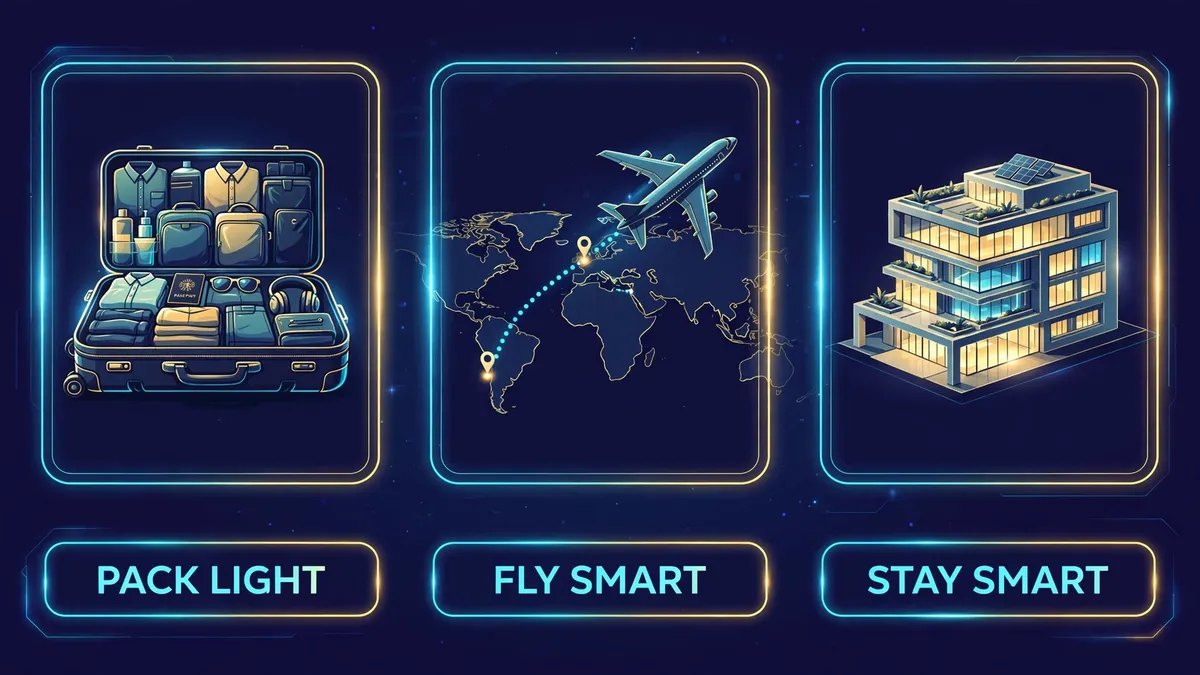
Flight hacks centre on comparison and timing: compare fares across search tools, set price alerts, stay flexible on dates or destinations, and check fares more than once. Those steps work as a comparison method, because a lower total on the same route, date, and fare class is visible on screen. They do not prove that any single day is cheapest, or that a browser setting changes an airline’s price.
Stay hacks centre on comparison and inclusions: compare booking sites and direct hotel prices, read recent reviews, and weigh breakfast, kitchen access, laundry, transit location, and cancellation terms against the nightly rate. A comparison is complete only with taxes, fees, and cancellation terms included, because a lower nightly rate can still give a higher final total or a stricter change rule.
Packing hacks centre on carrying less and organising what remains: rolling clothes, packing cubes, multi-use clothing, a document pouch, offline maps, and a carry-on checklist. Test them at home before departure by packing the bag, weighing it, checking the airline size limit, and carrying it for a short walk. A method passing that home test is useful even with no percentage attached.
Airport and arrival hacks centre on preparation and local movement: online check-in, a downloaded boarding pass, liquids and electronics placed for easy access, slip-on shoes, an empty bottle filled after security, public transport instead of taxis, and offline maps. Each saves time or money only when the local rule allows it, so the actual trip’s airport, airline, and transit rules matter more than the general tip.
See Also: how to verify information before acting on it
The Hack Test Routine: a checklist for any travel hack
The routine below works for any hack in this guide, and for any new hack found later. It asks five questions in order, and a hack that fails an early question should not be relied on, even if later questions look promising.
- Step 1: State the claim in one sentence. What exactly will improve, by how much, and under what condition?
- Step 2: Find the rule or total that proves it. For a fare hack, that is the final total for the same trip. For a packing hack, that is the bag size and weight limit. For a stay hack, that is the final total with taxes, fees, and cancellation terms.
- Step 3: Compare with and without the hack. Price the same trip twice, pack the same items two ways, or check the same stay with and without the inclusion.
- Step 4: Check the failure case. If the hack fails, what is lost: a fare, a connection, a bag fee, a night’s stay, or only a few minutes?
- Step 5: Decide by reversibility. A reversible, low-cost test can be tried. An irreversible booking, a fare-rule breach, or a health claim needs stronger proof before use.
The Hack Test Decision table in this section turns those steps into a decision. Use applies when the claim is specific, the comparison is visible, and failure costs little. Test First applies when the comparison can run without booking, such as packing at home or pricing a fare twice. Skip For Now applies when the claim is vague, proof rests on one anecdote, or failure would breach a fare rule, void a later leg, or create a health risk.
| Decision | When it applies | Example |
|---|---|---|
| Use | Claim is specific, comparison is visible, failure costs little | Packing method tested at home within size and weight limits |
| Test First | Comparison can be run without booking | Fare priced twice for the same trip, stay total compared with taxes and fees |
| Skip For Now | Claim is vague, proof is one anecdote, or failure breaches a rule or creates risk | Hidden-city shortcut, unproven health dose, upgrade promise |
Where competitor pages overclaim
Competitor pages share a pattern: a general tip is given a precise number or rule the evidence does not support. Rolling is said to save about half the space of folding, flight costs are said to fall by about half with the right tools, and a mid-week booking rule is presented as data. None shows a measured comparison for the same clothes, bag, or route, so each figure is recorded here as an unverified third-party claim.
Two claims need a warning, not just a label. Hidden-city ticketing, where a traveller books a flight with a layover at the intended destination and leaves there, is presented as saving up to 40 percent on certain routes. It can breach fare rules, cancel later legs, affect checked baggage, and affect miles or future bookings, so the airline’s own fare and contract terms must be read first; a third-party percentage is not permission. Free upgrades are presented as a result of early check-in and a polite gate request, but an upgrade depends on availability, fare class, status, and airline policy, so politeness alone guarantees nothing.
Health and comfort claims need the same discipline. Competitor material suggests specific melatonin doses and timing for jet lag, and presents lounge access as sometimes free with a credit card. A dose is a health claim depending on the individual reader, and lounge access depends on the card, programme, and lounge. Neither is repeated here as advice: check with a clinician on health questions, and check card programme terms for lounge access.
Related Post: how to read an ambiguous update when the facts are uncertain
What United States readers need to check
Readers booking from the United States face the same hacks, but five checks carry extra weight, because a general tip does not automatically fit a domestic route, a dollar fare, or a United States airport rule.
The first check is the fare total in dollars, including taxes and fees. A base-fare-only comparison can hide the part that does not change, so price the same trip twice, with and without the hack, with the full total visible on both screens. A fare is not a saving until final totals match in route, date, fare class, passengers, and baggage.
The second check is the airline rule for the actual booking. Domestic and international fares can differ in change and cancellation rules, baggage allowances, and what happens to later legs if one leg is skipped. The airline’s own terms for the fare class booked settle each question, and a shortcut skipping a leg must be checked against them before booking, not after.
The third check is airport security and identification rules for the actual airport and trip. General advice on liquids, electronics, shoes, and online check-in still applies, but current Transportation Security Administration guidance and the airline’s check-in window govern the details. Enrolment programmes, lounge access, and priority lanes each have their own eligibility rules and fees, so check official programme terms, not a competitor summary.
The fourth check is the stay total and cancellation rule, in the same way as the fare total. A United States stay comparison should include taxes, resort or facility fees where charged, parking, and the cancellation deadline, which decide whether a lower nightly rate is actually cheaper. Direct and third-party bookings for the same room can also differ in change flexibility, so compare terms, not only price.
The fifth check is the failure order: scope first (does the fare, route, or programme cover this trip?), then terms (dates, fare class, blackout periods, channel), then entry and documents. Many failures that look technical are scope errors, where the hack belongs to a different route, fare, or programme.
When a hack fails, or a trip goes wrong
A failed hack gives information if read in order. A fare that does not fall usually points to a scope or terms mismatch. A bag that does not fit usually points to an unchecked size or weight limit. A stay costing more than expected usually points to a fee or term missing from the first price shown. In each case, check the rule or total for the actual trip first, not a new version of the same tip.
If a booking already exists and a hack fails, protect the booking first and test second. Confirm flights, stay, and documents are still valid, then price an alternative without changing the existing booking until its total and terms are visible. A hasty change can cost more than the promised saving, especially with a change fee, stricter cancellation term, or lost later leg.
See Also: verifying software before downloading it
Conclusion
Travel hacks cwbiancavoyage are best used as ideas to test, not results to assume. CWBiancaVoyage.org presents hack topics covering flights, stays, documents, luggage, expenses, connection, and valuables, while third-party pages add percentages and shortcuts it does not verify. A reader who states the claim, compares the same trip with and without the hack, checks the airline or hotel rule, and weighs the failure case will keep the useful habits and leave the risky ones behind.
Related Post: troubleshooting connectivity issues step by step
Frequently asked questions
Is CWBiancaVoyage a person?
No verified public identity for a single named person behind the name was established during research. CWBiancaVoyage.org presents itself as a travel guide blog, and third-party descriptions of a named traveller or consultant are attributions, not facts confirmed on the publishing site. The name is therefore treated here as a publishing label, with no private personal detail included.
Does rolling clothes really save about half the space of folding?
That figure is an unverified third-party claim. Rolling can organise a bag well and reduce wrinkles for some fabrics, but the result depends on the clothes, bag, and packing tightness. Pack the same items both ways in the actual bag and check its size and weight limit.
Does private or incognito browsing lower flight prices?
No verified evidence in the reviewed material proves that a browser setting changes an airline’s fare for the same route, date, and fare class. The reliable test is a visible comparison with the full total shown; treat any difference as a price change to re-check, not proof of a browser effect.
Is hidden-city ticketing allowed?
Hidden-city ticketing can breach fare rules, cancel later legs, and affect checked baggage, miles, or future bookings. The airline’s own fare and contract terms for the fare class booked settle the question for a specific trip; a third-party percentage does not change those terms.
Is Tuesday really the cheapest day to book a flight?
No dated, route-level evidence proves a single cheapest booking day. Fares move with demand, season, route, and availability, so a mid-week check can be part of a comparison without being a rule. Compare the same trip across dates and check the final total.
Can early check-in and a polite request guarantee a free upgrade?
No. An upgrade depends on availability, fare class, status, and airline policy, and none of those factors is controlled by check-in timing or politeness alone. Early check-in can help with seat choice, but it should not be treated as an upgrade method.
What should a United States traveller check before relying on a lounge or priority programme?
Check the programme’s official eligibility, fee, and access terms for the actual trip, including covered lounges and airports and whether guests are included. A competitor summary describing access as free or easy does not prove eligibility for a particular card, fare, or airport.
See Also: how a partnership project is presented and checked