

Yes, shrimp is generally considered halal by the majority of Islamic scholars. However, the Hanafi school has differing opinions, while the Shafi’i, Maliki, Hanbali, and many contemporary scholars permit eating shrimp. Muslims should also check processed shrimp products for non-halal ingredients, alcohol-based flavourings, or cross-contamination.
Is shrimp halal? It’s one of the most frequently asked questions among Muslims who enjoy seafood or want to make halal food choices while shopping in the United States or United Kingdom. Whether you’re buying fresh shrimp from a supermarket, ordering fried shrimp at a seafood restaurant, or picking up frozen prawns for dinner, understanding the halal status of shrimp is important.
Unlike fish such as tuna or salmon, shrimp has been discussed by Islamic scholars for centuries, particularly within the Hanafi school of thought. Because of these scholarly differences, many Muslims look for clear guidance before deciding whether shrimp or prawns are halal. At the same time, modern seafood products often include breading, marinades, sauces, or seasonings that may contain ingredients requiring extra attention.
🧠 Related Post: Is Catfish Halal or Haram?
Why Do Muslims Ask If Shrimp Is Halal?
If shrimp were simply another type of fish, there would be very little debate. However, shrimp belongs to the crustacean family, not the fish family, which has led to different scholarly interpretations over the years.
The confusion becomes even greater because supermarkets and restaurants now sell shrimp in many forms, including:
- Fresh shrimp
- Frozen shrimp
- Breaded shrimp
- Fried shrimp
- Popcorn shrimp
- Garlic butter shrimp
- Shrimp sushi
- Ready-to-cook marinated shrimp
While the shrimp itself may be permissible according to many scholars, the ingredients used during processing or cooking can affect the halal status of the final product.
Because of these different scholarly opinions, many Muslims want clear guidance before eating shrimp. Questions often arise about fresh versus frozen shrimp, fried and breaded shrimp, prawns, and whether the ruling changes according to the Hanafi or Ja’fari (Shia) schools. Understanding these differences helps Muslim consumers make informed halal choices when shopping or dining out.
What Is Shrimp?
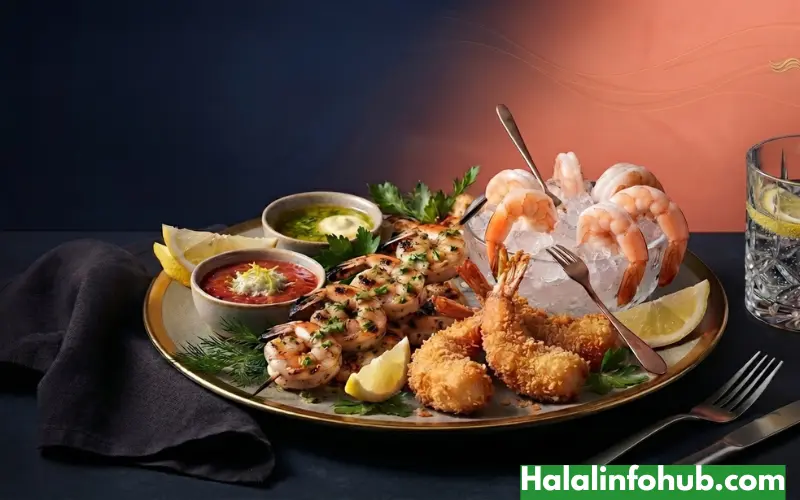
Shrimp is a small aquatic animal that belongs to the crustacean family. It lives in both freshwater and saltwater and is one of the most widely consumed seafood products in the world.
In supermarkets across the USA and UK, shrimp is commonly sold as:
- Fresh shrimp
- Frozen shrimp
- Peeled shrimp
- Cooked shrimp
- Raw shrimp
- Breaded shrimp
- Popcorn shrimp
- Shrimp skewers
In the United Kingdom, the word prawn is often used instead of shrimp. While there are small biological differences between shrimp and prawns,both are commonly treated as similar types of seafood choices in everyday cooking and halal discussions.
Is Shrimp Halal?
Yes. The majority of Islamic scholars consider shrimp halal. However, the Hanafi school has differing opinions, while the Shafi’i, Maliki, and Hanbali schools generally permit it. Processed shrimp products should always be checked for additional ingredients and preparation methods.
Because of these differences, some Hanafi Muslims choose to avoid shrimp, while others follow the opinions of scholars who permit it. The Shafi’i, Maliki, and Hanbali schools generally regard shrimp as permissible seafood.
It’s also important to remember that even when shrimp itself is halal, processed products may contain additional ingredients that should be checked before eating.
What Do the Different Islamic Schools Say About Shrimp?
One reason this topic is so widely searched is that the answer can vary depending on which school of Islamic jurisprudence a Muslim follows.
Hanafi School
The Hanafi school has differing scholarly opinions regarding shrimp. Some Hanafi scholars consider shrimp to be a permissible type of seafood, while others have taken a more cautious approach because shrimp is not considered a fish in the biological sense. Many contemporary Hanafi scholars permit shrimp, but followers often consult their trusted scholars for guidance.
Shafi’i School
The Shafi’i school generally permits shrimp and other seafood, making shrimp halal.
Maliki School
The Maliki school broadly permits seafood, including shrimp and prawns.
Hanbali School
The Hanbali school also generally considers shrimp halal as part of its permissive view of seafood.
Ja’fari (Shia) School
In the Ja’fari school, seafood rulings are based on specific principles regarding fish and certain sea creatures. Followers of the Ja’fari school should consult their marja’ for guidance on shrimp, as rulings may vary depending on the scholarly authority they follow.
Islamic School Comparison
| Islamic School | Is Shrimp Halal? | Notes |
| Hanafi | ⚠ Differing Opinions | Many contemporary scholars permit shrimp, while some take a cautious view. |
| Shafi’i | ✅ Yes | Shrimp is generally considered halal. |
| Maliki | ✅ Yes | Shrimp is halal. |
| Hanbali | ✅ Yes | Shrimp is generally permissible. |
| Ja’fari (Shia) | ⚠ Consult Your Marja’ | Rulings may differ depending on the marja’. |
Shrimp vs Prawns: Is There Any Halal Difference?
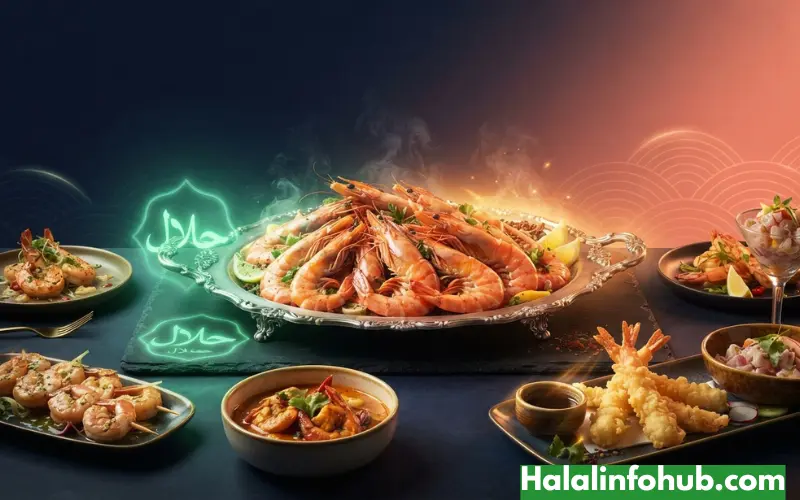
One of the most common questions from UK readers is whether shrimp and prawns have different halal rulings.
From a halal perspective, the different names do not automatically change the ruling. In everyday shopping and cooking, shrimp and prawns are treated similarly, although they are different species biologically.
What matters more is:
- How the seafood is prepared
- Whether sauces or marinades contain non-halal ingredients
- Whether the product has been breaded or processed
- Whether cross-contamination occurs during cooking
Therefore, if you’re asking “Are prawns halal?”, the same considerations generally apply as they do for shrimp.
Is Frozen Shrimp Halal?
Yes, plain frozen shrimp is generally considered halal because it usually contains only shrimp and, in some cases, a protective ice glaze to preserve freshness.
However, not all frozen shrimp products are the same. Some varieties include:
- Seasonings
- Garlic butter
- Marinades
- Breading
- Sauces
- Flavour enhancers
These additional ingredients should always be checked before purchasing.
Is Fried Shrimp Halal?
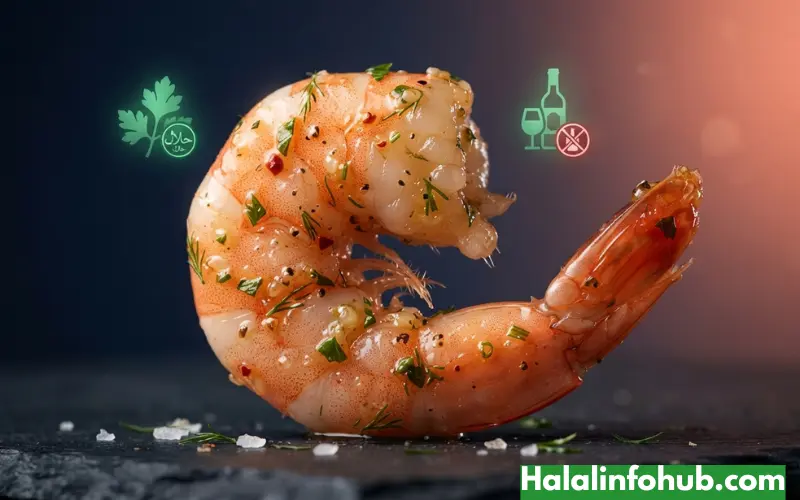
Fried shrimp can be halal, but the answer depends on how it is prepared.
The shrimp itself may be permissible, but the finished meal could contain non-halal ingredients or be cooked in a way that raises concerns.
Before eating fried shrimp, consider:
- Is the batter halal-friendly?
- Is alcohol used in the marinade?
- Is it fried in a shared fryer with pork products?
- Are the dipping sauces halal?
When eating at restaurants in the USA or UK, asking these questions can help you make an informed decision.
Is Breaded Shrimp Halal?
Breaded shrimp deserves extra attention because the coating may include ingredients beyond simple breadcrumbs.
Possible ingredients include:
- Wheat flour
- Modified food starch
- Egg powder
- Natural flavours
- Emulsifiers
- Seasonings
Most breaded shrimp products are likely halal-friendly, but it’s still wise to read the ingredient list, especially if the product contains unspecified flavourings or specialty seasonings.
Is Popcorn Shrimp Halal?
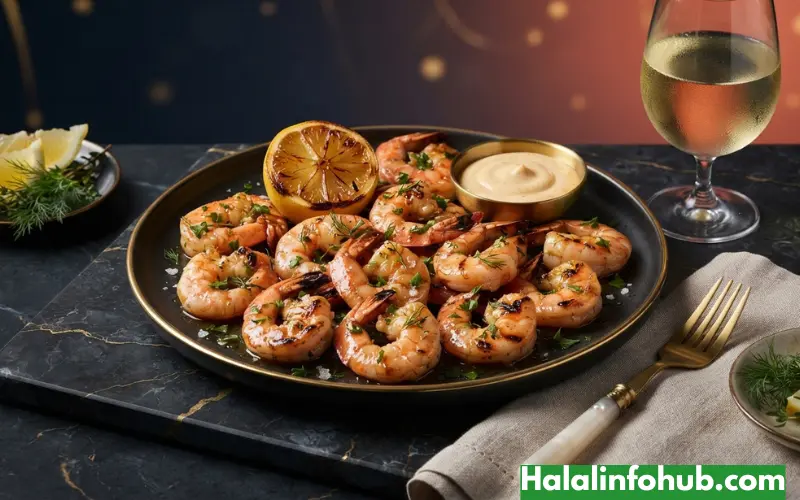
Popcorn shrimp follows the same principles as breaded shrimp.
The shrimp itself is generally halal, but the coating, seasoning, cooking oil, and preparation method determine whether the final product is suitable.
Restaurant versions should also be checked for shared fryers and cross-contamination.
Is Shrimp Sushi Halal?
Shrimp itself is generally halal according to the majority of scholars.
However, shrimp sushi depends on all of its ingredients, not just the seafood.
Watch for:
- Mirin in sushi rice
- Cooking sake
- Teriyaki sauce
- Spicy mayonnaise
- Alcohol-based sauces
If you’re ordering sushi at a Japanese restaurant, ask how the rice and sauces are prepared.
Common Ingredients Muslims Should Watch For
The shrimp itself is rarely the issue.
Instead, pay attention to added ingredients such as:
- Alcohol-based flavourings
- Cooking wine
- Mirin
- Worcestershire sauce
- Natural flavours
- Butter sauces
- Garlic butter seasoning
- Emulsifiers
- Marinades
Choosing products with short, simple ingredient lists usually makes halal shopping easier.
USA vs UK Shrimp Products
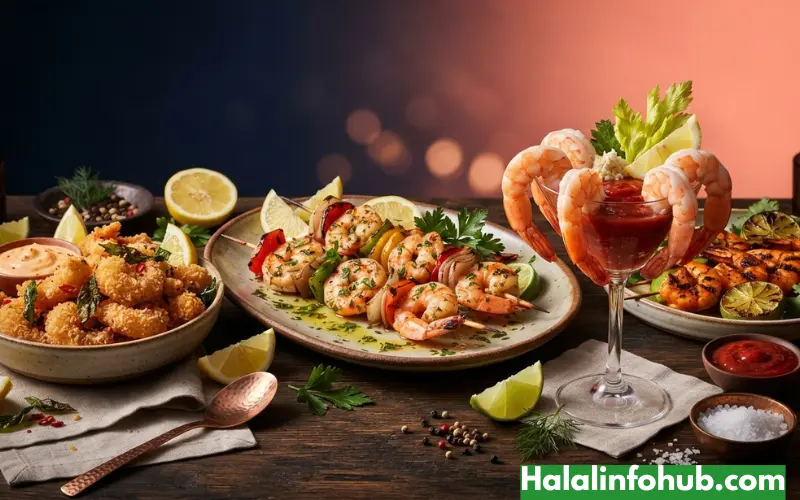
Muslim shoppers in both countries can usually find a wide range of shrimp products.
United States
Popular stores include:
- Walmart
- Costco
- Kroger
- Publix
- Sam’s Club
- Whole Foods
- Aldi
Where Can Muslims Buy Halal-Friendly Shrimp?
- Walmart
- Costco
- Kroger
- Whole Foods
- Aldi
- Tesco
- Asda
United Kingdom
Popular retailers include:
- Tesco
- Asda
- Morrisons
- Sainsbury’s
- Aldi
- Lidl
- Iceland
Fresh and plain frozen shrimp sold by these retailers are generally halal-friendly, while processed products should always be checked individually.
USA vs UK Comparison
| Product | USA | UK |
| Fresh Shrimp | ✅ Generally Halal | ✅ Generally Halal |
| Frozen Plain Shrimp | ✅ Generally Halal | ✅ Generally Halal |
| Breaded Shrimp | ⚠ Check Ingredients | ⚠ Check Ingredients |
| Fried Shrimp | ⚠ Check Preparation | ⚠ Check Preparation |
| Shrimp Sushi | ⚠ Check Ingredients | ⚠ Check Ingredients |
| Halal Certification | Not Common | Not Common |
Halal Buying Checklist
Before buying shrimp, ask yourself:
Is it fresh or plain frozen?
Does it contain only shrimp?
Is it breaded or heavily seasoned?
Does it contain alcohol-based flavourings?
Is it prepared in a shared fryer?
Are the sauces halal-friendly?
If you’re unsure, plain shrimp cooked at home is often the easiest halal-friendly choice.
Halal Decision Matrix
| Product | Halal Status |
| Fresh Shrimp | ✅ Generally Halal |
| Plain Frozen Shrimp | ✅ Generally Halal |
| Raw Shrimp | ✅ Generally Halal |
| Cooked Plain Shrimp | ✅ Generally Halal |
| Breaded Shrimp | ⚠ Check Ingredients |
| Popcorn Shrimp | ⚠ Check Ingredients |
| Fried Shrimp | ⚠ Check Preparation |
| Shrimp Sushi | ⚠ Check Ingredients |
| Shrimp with Alcohol-Based Sauce | ❌ Avoid |
Common Myths About Shrimp
Example
Some people believe all shellfish are automatically haram.
Others believe shrimp and prawns have different halal rulings.
Both assumptions oversimplify a topic that depends on scholarly interpretation and product ingredients.
Explore More Halal Guides
FAQs
Is shrimp halal?
Yes. The majority of Islamic scholars consider shrimp halal.
Is shrimp halal or haram?
Most scholars consider shrimp halal, although there are differing opinions within the Hanafi school.
Can Muslims eat shrimp?
Yes. Most Muslims can eat shrimp, but processed products should be checked for additional ingredients.
Is shrimp halal according to Hanafi?
There are differing scholarly opinions within the Hanafi school. Many contemporary Hanafi scholars permit shrimp, while others advise caution.
Is shrimp halal according to Shafi’i?
Yes. The Shafi’i school generally permits shrimp.
Is shrimp halal according to Maliki?
Yes.
Is shrimp halal according to Hanbali?
Yes.
Is shrimp halal according to Shia?
Followers of the Ja’fari school should consult their marja’, as rulings may vary.
Are prawns halal?
Generally, the same halal considerations that apply to shrimp also apply to prawns.
Is frozen shrimp halal?
Plain frozen shrimp is generally halal-friendly.
Is fried shrimp halal?
It depends on the batter, cooking method, cooking oil, and sauces.
Is popcorn shrimp halal?
Check the breading and preparation method.
Is shrimp sushi halal?
The shrimp itself may be halal, but sushi rice, sauces, and other ingredients should also be checked.
Does shrimp need halal certification?
Shrimp itself does not require halal slaughter, but halal certification can provide additional reassurance for processed products.
Conclusion
So, is shrimp halal? For the majority of Muslims, yes. The Shafi’i, Maliki, and Hanbali schools generally consider shrimp halal, and many contemporary Hanafi scholars also permit it. However, because there are differing scholarly opinions within the Hanafi tradition, some Muslims choose to follow the guidance of their trusted scholars.
From a practical standpoint, the biggest concern is usually not the shrimp itself, but the way it is prepared. Breading, marinades, sauces, alcohol-based flavourings, and shared fryers can all affect whether a shrimp dish remains halal-friendly. By checking ingredient labels and asking questions when dining out, Muslim consumers in the USA and UK can make more informed choices.
Plain fresh and frozen shrimp are generally considered halal by the majority of scholars, while breaded, fried, sushi, or heavily processed shrimp products should always be checked for their ingredients and preparation methods.