

Yes, tuna is generally considered halal because it is a fish. Fresh tuna and most plain canned tuna are halal-friendly. However, Muslims should always check flavoured tuna, tuna salad, and ready-to-eat products for non-halal ingredients, alcohol-based flavourings, or doubtful additives.
Is tuna halal? If you’ve ever picked up a can of tuna at Walmart, Costco, Tesco, or Asda and paused to check the label, you’re not alone. While tuna itself is a fish and is generally considered halal, the answer isn’t always as simple once it has been processed, flavored, or turned into ready-to-eat meals.
Today, supermarkets across the United States and the United Kingdom sell hundreds of tuna products. You’ll find tuna packed in spring water, sunflower oil, olive oil, spicy sauces, mayonnaise, lemon pepper seasoning, and even complete salad kits. Although the fish itself is usually halal, these extra ingredients can change the answer for Muslims trying to follow a halal diet.
Many websites stop after saying, “Fish is halal.” That may answer part of the question, but it doesn’t help someone standing in a supermarket comparing brands like StarKist, Bumble Bee, Chicken of the Sea, John West, or Princes. It also doesn’t explain whether tuna sushi, flavoured tuna pouches, or canned tuna with sauces are halal.
In this guide, we’ll go beyond the basic answer. You’ll learn how different Islamic schools of thought view tuna, which processed products deserve extra attention, how to read ingredient labels, and what Muslim shoppers in the USA and UK should know before buying tuna.
🧠 Related Post: Is Mirin Halal?
Why Do Muslims Ask If Tuna Is Halal?
Fresh tuna rarely creates confusion. The uncertainty usually starts after the fish has been processed.
For example, imagine you’re shopping for lunch. One can contains only tuna, water, and salt. The next one contains mayonnaise, flavourings, preservatives, and spices. A third includes teriyaki sauce or lemon pepper seasoning. At that point, the question is no longer just “Is tuna halal?” but “What else has been added to it?”
This is why Muslims frequently search:
- Is canned tuna halal?
- Is tuna salad halal?
- Is tuna sushi halal?
- Can Muslims eat flavoured tuna?
- Which tuna brands are halal?
Know the difference between plain tuna and processed tuna products is the key to answering these questions.
What Is Tuna?
Tuna is a saltwater fish belonging to the mackerel family. It is one of the most widely consumed seafood products in the world because it is affordable, high in protein, and easy to prepare.
You’ll commonly find tuna served as:
- Fresh tuna steaks
- Frozen tuna fillets
- Canned tuna
- Tuna sushi and sashimi
- Tuna sandwiches
- Ready-to-eat salad bowls
- Flavoured tuna pouches
The most common commercial species include:
- Skipjack tuna
- Yellowfin tuna
- Albacore tuna
- Bigeye tuna
- Bluefin tuna
All of these are true fish, which is an important point when discussing their halal status.
Is Tuna Halal?
For most Muslims, the simple answer is yes.
Tuna is generally considered halal because it is a fish, and fish has a different ruling from land animals in Islamic dietary law. Unlike chicken, beef, or lamb, fish does not require Islamic slaughter (zabiha).
However, this doesn’t mean every tuna product is automatically halal.
The fish itself is usually permissible, but processed products can include ingredients that require a closer look. That’s why checking the ingredient list is just as important as knowing the source of the fish.
What Do the Different Islamic Schools Say?
One area that many online guides overlook is the opinion of the major Islamic schools of thought. While there are differences regarding certain sea creatures, tuna is generally accepted as halal across the major schools.
| Islamic School | Is Tuna Halal? | Reason |
| Hanafi | ✅ Yes | Tuna is a true fish. |
| Shafi’i | ✅ Yes | Seafood is generally permissible. |
| Maliki | ✅ Yes | Tuna is considered halal. |
| Hanbali | ✅ Yes | Fish are generally permissible. |
| Ja’fari (Shia) | ✅ Yes | Tuna is generally accepted because it is a scaled fish. |
Although scholars may differ on animals such as shellfish or squid, tuna itself is generally regarded as halal.
Fresh Tuna vs Processed Tuna
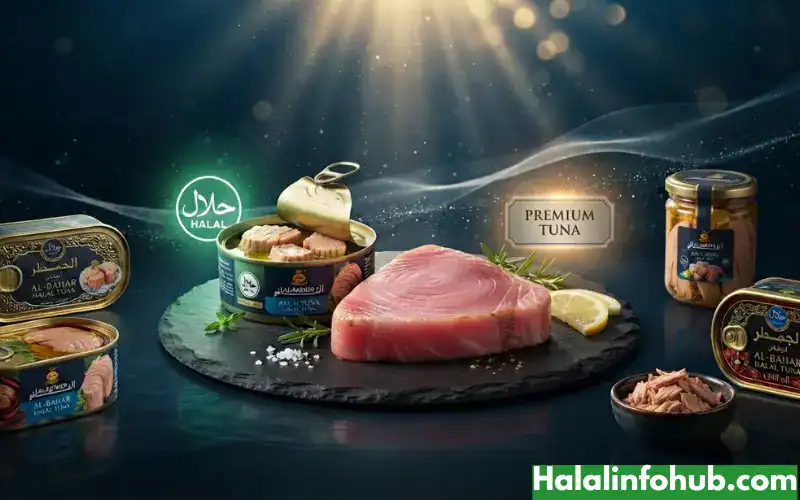
This is where many people become confused.
If you buy fresh tuna from a fish market, there is usually very little to question. It’s simply fish.
Processed tuna products are different. Manufacturers often add ingredients to improve flavour, texture, or shelf life.
Fresh Tuna
Generally contains:
- Tuna
- Nothing else
Plain Canned Tuna
Usually contains:
- Tuna
- Water or oil
- Salt
These products are generally halal-friendly.
Flavoured Tuna Products
May include:
- Seasonings
- Sauces
- Natural flavours
- Vinegar
- Emulsifiers
- Preservatives
These ingredients should always be checked before purchasing.
Why Reading the Label Matters
One of the biggest mistakes shoppers make is assuming that every tuna product is identical.
If you’re shopping at Costco, Walmart, Tesco, or Sainsbury’s, take a few seconds to read the ingredients.
A plain can of tuna may contain only:
- Tuna
- Water
- Salt
Another product sitting right beside it could include:
- Mayonnaise
- Wine vinegar
- Artificial flavours
- Modified food starch
- Emulsifiers
- Spice blends
The difference isn’t the tuna—it’s everything added to it.
Is Canned Tuna Halal?
One of the most searched questions after “Is tuna halal?” is whether canned tuna is also halal.
In most cases, plain canned tuna is halal-friendly because it contains only three simple ingredients:
- Tuna
- Water or oil
- Salt
Since these ingredients are generally halal, plain canned tuna is usually suitable for Muslim consumers.
The situation changes when manufacturers add extra ingredients such as mayonnaise, flavoured sauces, preservatives, or alcohol-based flavourings. That’s why reading the ingredient label is always the safest approach.
Is Tuna in Water Halal?
Yes.
Tuna packed in spring water or brine (salt water) is generally considered halal because it usually contains:
- Tuna
- Water
- Salt
These products are among the simplest options available in supermarkets and are often the easiest choice for Muslims.
Is Tuna in Oil Halal?
Generally, yes.
Most tuna packed in:
- Olive oil
- Sunflower oil
- Vegetable oil
is halal-friendly because the oils themselves are typically halal.
However, always read the label to make sure no additional flavourings or questionable ingredients have been added.
Is Flavoured Tuna Halal?
This is where extra care is needed.
Many flavoured tuna pouches sold in the USA and UK contain additional ingredients such as:
- Lemon pepper seasoning
- Sweet chilli sauce
- Teriyaki sauce
- BBQ sauce
- Buffalo sauce
- Garlic butter flavouring
These products may also contain:
- Natural flavours
- Modified food starch
- Yeast extract
- Vinegar
- Emulsifiers
- Preservatives
Most of these ingredients are often halal-friendly, but some flavourings or sauces may require closer inspection. If the ingredient list is unclear, choosing plain tuna is usually the safer option.
Is Tuna Sushi Halal?
Raw tuna itself is generally halal because tuna is a fish.
However, tuna sushi is not judged by the fish alone.
Its halal status depends on everything served with it.
Things to check include:
- Mirin in sushi rice
- Cooking sake
- Teriyaki sauce
- Spicy mayonnaise
- Alcohol-containing sauces
- Cross-contamination with non-halal foods
If you’re eating at a Japanese restaurant, it’s worth asking how the sushi rice and sauces are prepared.
Are Popular Tuna Brands Halal?
Many Muslim shoppers want to know about specific brands rather than tuna in general.
StarKist (USA)
StarKist’s plain canned tuna products are generally halal-friendly because they typically contain tuna, water or oil, and salt.
Flavoured varieties should always be checked individually.
Bumble Bee (USA)
Plain Bumble Bee tuna is generally halal-friendly.
Products containing sauces or seasonings should be checked before purchasing.
Chicken of the Sea (USA)
Most plain canned tuna products are generally halal-friendly.
Ready-to-eat meal kits and flavoured options require ingredient review.
Safe Catch (USA)
Safe Catch tuna is known for simple ingredient lists.
Plain products are generally halal-friendly.
John West (UK)
John West is one of the UK’s best-known tuna brands.
Plain tuna in water or sunflower oil is generally halal-friendly, while flavoured products should be checked individually.
Princes (UK)
Princes offers plain and flavoured tuna products.
Plain varieties are generally halal-friendly.
Products with added sauces should always be reviewed before buying.
USA vs UK Tuna Comparison
| Feature | USA | UK |
| Plain Canned Tuna | Generally Halal-Friendly | Generally Halal-Friendly |
| Tuna in Water | Generally Halal-Friendly | Generally Halal-Friendly |
| Tuna in Oil | Generally Halal-Friendly | Generally Halal-Friendly |
| Flavoured Tuna | Check Ingredients | Check Ingredients |
| Ready Meal Kits | Review Carefully | Review Carefully |
| Halal Certification | Not Common | Not Common |
Ingredients Muslims Should Watch For
Although tuna itself is halal, processed products sometimes include ingredients that deserve extra attention.
These include:
- Alcohol-based flavourings
- Wine vinegar (depending on the product and manufacturing process)
- Mirin
- Cooking wine
- Certain emulsifiers
- Unspecified natural flavours
- Non-halal mayonnaise in prepared salads
Most plain tuna products won’t contain these ingredients, but flavoured varieties may.
Mercury and Halal: Is There a Difference?
Many people confuse halal status with health concerns.
Mercury levels have nothing to do with whether tuna is halal.
Halal relates to whether a food is permissible according to Islamic dietary principles.
Mercury relates to nutrition and food safety.
If you’re concerned about mercury, follow your local health authority’s advice on recommended seafood consumption, especially for children and pregnant women.
Halal Buying Checklist
Before adding tuna to your shopping cart, ask yourself:
Is it plain tuna?
Does it contain only tuna, water or oil, and salt?
Are there any alcohol-based ingredients?
Does it contain flavoured sauces?
Is the ingredient list clear?
If the answer is yes to the first two questions and no to the others, the product is generally a safer choice.
Halal Decision Matrix
| Product | Halal Status |
| Fresh Tuna | ✅ Generally Halal |
| Frozen Plain Tuna | ✅ Generally Halal |
| Plain Canned Tuna | ✅ Generally Halal |
| Tuna in Water | ✅ Generally Halal |
| Tuna in Olive Oil | ✅ Generally Halal |
| Flavoured Tuna | ⚠ Check Ingredients |
| Tuna Salad Kits | ⚠ Check Ingredients |
| Tuna Sushi | ⚠ Depends on Preparation |
Explore More Halal Guides
FAQs
Is tuna halal?
Yes. Tuna is generally considered halal because it is a fish.
Is canned tuna halal?
Most plain canned tuna is generally halal-friendly.
Can Muslims eat tuna?
Yes, provided the tuna product does not contain non-halal added ingredients.
Is tuna in water halal?
Generally yes.
Is tuna in oil halal?
Generally yes, provided only halal-friendly oils and ingredients are used.
Is StarKist tuna halal?
Plain StarKist tuna products are generally halal-friendly. Check flavoured varieties individually.
Is Bumble Bee tuna halal?
Plain products are generally halal-friendly.
Is Chicken of the Sea tuna halal?
Plain canned tuna is generally halal-friendly.
Is John West tuna halal?
Most plain John West tuna products are generally halal-friendly.
Is Princes tuna halal?
Plain Princes tuna products are generally halal-friendly.
Is tuna sushi halal?
The tuna itself is halal, but the overall dish depends on ingredients such as mirin, sauces, and preparation methods.
Does tuna need halal certification?
Fish generally does not require halal slaughter, but halal certification can provide additional reassurance regarding processing and added ingredients.
Conclusion
So, is tuna halal? In most cases, yes. Fresh tuna and plain canned tuna are generally considered halal because tuna is a fish and does not require halal slaughter. For most Muslim shoppers in the USA and UK, plain tuna packed in water or oil is usually the safest choice.
The main area where caution is needed is processed tuna products. Flavoured pouches, tuna salad kits, sushi, and ready-to-eat meals may include sauces, flavourings, or other ingredients that require closer inspection. Reading the ingredient label and choosing products with simple, transparent ingredients can help you make confident halal choices.
Fresh tuna and most plain canned tuna are generally halal, while processed or flavoured tuna products should always be checked for additional ingredients before purchasing.