

Lobster is considered halal by many Sunni scholars, including the Maliki, Shafi’i, and Hanbali schools, because it is a sea creature. However, most Hanafi scholars and the majority of Shia scholars generally do not consider lobster halal. If you follow a specific madhhab, the ruling on lobster depends on that school’s interpretation of seafood and shellfish in Islam.
Is lobster halal? This is one of the most debated seafood questions among Muslims, especially in the USA and UK where lobster is commonly served in restaurants, seafood platters, lobster rolls, and fine dining dishes.
Unlike fish such as salmon, tuna, and cod, lobster belongs to the shellfish family. That distinction has led to different opinions among Islamic scholars. Many Sunni scholars consider lobster halal because it comes from the sea, while Hanafi scholars and most Shia scholars generally take a more restrictive view. As a result, Muslims often receive different answers depending on which school of thought they follow.
Quick Answer
| Question | Short Answer |
| Is lobster halal? | Depends on the madhhab you follow |
| Is lobster halal according to Shafi’i scholars? | Yes |
| Is lobster halal according to Maliki scholars? | Yes |
| Is lobster halal according to Hanbali scholars? | Yes |
| Is lobster halal according to Hanafi scholars? | Generally no |
| Is lobster halal in Shia Islam? | Generally no |
| Is frozen lobster halal? | Same ruling as fresh lobster |
| Can Muslims eat lobster? | Depends on the Islamic opinion they follow |
Why Are Muslims Confused About Lobster?
Lobster is one of the most confusing seafood topics in Islam.
When Muslims discuss salmon, tuna, cod, or haddock, there is usually very little disagreement. Lobster is different.
Some Muslims grow up hearing that everything from the sea is halal. Others are taught that only fish are halal. Then they discover that shrimp, crab, lobster, oysters, mussels, and prawns are treated differently by different scholars.
The confusion becomes even greater when people search online.
One website says lobster is completely halal.
Another says it is haram.
A third says it depends on your madhhab.
All three can appear convincing, which leaves many Muslims unsure about what they should actually do.
The reality is that lobster sits in an area where Islamic scholars have held different opinions for centuries. Understanding those opinions is much more helpful than looking for a simple yes-or-no answer.
What Is Lobster?
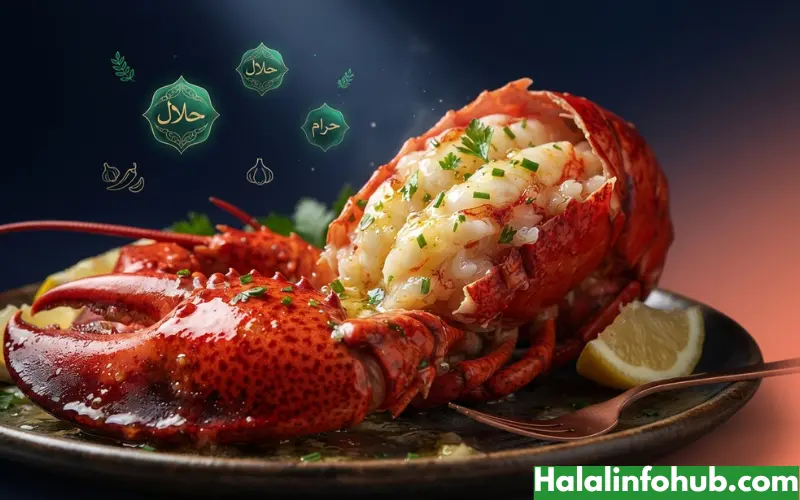
Lobster is a large marine crustacean that lives in oceans and coastal waters.
Unlike fish, lobster has:
- A hard outer shell
- Multiple legs
- Large claws
- An external skeleton
Lobster belongs to the same broader family as:
| Seafood | Category |
| Lobster | Crustacean |
| Crab | Crustacean |
| Shrimp | Crustacean |
| Prawns | Crustacean |
| Crayfish | Crustacean |
This classification is important because the scholarly disagreement largely revolves around whether crustaceans should be treated the same as fish under Islamic dietary rules.
Is Lobster Halal in Islam?
The short answer is that there is no single ruling accepted by every Muslim scholar.
Most Sunni scholars from the Maliki, Shafi’i, and Hanbali schools consider lobster halal because it lives in the sea.
Many Hanafi scholars disagree and generally restrict permissible seafood to fish.
Most Ja’fari Shia scholars also do not consider lobster permissible.
This means the ruling depends heavily on which school of Islamic jurisprudence a Muslim follows.
Why Scholars Disagree About Lobster
Many people assume the disagreement exists because scholars are unsure about lobster itself.
That is not really the case.
The disagreement comes from how scholars interpret broader seafood rulings.
Lobster Is Halal
Scholars who permit lobster generally argue that sea creatures are permissible unless there is clear evidence prohibiting them.
Since lobster is a creature that lives in the sea and no specific prohibition exists against it, they classify it as halal.
This is the position commonly followed in the:
- Maliki school
- Shafi’i school
- Hanbali school
Lobster Is Not Halal
Many Hanafi scholars approach seafood differently.
They generally limit halal seafood to fish.
Because lobster is classified as a crustacean rather than a fish, it is usually excluded.
Most Shia scholars also adopt a more restrictive approach toward shellfish and crustaceans.
This is why lobster remains one of the most debated seafood items in Islam.
Why Some Muslims Eat Lobster While Others Avoid It
This is a point that many competing articles fail to explain properly.
The difference is not usually about personal preference.
It is about following a specific scholarly tradition.
A Muslim following the Shafi’i school may eat lobster without hesitation because the school considers it halal.
A Hanafi Muslim may avoid lobster completely because their scholars generally do not classify it as permissible seafood.
A Shia Muslim may also avoid lobster because of the seafood criteria used within Ja’fari jurisprudence.
So when Muslims disagree about lobster, it is often because they are following different legal traditions rather than ignoring Islamic teachings.
Sunni vs Shia Ruling Comparison
| School of Thought | Lobster Status |
| Hanafi | Generally Not Halal |
| Maliki | Halal |
| Shafi’i | Halal |
| Hanbali | Halal |
| Ja’fari (Shia) | Generally Not Halal |
This table explains why searching “Is lobster halal?” often produces different answers.
Different schools begin from different legal principles, leading to different conclusions.
Is Lobster Halal According to Hanafi Scholars?
This is one of the most searched questions related to lobster.
The traditional Hanafi position generally limits permissible seafood to fish.
Since lobster is not classified as a fish, most Hanafi scholars do not consider it halal.
This is why many Hanafi Muslims choose alternatives such as:
- Salmon
- Tuna
- Cod
- Tilapia
- Haddock
However, individual Muslims should always follow the guidance of trusted scholars they rely upon.
Many Hanafi Muslims who avoid lobster choose fish such as salmon, tuna, and other commonly accepted seafood options instead.
Is Lobster Halal in Shia Islam?
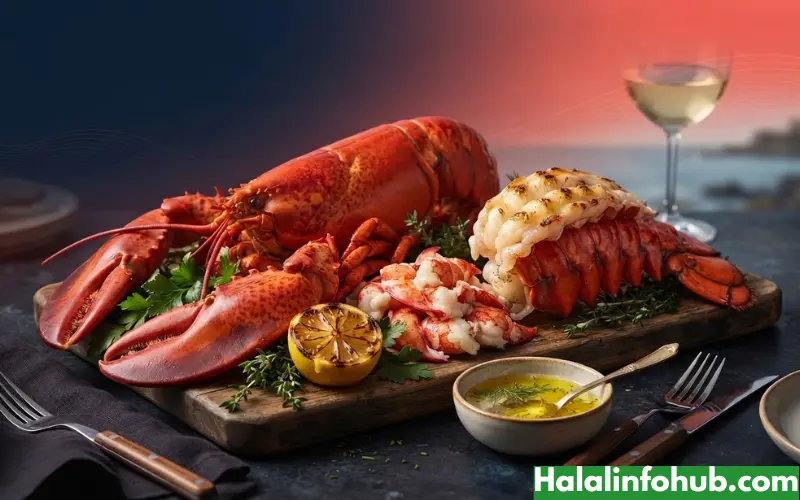
Most Ja’fari Shia scholars do not permit lobster.
Under mainstream Shia seafood rulings, lobster does not meet the criteria used to classify seafood as permissible.
As a result, lobster is generally avoided by practicing Shia Muslims.
Lobster vs Shrimp vs Crab
One reason Muslims become confused is that shrimp, crab, and lobster are often grouped together.
However, scholarly discussions about these seafood items are not always identical.
Many Muslims also compare lobster with shrimp and crab because scholars sometimes apply different rulings to these shellfish.
| Seafood | Shafi’i | Maliki | Hanbali | Hanafi | Shia |
| Salmon | Halal | Halal | Halal | Halal | Halal |
| Tuna | Halal | Halal | Halal | Halal | Halal |
| Shrimp | Halal | Halal | Halal | Often Permitted | Often Permitted |
| Crab | Halal | Halal | Halal | Generally Not Permitted | Generally Not Permitted |
| Lobster | Halal | Halal | Halal | Generally Not Permitted | Generally Not Permitted |
This explains why some Muslims who eat shrimp may still avoid lobster.
Is Lobster Tail Halal?
Many Muslims assume lobster tail might have a different ruling from whole lobster.
It does not.
A lobster tail comes from the same animal, so the Islamic ruling remains exactly the same.
If you follow a school that considers lobster halal, lobster tail is also halal. If you follow a school that does not permit lobster, the tail would not become permissible simply because it is sold separately.
The bigger concern is usually the ingredients used during preparation.
Many packaged lobster tails are sold with:
- Garlic butter sauces
- Seasoning blends
- Marinades
- Restaurant-style flavorings
These additional ingredients should always be checked.
Is Frozen Lobster Halal?
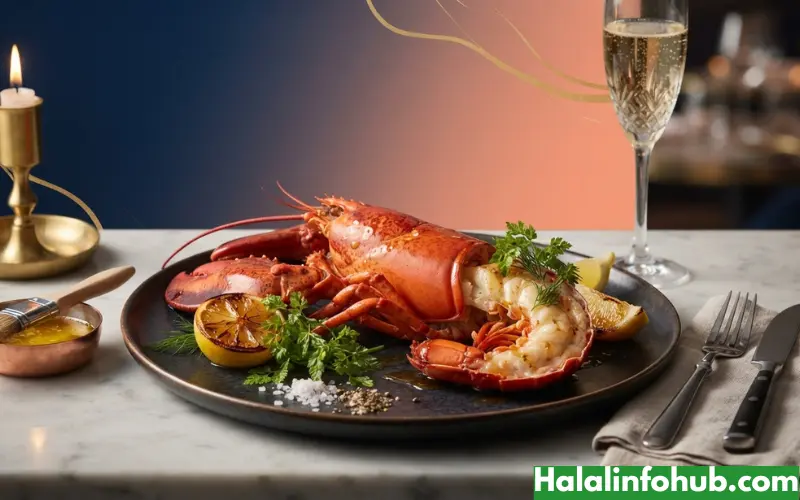
A common misconception is that frozen seafood has different halal rules.
Freezing does not change the Islamic ruling.
The same ruling that applies to fresh lobster applies to frozen lobster.
However, Muslims should still read ingredient labels carefully.
Frozen Lobster Buying Checklist
| Item | Risk Level | What To Check |
| Plain frozen lobster | Low | Usually just lobster |
| Seasoned lobster | Medium | Flavorings and additives |
| Pre-cooked lobster | Medium | Cooking ingredients |
| Ready meals | High | Sauces and preservatives |
| Lobster pasta meals | High | Multiple ingredients |
The safest option is usually plain frozen lobster with no added ingredients.
Is Lobster Roll Halal?
Lobster rolls are especially popular in the United States, Canada, and parts of the United Kingdom.
The lobster itself may not be the only concern.
A typical lobster roll may contain:
- Mayonnaise
- Butter
- Dressings
- Specialty sauces
- Bread additives
For Muslims who already consider lobster halal, these ingredients should still be checked before eating.
Most standard lobster rolls do not contain obvious haram ingredients, but restaurant recipes vary significantly.
Is Lobster Bisque Halal?
This is where many Muslims make mistakes.
Even scholars who consider lobster halal may avoid certain lobster bisque products.
Why?
Because the concern often shifts from the lobster itself to the ingredients used in the soup.
Common Ingredients Found In Lobster Bisque
| Ingredient | Potential Concern |
| Lobster stock | Usually acceptable |
| Cream | Usually acceptable |
| Butter | Usually acceptable |
| Wine | Potential issue |
| Cooking alcohol | Potential issue |
| Flavor concentrates | May require verification |
Many restaurant-style lobster bisques traditionally use wine during cooking.
That does not automatically mean every lobster bisque is unsuitable, but it does mean Muslims should verify ingredients rather than assume.
Is Restaurant Lobster Halal?
Eating lobster at a restaurant introduces questions that do not exist when buying plain seafood from a supermarket.
Even if you personally follow a ruling that permits lobster, you should still check how it is prepared.
Things To Ask Before Ordering
| Question | Why It Matters |
| Does the sauce contain wine? | Common in seafood dishes |
| Is alcohol used during cooking? | Frequently used in fine dining |
| Are ingredients listed clearly? | Helps avoid uncertainty |
| Is the seafood seasoned separately? | Prevents confusion |
| Does the restaurant provide allergen information? | Often includes ingredient details |
Most problems come from preparation methods rather than the lobster itself.
How To Buy Halal-Friendly Lobster In The USA & UK
One weakness in many competing articles is that they explain the ruling but never tell readers what to do in real life.
Here is a practical approach.
USA
When buying lobster in the United States:
- Check ingredient labels carefully.
- Be cautious with prepared seafood meals.
- Verify restaurant sauces.
- Review seasoning ingredients.
- Choose plain seafood whenever possible.
UK
When buying lobster in the United Kingdom:
- Read ingredient labels thoroughly.
- Check seafood counters for added seasonings.
- Review ready-meal ingredients.
- Ask restaurants about alcohol-based sauces.
The process is very similar in both countries.
USA vs UK Lobster Products
| Factor | USA | UK |
| Fresh lobster availability | Very High | High |
| Frozen lobster products | Very Common | Common |
| Seafood restaurants | Very Common | Common |
| Prepared lobster meals | Very Common | Common |
| Ingredient transparency | Strong | Strong |
For most Muslims, ingredient verification is usually more important than country of purchase.
Should You Eat Lobster?
This section provides a simple practical answer.
| Situation | Recommendation |
| You follow Shafi’i rulings | Generally permissible |
| You follow Maliki rulings | Generally permissible |
| You follow Hanbali rulings | Generally permissible |
| You follow Hanafi rulings | Generally avoided |
| You follow Shia rulings | Generally avoided |
| Lobster cooked with wine | Verify carefully |
| Plain fresh lobster | Depends on madhhab |
| Frozen lobster with additives | Check ingredients first |
| Restaurant lobster with unknown sauce | Ask before ordering |
Common Myths About Lobster In Islam
All Muslims Agree Lobster Is Halal
This is false.
Lobster remains an area of genuine scholarly disagreement.
Lobster Is Just A Fish
is Lobster not classified as a fish.
It is a crustacean.
This distinction is one reason scholars differ.
Frozen Lobster Has Different Rules
Freezing does not change the halal status.
The same ruling applies.
Every Seafood Restaurant Is Automatically Halal-Friendly
Seafood restaurants often use ingredients such as wine-based sauces and flavorings.
Always verify ingredients. If you are unsure about lobster, you may prefer seafood with broader scholarly acceptance such as salmon, tuna, or catfish.
Lobster And Shrimp Have Exactly The Same Ruling
Not every scholar treats shellfish categories in the same way.
This is why discussions about shrimp and lobster sometimes reach different conclusions.
Explore More Halal Guides
FAQs
Can Muslims eat lobster?
Many Muslims do, but others avoid it based on the Islamic school of thought they follow.
Is lobster halal according to Sunni Islam?
Many Sunni scholars consider lobster halal, although Hanafi scholars generally do not.
Is lobster halal according to Hanafi scholars?
Most Hanafi scholars generally do not consider lobster halal.
Is lobster halal in Shia Islam?
Most Shia scholars generally do not permit lobster.
Is lobster tail halal?
The ruling is generally the same as lobster itself.
Is frozen lobster halal?
Yes, the ruling is generally the same as fresh lobster.
Is lobster bisque halal?
It depends on the ingredients, particularly whether alcohol is used.
Is lobster roll halal?
It depends on both the lobster ruling you follow and the ingredients used.
Is shellfish halal in Islam?
Scholars differ regarding shellfish, which is one reason lobster remains debated.
Is lobster halal in the USA and UK?
The ruling itself does not change by country, although ingredients and preparation methods may differ.
Conclusion
So, is lobster halal? The answer depends on the Islamic school of thought you follow. Most Maliki, Shafi’i, and Hanbali scholars consider lobster halal because it is a sea creature, while most Hanafi scholars and the majority of Shia scholars generally do not permit lobster due to their more restrictive approach to shellfish and seafood.
For Muslims in the USA and UK, understanding your madhhab’s ruling is the most important factor when deciding whether to eat lobster. It’s also wise to check how lobster products are prepared, especially lobster tails, frozen lobster, lobster rolls, and lobster bisque, as additional ingredients may raise separate halal concerns.
Ultimately, if you follow the Sunni view that permits lobster, it is generally considered a halal seafood option. If you follow Hanafi or Shia rulings, you may choose to avoid it. When in doubt, consult a trusted scholar and follow the opinion that aligns with your beliefs and gives you confidence in your food choices.