


A reader searching for discount codes ttweakairline by traveltweaks usually asks: where is the current code published, how is it entered at checkout, and how can it be checked before paying? This guide answers those questions in that order, treating a code as an offer to be checked, not as a saving to be assumed.
TravelTweaks material describes a code that appears at checkout and reduces the fare on selected routes, dates, or fare classes when the code matches the fare rules. Third-party pages add named code strings, percentage ranges, partner lists, and user totals. This guide separates the two layers and ends with a verification routine to run before paying. No specific code string is presented here as working, and no percentage as a guaranteed saving, because neither was verified against a current TravelTweaks offer page.
Quick Answer
Discount codes ttweakairline by traveltweaks are flight-discount codes described in material published under the TravelTweaks name. TravelTweaks describes the mechanism in general terms: a reader finds a code on a TravelTweaks deals page or offer article, copies it or follows a promo link, enters it in the promo field at checkout, and sees the fare adjust before payment, provided the route, date, and fare class match the offer terms.
Three limits apply to every code of this kind. First, a code is tied to a specific offer, so a code that worked for one route or date does not automatically work for another. Second, an expiry date, a blackout date, a minimum-stay rule, or an advance-purchase rule can remove the discount even when the code is entered correctly. Third, no current, dated TravelTweaks offer with a verified code string, percentage, and expiry date was established during research.
See Also: comparing verified and unverified claims about an unfamiliar platform
How a TravelTweaks discount code works
A discount code in this context is a short string that a booking site recognises at checkout, or a promo link that carries the same offer without manual typing. In the manual form, a reader copies the code from the offer and pastes it into a field labelled Promo Code, Discount Code, or Coupon. In the promo-link form, a reader follows a link from the offer, and the discount may already be applied on arrival. In both forms, the test is the same: the fare total must change before payment.
The discount is described by TravelTweaks as a fixed or percentage reduction on specific fares, not as a flat reduction on every flight. A fare combines route, date, fare class, advance purchase, and availability, and an offer normally covers only part of that combination. TravelTweaks material states that the expiration date, minimum-stay rule, advance-purchase rule, or blackout dates appear in the offer details. A code also has a booking channel: it sometimes works only on an airline native site, and sometimes through a partner.
Where current codes appear, and where they do not
The first place to look for a current code is the publishing site itself. TravelTweaks publishes travel guides and deal material, including an airlines category, and its material states that a reader finds the code on its deals page. That offer article is the strongest source, because it can also show the expiry date, covered routes and dates, and any blackout or minimum-stay rule.
Research tried to establish a current, dated TravelTweaks code source and reached a limit. The TravelTweaks airlines feed lists a guide titled Save More With TtweakAirline: How To Use TravelTweaks Discount Codes (2026 Guide), with feed metadata dated 23 June 2026, and its summary repeats the general mechanism described here. The full article page could not be read during research, because the request was refused with an access-denied response, so no code string, percentage, or expiry date was taken from it, and no current offer is claimed here.
Third-party pages are a weaker source. Several name a specific code string, quote savings of roughly 10% to 20%, and list platforms such as Expedia, Booking.com, and MakeMyTrip. Others quote flight savings as high as 15% to 50%, add hotel and package discounts, and cite user totals in the millions. None of those additions was verified against a current TravelTweaks offer page.
See Also: how to verify information before acting on it
How to apply a code, step by step
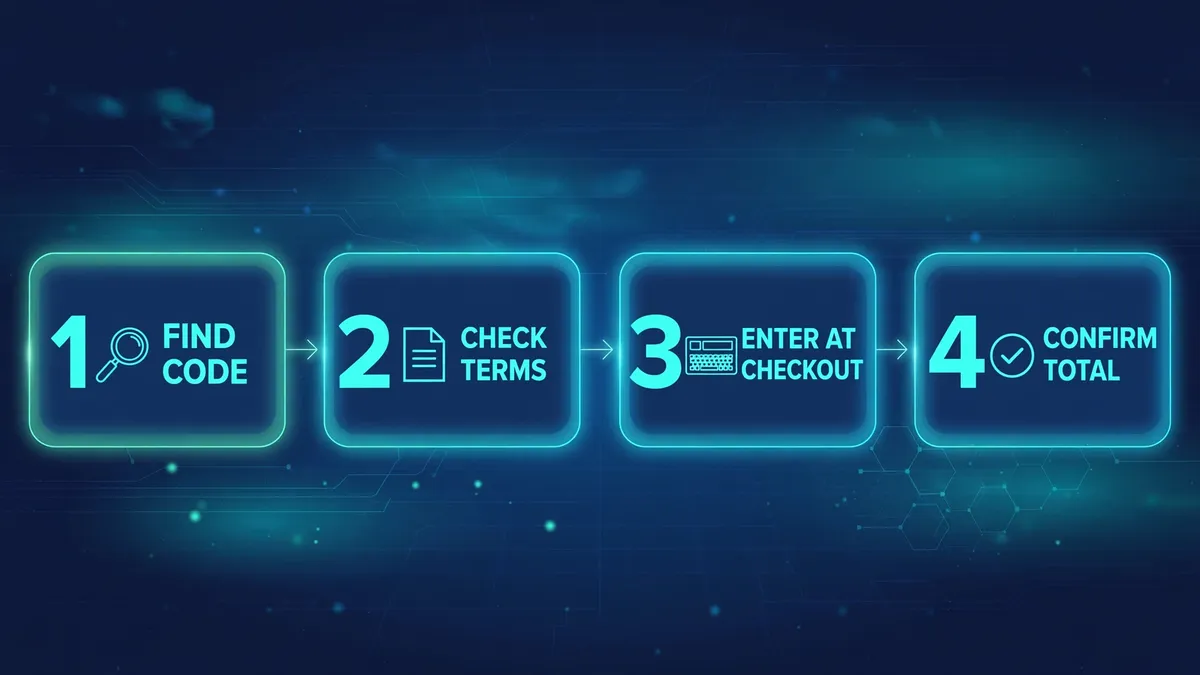
- Step 1: Find the current offer on the publishing site, with its expiry date and terms visible.
- Step 2: Read the terms against the actual trip: route, dates, fare class, channel, minimum stay or advance-purchase rule, and blackout dates.
- Step 3: Build the booking first, without the code, and note the total shown. This total is the comparison point.
- Step 4: Enter the code exactly as published, using copy and paste where the field allows it, or follow the promo link from the offer.
- Step 5: Apply the code and read the new total line by line. Confirm that the route, dates, and fare class are still the ones selected in Step 3.
- Step 6: Compare the two totals for the same trip. Only a difference between the code total and the no-code total counts as a measured saving.
- Step 7: Pay only when the reduced total is visible, or stop and re-check. If the total does not fall, work through the failure diagnosis in the section titled Why codes fail.
Terms and expiry rules that decide whether a code works
Most failed codes are not mysteries. They are offers whose terms do not cover the trip, and the terms are usually visible in the offer details before checkout. TravelTweaks material names the main terms: expiration dates, minimum-stay rules, advance-purchase rules, and blackout dates, with selected routes, dates, and fare classes. The Terms and expiry checklist table in this section turns those terms into a checking order.
| Term | Check | Result if it does not match |
|---|---|---|
| Expiry date | Last date the code can be entered | Code rejected, or total unchanged |
| Travel window | Last date that can be travelled under the offer | Code fails for a later departure, even if entered before expiry |
| Route | Origin and destination against covered routes | Code fails on an unlisted route |
| Travel dates | Dates against the covered window and blackout dates | Code fails on an excluded date |
| Fare class | Selected fare class against covered classes | Code fails on a class outside the offer |
| Booking channel | Booking site against the channel named in the offer | Code not recognised on an unrelated site |
| Minimum stay or advance purchase | Stay length and lead time against the offer rules | Code fails on a short or last-minute trip the rules exclude |
Expiry is the first term to check, because it is also the easiest to misread. An offer can expire in two ways: the code itself can expire, and the travel window can close, so a code entered before expiry still fails for a later departure. Check both dates: the last date the code can be entered, and the last date that can be travelled under the offer. A minimum-stay rule excludes a short trip, an advance-purchase rule excludes a last-minute booking, and a channel rule excludes a site that does not accept the code.
Related Post: how to read an ambiguous update when the facts are uncertain

Why codes fail: a diagnosis guide
A failed code gives information, if the failure is read in order. The Failure diagnosis table in this section matches each symptom to the most likely cause and the check to run first: terms first, entry second, channel third, and account history last.
| Symptom | Most likely cause | Check first |
|---|---|---|
| Total does not change | Route, date, fare class, expiry, or channel mismatch | Offer details against the actual booking |
| Invalid-code message | Expired code, mistyped code, or unrecognised site | Spelling and channel, then expiry |
| Discount disappears at payment | Booking details changed, or discount covers only part of the booking | Booking details on both screens, and the scope of the offer |
| No promo code field visible | Field lower on the page, collapsed, or unsupported for that fare | Payment summary and collapsed sections |
| Code worked before, fails now | Offer changed, use limit reached, or new trip outside the terms | Offer details for the new trip |
| Discount smaller than the headline suggested | Offer covers base fare only, or taxes and fees unchanged | Same trip priced with and without the code |
The most common failure is a total that does not change after the code is applied. That usually points to a terms mismatch: the route, date, or fare class falls outside the offer, or the offer has expired, or the channel does not accept the code. The first check is therefore the offer details against the actual booking, not the spelling of the code. An invalid-code message can mean an expired code, a mistyped code, or an unrecognised site; here spelling and channel should be checked first. A discount that disappears at payment usually means that the booking changed between screens, or that the discount covers only part of the booking. TravelTweaks material suggests retries: re-entering the code, using a promo link, clearing cookies, or switching browsers. Those retries are worth trying after the terms check, but if no current offer covers the trip, no retry will create a discount.
See Also: verifying software before downloading it
How to verify a code before paying
Verification before payment compares evidence the reader can see, rather than claims the reader has read. A code that passes all six checks here is as verified as a reader can make it.
- Check 1: Confirm the source. The code and its terms come from a current offer on the publishing site, with a visible expiry date, not from a repeating page or a screenshot.
- Check 2: Confirm the match. The route, dates, fare class, booking channel, and any minimum-stay or advance-purchase rule match the actual booking, line by line.
- Check 3: Confirm the field. The code is entered in the promo or discount field of the booking that matches the offer, or the promo link from the offer is followed, and the booking details have not changed after entry.
- Check 4: Confirm the total. The discount appears as a changed total on screen before the payment step, with the same route, dates, passengers, and fare class as the no-code total.
- Check 5: Confirm the scope. If the offer covers the base fare only, baggage or seat fees should not be expected to fall.
- Check 6: Confirm the comparison. The same trip is priced without the code, so that the saving is measured from two totals for the same booking, not from a headline percentage.
Related Post: troubleshooting connectivity issues step by step
What United States readers need to check
Readers booking from the United States face the same code, but the checking order has extra weight, because a code described on a general deals page does not automatically apply to a United States departure, a domestic route, or a fare sold in dollars. Offer terms should therefore be read as a list of inclusions: a route is covered only if the offer names it, and a fare only if its class matches.
The first United States check is the departure and route rule. A code that covers international departures from the United States does not necessarily cover a domestic route, and vice versa, because the two are different route groups in most offer terms. The origin and destination should be checked against the offer, and each leg of a connecting trip checked separately.
The second United States check is the fare total in dollars, including taxes and fees. A discount on the base fare may leave taxes and fees unchanged, so the total may fall by less than a headline percentage suggests. The comparison that matters is the same trip, priced with and without the code, with taxes and fees shown on both totals.
The third United States check is the booking platform. Third-party pages name United States-facing platforms such as Expedia and Booking.com, and sometimes add MakeMyTrip, Kayak, or Google Flights. Those lists were not verified against a current TravelTweaks offer page. The settling check is practical: enter the code, or follow the promo link, on the platform named in the offer itself, and confirm that the total changes before payment.
The fourth United States check is the scope of the saving. Third-party pages sometimes describe these codes as covering hotels, packages, baggage fees, or seat selection in addition to flights. None of that broader coverage was verified against a current TravelTweaks offer page, so the offer details should be checked for each part of the trip separately.
The fifth United States check is what to do when a code fails on a United States booking. The order has one extra step at the start: confirm that the offer covers United States departures or the domestic route in question, before checking spelling or channel. Many failures that look like spelling errors are scope errors, where the code belongs to a different route group. If the scope check passes and the code still fails, price the trip normally and decide on the normal price.
See Also: how a partnership project is presented and checked
Codes, promo links, seasonal offers, and error fares
TravelTweaks material describes codes for promotions, seasonal sales, and error fares. A promotion code is a general offer tied to a route, date, or fare-class rule. A seasonal code has a tighter window, tied to a holiday or travel season, and fails more often on date grounds. An error fare is published in error and corrected quickly, so the window is short.
Conclusion
Discount codes ttweakairline by traveltweaks are best used as offers to be checked, not as savings to be assumed. TravelTweaks describes a code that appears at checkout and reduces the fare on selected routes, dates, or fare classes when the terms match, while third-party pages add named code strings and percentage ranges that were not verified against a current offer page. A reader who finds the current offer, reads its terms against the actual trip, and verifies the reduced total before payment will have a measured comparison for the same trip.
Frequently asked questions
Where can a reader find a current discount code ttweakairline by traveltweaks?
The strongest source is a current offer on the TravelTweaks site itself, with a visible expiry date and terms. Third-party pages can point to an offer, but they do not prove that the code is current or covers a particular trip.
How is a code applied at checkout?
Build the booking first, then enter the code exactly as published in the promo or discount field, or follow the promo link from the offer, and confirm that the total changes before the payment step.
Can more than one discount code be used on the same booking?
Third-party pages commonly state that only one code can be used per booking, but that rule was not verified against a current TravelTweaks offer page. Check the offer details, and test the booking with the code that gives the larger measured saving.
Does a code cover baggage fees, seat selection, hotels, or packages?
Not automatically. Third-party pages sometimes describe broader coverage, but that coverage was not verified against a current TravelTweaks offer page. Check the offer details for each part of the trip separately.
Why is there no promo code field on a mobile booking page?
The field is sometimes placed further down the payment page, or inside a collapsed discount section, on a phone screen. Scroll to the payment summary and expand any collapsed section before concluding that the booking site has no field.
How can a reader tell an expired code from a route mismatch?
Check the offer details first. An expired code fails on every trip, while a route mismatch fails only on trips outside the covered routes. A code with no visible date or route rule should be treated as unconfirmed.
Does a code described on a general deals page work for a United States domestic flight?
Only if the offer terms cover that domestic route. A general description does not prove coverage for a United States departure, a domestic route, or a fare sold in dollars. Check the origin, destination, fare class, and dates against the offer details, and compare the totals with and without the code for the same trip before payment.