
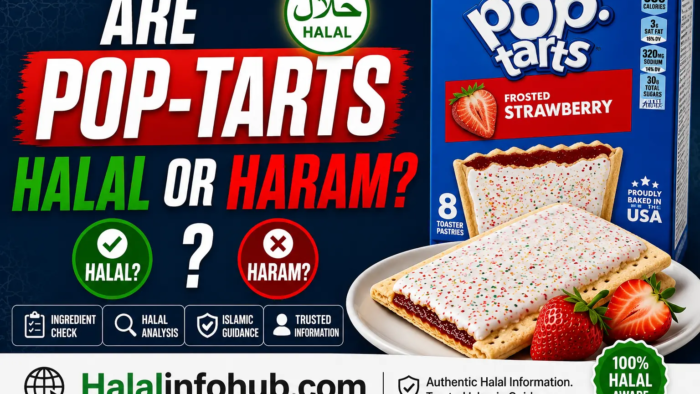
Pop-Tarts are generally considered doubtful (mashbooh) for Muslims because some flavours may contain gelatin, animal-derived emulsifiers, or unclear flavouring ingredients that are not halal-certified.
In the United States and United Kingdom, Pop-Tarts products are not officially halal-certified, and ingredient sourcing can vary between flavours and manufacturing facilities.
Some Pop-Tarts flavours may be closer to halal than others, but without clear halal certification, most varieties remain doubtful for strict Muslim consumers. For complete halal certainty, verified halal-certified alternatives are the safest option.
What Are Pop-Tarts?
Pop-Tarts is one of the most popular packaged breakfast snacks in Western countries.
The brand is known for:
- sweet pastry crust
- fruity fillings
- frosting toppings
- toaster-ready convenience
Pop-Tarts are especially popular among:
- children
- teenagers
- busy families
They are sold in:
- supermarkets
- convenience stores
- online retailers
However, processed breakfast snacks often contain hidden halal concerns that many consumers overlook.
Why Muslims Question Pop-Tarts
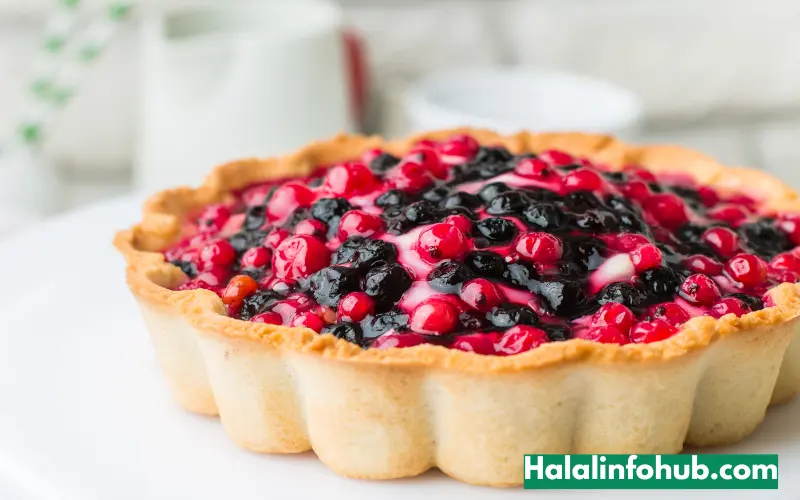
At first glance, Pop-Tarts may seem harmless.
But modern processed pastries can include:
- gelatin
- emulsifiers
- artificial flavourings
- food colourings
- animal-derived ingredients
Some flavours may appear safer, while others clearly contain doubtful ingredients.
This makes halal verification more complicated.
Pop-Tarts Halal Risk Overview
| Factor | Status | Risk Level |
| Halal Certification | ❌ None | High |
| Gelatin Presence | ⚠️ Some flavours | Medium |
| Flavor Transparency | ⚠️ Partial | Medium |
| Manufacturing System | ⚠️ Shared facilities | High |
| Ingredient Consistency | ⚠️ Varies by flavour | Medium |
👉 Overall classification: Doubtful (Mashbooh)
Do Pop-Tarts Contain Gelatin?
Some Pop-Tarts flavours may contain gelatin or gelatin-related ingredients.
Gelatin is one of the biggest halal concerns because it can come from:
- pork
- non-halal beef
- halal beef
- fish
If gelatin comes from pork or non-halal animals, it becomes haram.
Certain frosted Pop-Tarts varieties are more likely to contain doubtful ingredients compared to plain flavours.
This is why Muslims should always check ingredient labels carefully.
Which Pop-Tarts Flavours Create More Halal Concerns?
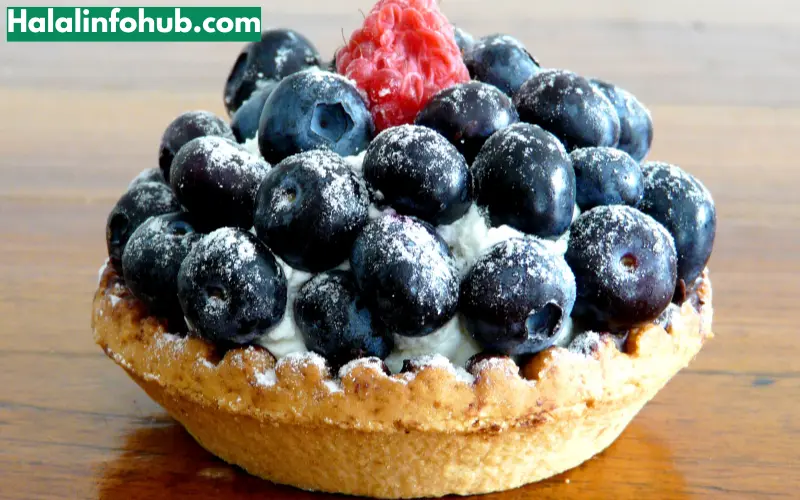
Not all Pop-Tarts flavours carry the same risk.
Generally:
- frosted flavours = higher ingredient complexity
- marshmallow flavours = higher gelatin risk
- chocolate flavours = possible emulsifier concerns
- simple fruit flavours = relatively lower risk
However, even “safer-looking” flavours are not officially halal-certified.
Pop-Tarts Flavour Risk Comparison
| Flavour Type | Halal Risk |
| Frosted flavours | ⚠️ Medium-High |
| Marshmallow flavours | ❌ High |
| Chocolate flavours | ⚠️ Medium |
| Plain fruit flavours | ⚠️ Lower but still doubtful |
Are Pop-Tarts Halal in the USA?
In the United States, Pop-Tarts are produced through large industrial food systems.
Main concerns include:
❌ No halal certification
No major halal authority certifies standard Pop-Tarts products.
Shared manufacturing systems
Factories may process non-halal ingredients on shared equipment.
Ingredient variation
Recipes can change over time.
Because of these issues, many Muslims in America classify Pop-Tarts as doubtful.
Are Pop-Tarts Halal in the UK?
The situation in the United Kingdom is similar.
UK versions may have slightly different ingredient formulas, but halal certification is still missing.
Key UK concerns:
- imported manufacturing
- unclear ingredient sourcing
- industrial processing systems
- lack of Islamic auditing
This means Muslims in the UK still face uncertainty.
Frosted vs Unfrosted Pop-Tarts – Which Is Safer?
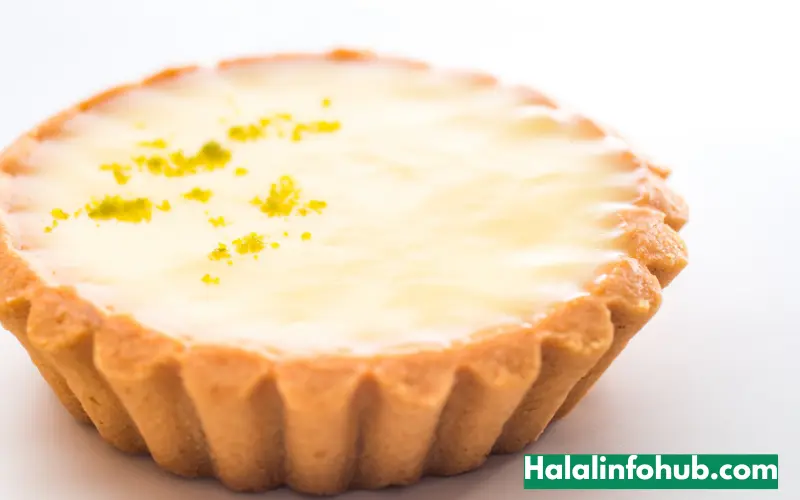
One of the biggest differences in halal risk comes from the type of Pop-Tarts flavour.
Generally, frosted versions contain:
- more additives
- more colouring agents
- more flavour systems
- more processed ingredients
Unfrosted versions are usually simpler.
That does not automatically make them halal, but it may reduce some ingredient concerns.
For example:
Frosted flavours may include:
- glaze stabilizers
- artificial colours
- emulsifiers
- decorative toppings
Unfrosted flavours may contain:
- simpler pastry ingredients
- fewer additives
- less ingredient complexity
This is why many Muslims consider unfrosted varieties slightly safer, although they are still not officially halal-certified.
Frosted vs Unfrosted Halal Risk
| Type | Ingredient Complexity | Halal Risk |
| Frosted Pop-Tarts | High | ⚠️ Medium-High |
| Unfrosted Pop-Tarts | Lower | ⚠️ Medium |
Hidden Manufacturing Concerns Most Muslims Ignore
Many people only focus on ingredients.
But halal issues also come from:
- manufacturing systems
- factory contamination
- shared processing lines
Large food factories often produce:
- marshmallow products
- gelatin snacks
- chocolate pastries
- dairy desserts
on the same equipment.
This means contamination can happen even when a specific flavour looks “safe.”
Without halal auditing systems, consumers cannot verify:
✔ equipment cleaning
✔ ingredient separation
✔ contamination control
This is one reason why halal certification matters so much.
Chocolate Flavours Create Extra Halal Questions
Chocolate-based Pop-Tarts sometimes create additional concerns because chocolate manufacturing may involve:
- emulsifiers
- flavour extracts
- dairy enzymes
- shared chocolate facilities
Some flavouring systems may use alcohol during extraction or processing stages.
This does not always mean the final product is haram, but it increases uncertainty when halal certification is missing.
Why Western Snack Foods Create More Halal Confusion
In countries like the United States and United Kingdom, processed food systems are extremely industrialized.
Manufacturers prioritize:
- mass production
- long shelf life
- low ingredient cost
- flavor consistency
Halal compliance is usually not the main focus unless the brand specifically targets Muslim consumers.
This creates a situation where:
- ingredients may change frequently
- suppliers may vary
- processing systems become difficult to trace
As a result, Muslims often struggle to identify whether processed foods are truly halal.
Why Muslims Should Be Careful With
Islam encourages certainty in food choices.
- ingredient sources are unclear
- contamination risks exist
- halal verification is missing
then caution becomes important.
Many modern snack products contain “hidden complexity” that average consumers cannot easily see.
That is why Muslims should avoid relying only on:
- packaging appearance
- advertising
- assumptions
Instead, verification should always come first.
Safer Breakfast Alternatives for Muslims
Instead of doubtful processed toaster pastries, Muslims can choose:
Better options:
✅ halal-certified pastries
✅ homemade fruit pastries
✅ Muslim-friendly bakery snacks
✅ simple ingredient breakfast foods
These alternatives reduce:
- contamination concerns
- gelatin risks
- ingredient uncertainty
and provide much greater halal confidence.
Important Rule for Processed Snack Foods
A snack is not automatically halal because:
- it looks vegetarian
- it contains fruit flavour
- it has no obvious meat
Modern food science uses complex systems that many consumers never notice.
That is why halal-certified products remain the safest and most reliable option for Muslims living in Western countries.
Industrial Pastry Manufacturing Problem
Modern packaged pastries are highly processed foods.
Factories often:
- produce many products together
- use shared machinery
- switch ingredient suppliers
- focus on mass production efficiency
This creates halal concerns beyond just visible ingredients.
Even when a product looks vegetarian, contamination and sourcing issues may still exist.
Artificial Flavour and Emulsifier Concerns
Some Pop-Tarts flavours may contain:
- mono and diglycerides
- emulsifiers
- artificial flavours
- stabilizers
These ingredients are not always haram, but their sources are often unclear.
Without halal certification, Muslims cannot fully verify:
- whether animal derivatives are involved
- how flavours were processed
- whether contamination occurred
Common Processed Pastry Ingredient Risks
| Ingredient Type | Possible Concern |
| Gelatin | Pork or non-halal source |
| Mono & Diglycerides | Animal source possible |
| Artificial Flavours | Processing uncertainty |
| Emulsifiers | Source may vary |
Why “Vegetarian” Does Not Always Mean Halal
Many consumers think:
“If there is no meat, it must be halal.”
That is incorrect.
Processed snacks can still contain:
- non-halal additives
- doubtful flavour systems
- animal-derived processing ingredients
Halal requires:
✔ ingredient safety
✔ halal sourcing
✔ contamination control
✔ Islamic compliance
not simply “no meat.”
Safer Alternatives for Muslims
Instead of doubtful processed pastries, Muslims can choose:
- halal-certified breakfast snacks
- Muslim-friendly bakery products
- plant-based certified pastries
- homemade alternatives
These remove uncertainty completely.
Safer Snack Choices for Muslims
| Product Type | Safety Level |
| Halal-certified pastries | ✅ High |
| Homemade pastries | ✅ High |
| Vegan + halal-certified snacks | ✅ High |
| Mainstream uncertified pastries | ⚠️ Medium risk |
How Muslims Can Check Processed Snacks
Before buying packaged snacks:
Always:
✔ check ingredient labels
✔ search for halal certification
✔ avoid unclear gelatin sources
✔ research flavour ingredients
Avoid:
products with doubtful additives
unclear ingredient sourcing
marshmallow-based fillings without certification
See Also
- Feastables Halal or Haram?
- Is Skittles Halal or Haram?
- Is Gelatin Halal or Haram?
Are Nerds Gummy Clusters Halal?
FAQs
Are Pop-Tarts halal?
Most Pop-Tarts are considered doubtful because they are not halal-certified.
Do Pop-Tarts contain gelatin?
Some flavours may contain gelatin or gelatin-related ingredients.
Are Pop-Tarts haram?
Not all flavours are clearly haram, but many remain doubtful.
Are Pop-Tarts halal in the USA?
No official halal certification exists for standard Pop-Tarts products in the USA.
Are Pop-Tarts halal in the UK?
UK versions are also generally uncertified and doubtful.
Which Pop-Tarts flavours are safer?
Simple fruit flavours may carry lower risk, but they are still not officially halal-certified.
Can Muslims eat Pop-Tarts?
Many Muslims avoid them due to ingredient uncertainty and lack of halal verification.
Conclusion
Most Pop-Tarts are generally considered doubtful (mashbooh) for Muslims because they are not halal-certified and may contain ingredients or processing methods that do not fully meet Islamic dietary standards.
In both the United States and United Kingdom, halal concerns mainly include:
- unclear gelatin sources
- animal-derived emulsifiers
- artificial flavour systems
- shared manufacturing equipment
- industrial processing without halal verification
Some fruit-based flavours may appear safer than frosted or marshmallow varieties, but without official halal certification, certainty is still missing.
Pop-Tarts cannot be fully confirmed halal in most cases, which is why many Muslims choose to avoid doubtful flavours and prefer clearly halal-certified alternatives instead.
✅ The safest option is always:
- halal-certified snacks
- verified halal bakery products
- transparent ingredient brands
This gives Muslims complete confidence when following halal dietary guidelines in modern food markets.