


Silicon-Insider.com is a general technology blog, and its wearable-tech section is one of its category archives. Readers who find it through search usually want to know whether its articles are hands-on reviews they can buy from, or something else entirely. The answer is narrower than the section’s own presentation suggests: the coverage found during research consists of short general explainers and listicles, not lab tests, measurements, or long-term wear tests. This article explains what the section contains, what it is not, and how to check its device claims.
That distinction matters because wearable devices are bought, worn, and relied on daily, and a general explainer cannot carry the weight of a buying decision on its own. The sections below therefore look at the section’s format, the difference between describing a device and testing it, the quality signals readers should notice, and the lookalike domains that must not be confused with it, before ending with the five checks that turn a general explainer into a safe starting point.
Direct answer
Silicon-Insider.com is a general technology blog, and its wearable-tech section is a category archive of short explainers and listicles about wearable devices. The section covers topics such as hybrid smartwatches, wearable air purifiers, wearable electronics, wearable alarm clocks, wearable breast pumps, wearable cooling devices, and wearable apps. Its articles are short, typically four to five minute reads, and they describe devices and ideas rather than testing them.
Three points matter for anyone who finds the section through search. First, the coverage is not hands-on review work: no lab tests, measurements, or test data were found in it. Second, the site around it carries quality signals that call for caution, including a visible typo in a lead excerpt, keyword-bait posts about nonsense terms, sponsored-looking gambling content, and a footer address that matches no real place. Third, a near-identical site at silicon-insider.net explicitly targets searches for the .com, so the exact domain must be checked.
This article explains what the section contains, what it is not, how its lookalikes differ, and how to check a device claim from it before spending money. It is not a recommendation, and it does not judge the site.
See Also: comparing verified and unverified claims about an unfamiliar platform
What the wearable-tech section contains

The section lives in its own category archive on the site, with navigation entries for Home, Wearable Tech, Tech News, and Smart Tech. Its first archive page lists articles on hybrid smartwatches, wearable air purifiers, wearable electronics, wearable alarm clocks, wearable breast pumps, hydration cups, wearable air conditioning, and wearable apps, alongside a lead article that surveys the site’s own wearable-tech coverage. Related pieces cross-linked from the section include fitness trackers for beginners and a discussion of wearables that measure mood rather than fitness.
The consistent format is the short general explainer: a topic introduced, its supposed benefits described, and a general conclusion offered, without measurements, comparison tables from testing, or named test conditions. That format is normal for a general blog, and it is useful for discovering what kinds of devices exist. It is not the same as a review that bought, wore, charged, and measured a device, and readers should not treat it as one.
Related Post: how to verify information before acting on it
What the coverage is not
The distinction that matters most is between describing a device and testing it. A hands-on review states how long a battery lasted in use, how accurate a sensor proved against a reference, or how a device behaved over days of wear. Nothing of that kind was found in this section. Its articles describe what a category of device is for and what it claims to do, which is general information, not evidence about a specific product’s performance.
The site’s own About page presents it as a tech blog run by an enthusiast, aimed at readers from beginners to experts, with a mission to make technology more accessible. That self-description fits what the section actually contains. It does not present the site as a testing laboratory, a manufacturer, or a retailer, and no article in the section should be read as carrying that authority.
A genuine hands-on review leaves fingerprints that are easy to check: a named device and software version, a stated test period, battery or accuracy figures with the conditions under which they were measured, and photographs of the actual unit in use. General explainers leave none of these, because they were not produced by testing anything. When an article about a wearable contains no measurement, no test period, and no named unit, the correct inference is that it is a description, not a test, whatever its headline promises.
Quality signals readers should know

Several observations about the wider site should shape how its wearable articles are read. The lead article’s excerpt contains a visible spelling error in a technical word. The site also publishes keyword-bait posts about invented nonsense terms, which is a pattern associated with content written to capture searches rather than to inform readers. Sponsored-looking gambling and casino content appears on the site as well, which sits oddly beside consumer-tech advice. Finally, the footer lists an address whose place name matches no recognizable real location.
None of these observations proves that any single wearable article is wrong, and no scam report, regulator warning, or malware report tied to the exact domain was found. They do show that the site’s editorial checking is weak, and that its articles should be treated as starting points for research rather than as conclusions. A reader who keeps that frame will use the section well; a reader who treats it as a buying guide will not.
See Also: verifying software before downloading it
Similarly named sites that must not be confused
The most important lookalike is silicon-insider.net, a separate site that uses near-identical branding and whose own copy explicitly targets searches for the .com version. It should be treated as a different site, not as another address for the same blog. Other variants to watch include silicon-insider-com.us, which appears in guest-post marketplace listings, and misspellings with doubled letters that appear as titles of the .com site’s own keyword-bait articles.
Two further confusions should be avoided. Silicon-insider.com.in is a different domain, and a favorable third-party checker result for that domain must not be attributed to the .com site. “The Silicon Insider” is also a tech podcast from 2019 to 2020, a different entity entirely, which automated search summaries have conflated with the blog. Checking the exact domain, letter by letter, avoids all of these traps.
Related Post: how to read an ambiguous update when the facts are uncertain
The paid-placement question
Third-party marketplaces sell paid guest-post and advertorial placements on silicon-insider.com, with listed prices and claimed authority scores. That means some content on the site may exist because someone paid for it rather than because an editor chose it, and readers cannot tell paid content from editorial content by looking at a page. A wearable article that reads like promotion should therefore be checked against the manufacturer’s own specifications and against independent reviews before it influences a purchase.
How to check a wearable claim from this section in five steps
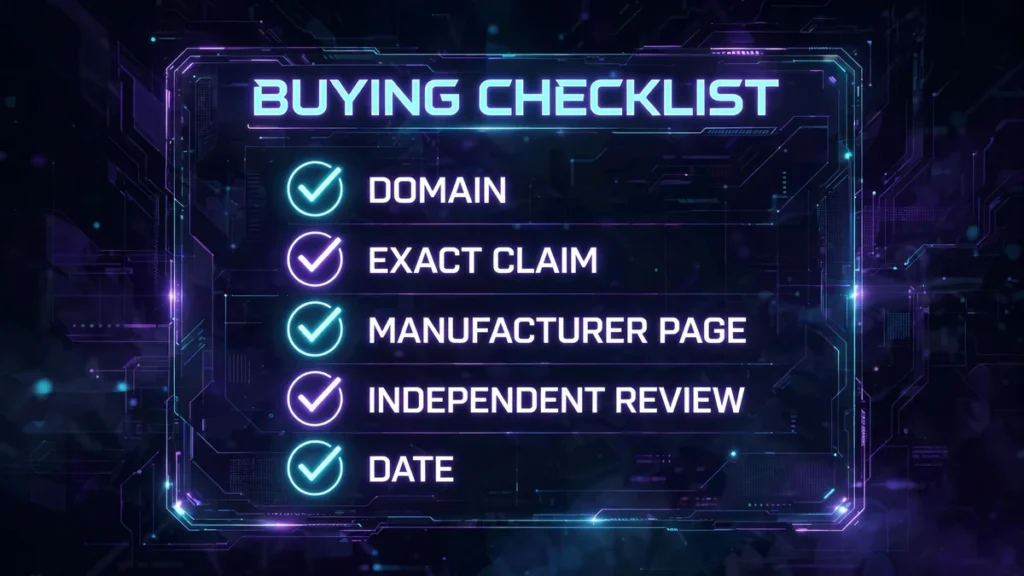
The following five checks turn a general explainer into a safe starting point for a buying decision.
- Confirm the exact domain. Check the spelling letter by letter, since the .net piggyback site and the typo variants lead elsewhere.
- Identify the exact claim. Separate a general statement about a device category from a specific claim about a named product’s battery, accuracy, or features.
- Check the manufacturer’s own page. Specifications, compatibility, and warranty terms come from the maker, not from a general blog.
- Find an independent review with measurements. A review that wore and tested the device outweighs an explainer that only describes it.
- Check the date. Wearable models, prices, and software change quickly, and an old explainer may describe a discontinued model.
The same discipline applies here as with any unfamiliar platform. A reader who checks the exact domain, separates a general statement about a device category from a specific claim about a model, and confirms specifications with the manufacturer will know more than a reader who trusts an explainer’s summary alone. That habit protects every kind of tech purchase, not just wearables.
See Also: troubleshooting connectivity issues step by step
When to use an official source instead
For a purchase decision, the manufacturer’s specifications and warranty terms are the authority, supported by independent reviews that tested the device. For health-related claims, such as heart-rate accuracy or sleep tracking, a medical authority or a clinician’s advice outweighs any general blog. If a wearable article is the only source for an important claim, that claim should be treated as unverified until a stronger source confirms it.
Retailer terms deserve the same treatment. Return windows, warranty coverage, and compatibility with a reader’s phone or health app are decided by the seller and the maker, not by a blog, and they change with models and regions. A wearable bought on the strength of a general explainer, without checking those terms, can become a return dispute rather than a purchase, which is why the five checks above put the manufacturer and the tested review ahead of the blog at every step.
Conclusion
Silicon-Insider.com’s wearable-tech section is a findable archive of short general explainers about wearable devices, useful for discovering what exists but not a substitute for tested reviews or manufacturer specifications. Its weak editorial signals, its paid-placement market, and its piggyback lookalike all point the same way: read it as a starting point, verify the exact domain, and check important claims elsewhere before buying.
That approach costs little and protects much. A few minutes spent confirming the domain, the maker’s specifications, and one tested review will always beat trusting a general explainer with a purchase, however polished its headline sounds.
Frequently asked questions
What is Silicon-Insider.com?
It is a general technology blog that presents itself as an enthusiast-run site for readers from beginners to experts, covering gadgets, apps, and tech trends, with a dedicated wearable-tech category among its sections.
What does its wearable-tech section cover?
Short explainers and listicles on wearable topics such as hybrid smartwatches, wearable air purifiers, wearable electronics, wearable alarm clocks, wearable breast pumps, wearable cooling devices, and wearable apps.
Are its wearable articles hands-on tests?
No. The coverage found during research consists of short general explainers without lab tests, measurements, or test data. It describes device categories rather than testing specific products.
Who writes for Silicon-Insider.com?
Its wearable-tech archive names contributors including Gordon James and Raph De Leon. Directory traces that describe the site as a small company are unverified snippets, not confirmed company records, and no accountable editorial team is established from public evidence.
Is Silicon-Insider.com the same as silicon-insider.net?
No. Silicon-insider.net is a separate site with near-identical branding whose own copy targets searches for the .com site. The two should not be treated as the same blog.
Should you buy a wearable based on its articles?
Not on their word alone. Use them to discover device categories, then check the manufacturer’s specifications and an independent tested review, and confirm the model and price are current, before spending money.