

A parent searching for training advice llblogkids usually wants practical ways to help a child build steady learning habits: a calmer homework time, clearer routines, and more independence. Search results answer that search with routines, minute bands, reward ideas, and screen rules, all under one name. Most pages repeat one another, attach precise numbers to general guidance, and present ordinary parenting ideas as proven results.
This guide first establishes what LLBlogKids actually is, groups its training advice by everyday situation, and gives one check routine for any method. No method is presented as guaranteed to change a child, and no number counts as a measured result unless a source shows how it was measured. Guidance touching a child’s development stays general and educational, and individual concerns are directed to a qualified professional.
Quick Answer
Training advice llblogkids is general learning and behaviour guidance published under the LLBlogKids name, aimed at parents, caregivers, and teachers. LLBlogKids.org describes itself as a space for fun learning, training, and educational guidance for children, offering simple guidance, creative activities, and training strategies that support children as they learn and develop life skills.
The publishing site’s own advice centres on a small set of ideas: predictable routines, clear expectations, smaller steps, visual reminders, short focused sessions, praise for effort, and independent practice. Its home page also stresses that every child is different and that comparison between children creates unnecessary pressure.
The limit matters. LLBlogKids.org presents general guidance rather than a dated study or a named expert programme, while third-party pages using the same keyword add research citations, fixed minute bands by age, and improvement timelines the publishing site does not show. A method is therefore an idea to test against the actual child and task, not a result that repeats for every family.
See Also: comparing verified and unverified claims about an unfamiliar platform
What LLBlogKids actually is
LLBlogKids.org is a children’s learning blog for parents, caregivers, teachers, and families. Its home page states a goal of making childhood learning more enjoyable, practical, and meaningful, through games, stories, creative activities, daily routines, and positive interaction with adults.
Two cautions apply. First, no verified named author, organisation, or programme behind the name was established during research. The site’s own pages also use the label Lovelolablog, in phrases such as LLBlogKids educational by Lovelolablog and LLBlogKids training hacks by Lovelolablog, but no verified identity or ownership record for that label was found on the publishing site. Those phrases are therefore treated here as labels used on the site, not as verified facts about a person or an organisation. Second, more than one web address uses a similar name, so a reader should check the exact domain before treating any page as the publishing site’s own material.
That distinction changes how the advice should be read. Material on LLBlogKids.org is attributable to the publishing site; material on other sites repeating the keyword is a third-party claim.
See Also: how to verify information before acting on it
| Claim | Source layer | Status |
|---|---|---|
| LLBlogKids.org is a space for fun learning, training, and educational guidance for children | Publishing site home page | Verified as the site’s own description |
| Training advice centres on predictable routines, clear expectations, small steps, visual reminders, short sessions, praise for effort, and independent practice | Publishing site home page | Verified as the site’s own guidance, without measured outcomes |
| Every child is different and no single method works for everyone | Publishing site home page | Verified as the site’s own wording |
| A named author, organisation, or structured programme stands behind the name | Third-party pages | Not verified on the publishing site |
| Lovelolablog is a verified person or organisation behind LLBlogKids | Site label phrases only | Not verified, no identity record found |
| Research bodies prove the methods, fixed minute bands by age apply, and improvement appears within a few weeks | Competitor pages | Unverified, no linked study or measured comparison shown |
The training advice, grouped by everyday situation
Routine advice centres on predictability: a morning routine, a homework routine, a play period, and a bedtime routine, kept steady without becoming rigid. Visual reminders, such as pictures or simple lists, help younger children remember what comes next. The practical test is whether reminders become less frequent, not merely that a chart exists on a wall.
Communication advice centres on short, clear instructions and calm correction: simple language, demonstrating the behaviour first, and explaining what to do differently next time instead of focusing only on mistakes. During play, it advises open-ended questions and allowing the child to lead sometimes, so decision-making gets practice.
Independence advice centres on manageable responsibility: letting a child choose between two activities, organise belongings, or select a book for reading time, even when the task takes longer than it would with adult help. The publishing site advises starting with one specific skill, demonstrating it, giving time to practise, and adding further steps only after the first step is understood.
Learning-through-play advice centres on turning ordinary moments into practice: cooking for counting and measurement, shopping for numbers and choices, nature walks for observation, and stories for vocabulary. Games are grouped by the skill they practise: matching cards for memory, sorting for classification, word games for vocabulary, building games for problem-solving, and movement games for coordination. The publishing site advises matching the activity to the child’s age and ability and increasing difficulty gradually.
Screen and balance advice centres on boundaries and proportion: selecting age-appropriate content, setting clear limits, supervising use, and keeping digital activities as a complement to real-world experience rather than a replacement for it. A balanced day on the publishing site includes learning time, active play, creative activities, family interaction, quiet time, and rest. No screen rule in the publishing site’s own material comes with a cited study or an age-by-age limit table, so any such table found elsewhere is a third-party addition.

Related Post: how to read an ambiguous update when the facts are uncertain
The Family Training Check Routine: a checklist for any method
The routine below works for any method in this guide, and for any new method found later. It asks five questions in order, and a method that fails an early question should not be relied on.
- Step 1: State the claim in one sentence. What exactly will improve, for which child, and under what condition?
- Step 2: Check the source layer. Is the claim on LLBlogKids.org itself, or only on a third-party page repeating the keyword?
- Step 3: Try one small, reversible test. Run the method for one task and one short period, and note what actually happened, including resistance and reminders needed.
- Step 4: Check the cost of being wrong. If the method fails, what is lost: a calm evening, homework progress, confidence, or only a few minutes?
- Step 5: Decide by evidence and fit. Keep a method that fits the child and shows a visible change. Pause a method that depends on a vague claim, a borrowed figure, or pressure to continue despite distress.
The Family Training Decision table in this section turns those steps into a decision. Use applies when the claim is specific, the source is checkable, and the test shows a visible change at low cost. Test First applies when the method can be tried on one task without commitment. Pause applies when the claim is vague, proof rests on one anecdote or an uncited research mention, or the method creates pressure or distress.
| Decision | When it applies | Example |
|---|---|---|
| Use | Claim is specific, source is checkable, and a small test shows a visible change at low cost | Visual routine board that reduces reminders for one task |
| Test First | Method can be tried on one task without commitment | One-step task breakdown for one homework task over one week |
| Pause | Claim is vague, proof is one anecdote or an uncited research mention, or the method creates pressure or distress | Fixed minute band imposed despite resistance |

See Also: verifying software before downloading it
Where competitor pages overclaim
Competitor pages share a pattern: general guidance is given a research label, a precise number, or a timeline the evidence does not support. One third-party guide cites the American Academy of Pediatrics, Harvard’s Center on the Developing Child, CASEL, and the Centers for Disease Control and Prevention, and lists those bodies under references, but gives no linked study or publication detail that would let a reader check what each body actually said. A citation list without a checkable source is a label, not evidence, and no finding from those bodies is repeated here as fact.
The same guide gives fixed session bands by age, a quick-start chart with daily minute targets, and a claim that visible improvement usually appears after a few weeks of steady application. None of those figures is shown with a measured comparison, so each is recorded here as an unverified third-party claim. The publishing site’s own advice, by contrast, says only that short, focused activities often work better than long sessions, without fixing a minute target for any age.
Two further claims need a warning, not just a label. One third-party page describes its methods as perfected through years of research and real-world application, and another presents personal observation of family routines as a basis for general rules. Neither shows a study or a method a reader could repeat, so neither proves that a method works for a particular child. Screen rules presented as official recommendations on third-party pages fall in the same category: unless the recommending body’s own current guidance is read directly, the rule is a third-party summary.
What United States readers need to check
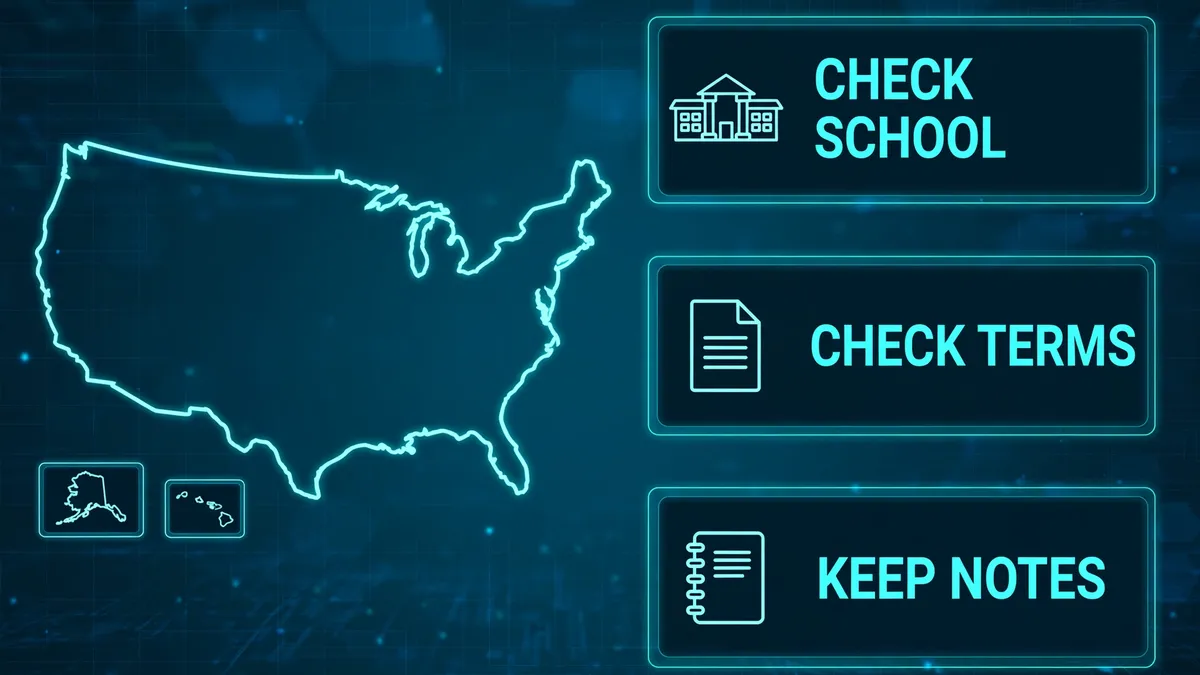
Readers in the United States face the same advice, but five checks carry extra weight, because a general tip does not automatically fit a particular school, schedule, or household rule.
The first check is the child’s own school and teacher. Homework expectations, reading levels, and classroom routines vary by school and grade, so a home routine should be compared with what the teacher actually assigns. A method that conflicts with classroom instructions creates confusion, and the teacher’s guidance for that child takes precedence over a general blog tip.
The second check is the household schedule in real time. A routine that assumes a long, uninterrupted block may not fit a household with shift work, shared devices, or transport times. The workable test is a routine that survives an ordinary week, including a busy day.
The third check is any programme, app, or material offered alongside the advice. Before paying for, downloading, or enrolling in anything linked from a page repeating the keyword, check the provider’s own terms, price, cancellation rule, and privacy handling. A blog post recommending a method does not verify the product sold beside it.
The fourth check is the language of progress. United States schools and programmes use their own terms for reading levels, assessments, and support services, and those terms differ by state and district. A general claim about focus or confidence should not be translated into a school outcome or a grade prediction without the school’s own record.
The fifth check is the failure order: scope first, then fit, then method. If a routine is not working, first ask whether it covers this child and this task at all. Then ask whether the session length or timing fits the child. Only then ask whether a different method is needed. Many failures that look like a lack of effort are scope or fit errors.
See Also: how a partnership project is presented and checked
When a routine is not working, and when to ask a professional
A routine that is not working gives information if read in order. Resistance at the same step each day usually points to a step that is too large, too long, or unclear. A method that works for one task but not another usually points to a task difference. A routine that starts well and fades usually points to a schedule that was never workable.
Three responses help before changing methods: reduce the step until it can be completed, shorten the session until attention holds, and change one variable at a time, so each change can be judged. Brief notes — the task, the step size, and the reminders needed — turn vague impressions into a record that can be compared across weeks and shared with a teacher.
Professional guidance is the right step when concern goes beyond an ordinary routine problem. Persistent difficulty with reading, speech, attention, behaviour, sleep, or mood, or a marked change in behaviour, should be discussed with a qualified professional, such as the child’s teacher or clinician, who can assess the individual child. General blog guidance, including this article, does not diagnose or replace that assessment, and no method here should delay seeking it.
Related Post: troubleshooting connectivity issues step by step
Conclusion
Training advice llblogkids is best used as general guidance to test, not as a programme with proven results. LLBlogKids.org presents routines, clear communication, small steps, play-based learning, and balanced screen use, while third-party pages add research labels, minute bands, and timelines it does not verify. A reader who states the claim, checks the source layer, tries one small test, and keeps brief notes will keep the useful habits and leave the unproven numbers behind.
Frequently asked questions
Is LLBlogKids a person, a programme, or a blog?
LLBlogKids.org presents itself as a blog for parents, caregivers, teachers, and families, offering learning guidance, activities, and training strategies. No verified named person, organisation, or structured programme behind the name was established during research, so the name is treated here as a publishing label.
Is LLBlogKids the same as Lovelolablog?
Not on the evidence found. The publishing site’s own pages use Lovelolablog inside phrases such as LLBlogKids educational by Lovelolablog and LLBlogKids training hacks by Lovelolablog, but no verified identity or ownership record for that label was found.
Do the minute bands by age prove how long a session should last?
No. Fixed minute bands by age appear on third-party pages, not in the publishing site’s own advice, and they are shown without a measured comparison. The publishing site advises only that short, focused activities often work better than long sessions. Session length should be set by what the child can complete with attention intact, not by a borrowed band.
Does steady practice guarantee visible improvement within a few weeks?
No. A timeline for visible improvement appears on a third-party page without a sample or a measure, so it is recorded here as an unverified claim. Progress varies by child and task, and brief notes across weeks give a better picture than a promised date.
Are the screen-time rules on competitor pages official recommendations?
Not as presented. Third-party pages attribute screen rules to public bodies but give no linked guidance a reader could check, so those rules are third-party summaries, not verified recommendations. A reader who needs an official position should read the recommending body’s own current guidance directly.
What should a parent do if a child keeps struggling despite a steady routine?
Seek individual guidance. Persistent difficulty with reading, speech, attention, behaviour, sleep, or mood, or a marked change in behaviour, should be discussed with a qualified professional, such as the child’s teacher or clinician. General guidance does not assess an individual child, and a method should not be continued through distress on the strength of a blog claim.
How should United States parents coordinate a home routine with a school or teacher?
Start from the school’s own expectations: the assignments, reading level, and communication channel the teacher actually uses. Share brief notes on what was tried at home, so the teacher can compare them with classroom observation. Where home and school guidance conflict, the teacher’s guidance for that child takes precedence.