

Rennet can be halal or haram depending on its source. Microbial and plant-based rennet are generally halal, while animal rennet from non-halal slaughtered animals is considered doubtful or haram by many Islamic scholars.
Some scholars allow certain forms of animal rennet in cheese, while others only permit halal-certified rennet.
Is rennet halal? This is one of the most confusing halal food questions for Muslims living in the USA, UK, and Canada. Rennet is commonly used in cheese production, but many consumers do not even realize it comes from animal or microbial sources.
The confusion becomes even bigger because:
- Some cheeses use animal rennet,
- Some use microbial rennet,
- Different scholars have different opinions,
- Manufacturers rarely explain rennet sources clearly.
In 2026, halal-conscious Muslims are paying much closer attention to hidden food ingredients. Instead of checking only for pork, people now investigate:
- cheese enzymes,
- rennet sources,
- animal slaughter methods,
- microbial fermentation,
- halal certification.
Rennet is halal if it comes from halal-slaughtered animals, microbial sources, or plants. The use of non-halal animal rennet remains doubtful or haram according to many scholars.
This complete guide explains everything Muslims need to know about rennet in Islam.
Related Post: Is Pepperoni Halal or Haram?
Quick Verdict Box
| Type of Rennet | Halal Status |
| Microbial Rennet | Halal |
| Plant-Based Rennet | Halal |
| Halal Animal Rennet | Halal |
| Non-Halal Animal Rennet | Mushbooh/Haram |
| Pork Rennet | Haram |
| Vegetarian Cheese Rennet | Usually Halal |
| Halal Certified Cheese | Safest Option |
What Is Rennet?
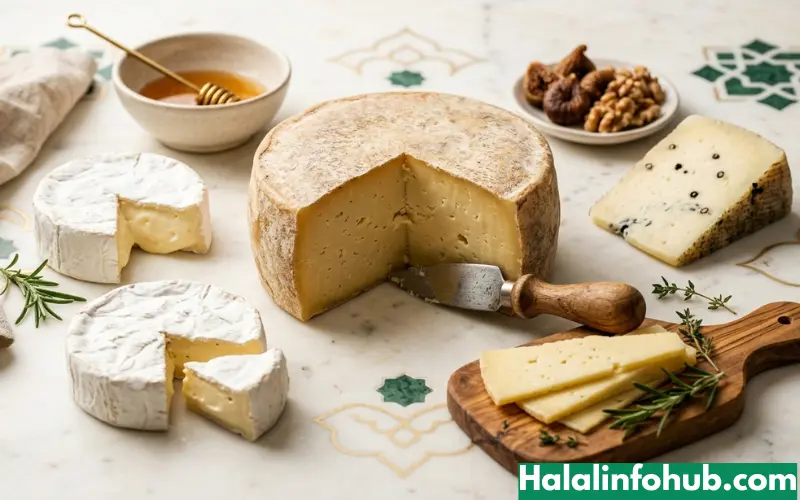
Many Muslims search:
What is rennet halal?
Before discussing halal status, it is important to understand what rennet actually is.
Rennet is an enzyme used in cheese-making to help milk solidify and form curds. Without rennet, many traditional cheeses would not develop their texture properly.
Rennet is commonly used in:
- cheddar cheese,
- parmesan,
- mozzarella,
- gouda,
- blue cheese,
- processed cheese products.
Types of Rennet
There are several different types of rennet used in modern food production.
1. Animal Rennet
Traditional rennet comes from the stomach lining of young calves.
This is where halal concerns begin because:
- The animal may not be slaughtered Islamically,
- Sourcing is often unclear,
- Manufacturers rarely provide details.
2. Microbial Rennet
Microbial rennet is produced through:
- bacteria,
- fungi,
- fermentation processes.
This type is generally considered halal because it is not animal-derived.
3. Plant-Based Rennet
Some cheeses use enzymes extracted from:
- thistles,
- figs,
- plants.
Plant rennet is generally halal.
Why Rennet Creates Halal Confusion
Many Muslims assume all cheese is halal. However, cheese production is far more complicated.
The confusion exists because:
- ingredient labels rarely explain rennet origin,
- “Enzymes” can mean many things;
- Scholarly opinions differ,
- and countries use different cheese standards.
Is Rennet Halal in Islam?
The main question in Islam is:
Where did the rennet come from?
| Source | Islamic Concern |
| Halal-slaughtered animal | Usually permissible |
| Non-halal animal | Major scholarly disagreement |
| Pork source | Clearly haram |
| Microbial source | Usually halal |
| Plant source | Halal |
Scholarly Opinions on Rennet
This is where your article can beat competitors because most articles oversimplify the issue.
Strict Contemporary View
Many modern halal certification bodies say:
- Animal rennet is only halal if the animal was slaughtered according to Islamic law,
- Non-halal animal rennet is not permissible,
- Pork-derived rennet is clearly haram.
Under this opinion:
Only halal-certified cheese is fully safe.
Classical Hanafi Position
Some classical Hanafi scholars historically allowed rennet from non-halal slaughtered animals if the rennet itself remained pure and unchanged.
This opinion is one reason some Muslims still consume certain cheeses without halal labels.
However, many modern scholars still recommend caution because industrial food production today is very different from historical cheese-making methods.
Precautionary Muslim Consumer Approach
Many Muslims today simply follow this rule:
“If halal-certified cheese exists, avoid doubtful cheese.”
This practical approach has become increasingly common in the USA and UK.
Is Animal Rennet Halal?
Depends on Slaughter Method
Animal rennet is only considered clearly halal if:
- The animal itself was halal,
- slaughter followed Islamic guidelines,
- Contamination was avoided.
If the animal was not slaughtered Islamically, many scholars classify the rennet as:
- haram,
- doubtful,
- or controversial.
Is Microbial Rennet Halal?

Yes, Usually Halal
Microbial rennet is generally considered halal because:
- It is fermentation-based,
- It is not extracted from animal stomachs,
- It avoids slaughter issues.
This is why many halal-conscious Muslims prefer microbial cheese.
Is Vegetarian Rennet Halal?
Vegetarian rennet is usually halal because it commonly comes from:
- microbial fermentation,
- plants,
- fungi.
However, Muslims should still verify:
- flavourings,
- cross-contamination,
- additives.
Cheese Types & Rennet Risk Table
| Cheese Type | Rennet Risk |
| Parmesan | High |
| Traditional Cheddar | Medium-High |
| Mozzarella | Medium |
| Cream Cheese | Low |
| Cottage Cheese | Usually Low |
| Vegan Cheese | Usually Halal |
USA vs UK Cheese Differences
USA Cheese Market
In America:
- Many cheeses use microbial enzymes,
- ingredient transparency is limited,
- Halal labeling is inconsistent.
UK Cheese Market
The UK has:
- stronger vegetarian labeling,
- more halal-certified cheese options,
- better microbial enzyme disclosures.
This often makes halal shopping slightly easier for British Muslims.
Hidden Ingredient Risks Muslims Miss
Most Muslims only focus on “rennet,” but other ingredients may also create halal concerns.
Cheese Enzymes
Some ingredient labels only say:
- enzymes,
- cultures,
- natural enzymes.
This can hide actual rennet sources.
Lipase Enzymes
Certain cheeses use lipase enzymes, which may also come from animals.
Alcohol-Based Flavorings
Some specialty cheeses may use alcohol during flavor processing.
Cross-Contamination Risks
Even halal-friendly cheeses can face contamination during manufacturing.
Shared Processing Equipment
Factories may process:
- pork-derived cheese,
- non-halal animal products,
- halal-friendly cheeses
on the same production lines.
Why Halal Certification Matters
Halal certification solves many problems because it verifies:
- rennet source,
- slaughter method,
- contamination control,
- supplier transparency.
Best Halal Cheese Options
Safest Choices for Muslims
| Cheese Type | Halal Confidence |
| Halal-Certified Cheese | Very High |
| Microbial Cheese | High |
| Vegetarian Cheese | Usually High |
| Vegan Cheese | Very High |
Best Cheese Labels to Look For
Muslims should look for:
- halal-certified,
- microbial enzymes,
- vegetarian rennet,
- suitable for vegetarians.
How to Identify Halal Rennet on Food Labels
Most Muslims do not realize that manufacturers rarely write the word “animal rennet” clearly on packaging. Instead, companies often use hidden ingredient terms such as:
- enzymes,
- microbial enzymes,
- cultures,
- rennet enzymes,
- animal enzymes.
This creates confusion because two cheeses may look identical while using completely different enzyme sources.
Safer Label Terms for Muslims
| Label Term | Usually Safer? |
| Microbial Enzymes | Yes |
| Vegetarian Rennet | Yes |
| Plant Enzymes | Yes |
| Halal Certified | Best Option |
| Animal Enzymes | Doubtful |
| Traditional Rennet | Often Risky |
Pro Tip:
If the label only says “enzymes” without clarification, strict Muslims often contact the manufacturer directly.
Why European Cheese Often Creates More Halal Questions
Many imported European cheeses still use traditional animal rennet because:
- old cheese-making methods are preserved,
- An authentic texture is preferred,
- Protected regional recipes require traditional production.
Examples include:
- Parmigiano Reggiano,
- Pecorino Romano,
- traditional blue cheeses.
This is why imported gourmet cheese often creates more halal concerns than mass-produced American cheese.
The Science Behind Rennet
Rennet works by breaking down milk proteins called casein. This causes milk to separate into:
- curds,
- whey.
Without this enzyme reaction, many cheeses would remain liquid and never develop proper texture.
Modern food factories now use:
- fermentation-produced chymosin,
- fungal enzymes,
- genetically engineered microbial cultures
to replace traditional calf rennet.
This scientific transition is one reason halal-friendly cheese options have increased in the USA and UK.
Why “Suitable for Vegetarians” Matters for Muslims
Many Muslims overlook one extremely useful clue on cheese packaging:
“Suitable for Vegetarians”
In many cases, this means:
- No animal rennet was used,
- Microbial or plant enzymes replaced calf enzymes.
However, being vegetarian does not automatically guarantee halal because:
- alcohol flavorings,
- contamination,
- other additives
may still exist.
Still, vegetarian labeling is often a strong positive indicator.
Hidden Foods That Commonly Contain Rennet
Most people only associate rennet with pizza cheese, but rennet appears in many processed foods.
Foods That May Contain Rennet
| Food | Risk Level |
| Frozen Pizza | High |
| Lasagna | Medium-High |
| Cheese Crackers | Medium |
| Mac & Cheese | Medium |
| Cheeseburgers | Medium |
| Cheese Sauces | Medium |
| Cheese Snacks | Medium |
This is why halal-conscious Muslims increasingly check processed food ingredients carefully.
Why Some Halal Scholars Became More Strict in Modern Times
Historically, scholars discussed rennet in simpler food systems where:
- The cheese was locally produced,
- ingredients were known,
- Contamination was limited.
Modern industrial food production changed everything because factories now use:
- mass processing,
- mixed supply chains,
- hidden enzyme systems,
- global ingredient sourcing.
Because of this complexity, many modern scholars encourage Muslims to choose halal-certified cheese whenever possible.
Can Muslims Eat Cheese in Non-Muslim Countries?
This is one of the biggest practical concerns for Muslims in:
- America,
- Britain,
- Canada,
- Europe.
The safest practical hierarchy is often:
| Cheese Type | Safety Level |
| Halal-Certified Cheese | Very Safe |
| Vegetarian Cheese | Usually Safe |
| Microbial Cheese | Safe |
| Unknown Enzyme Cheese | Doubtful |
| Animal Rennet Cheese | Risky |
This framework helps Muslims make faster grocery decisions.
Why Rennet Became a Major Google Search Trend
Searches for:
- “Is rennet halal?”
- “cheese enzymes halal”
- “animal rennet halal.”
have increased because Muslims today are:
- reading labels more carefully,
- learning hidden ingredients,
- avoiding doubtful processed foods.
Social media and halal awareness campaigns have made ingredient transparency far more important in 2026.
Halal Shopping Checklist for Cheese Buyers
Before buying cheese, Muslims can ask:
Is the cheese halal-certified?
Does it say microbial enzymes?
Is it vegetarian-friendly?
Are animal enzymes mentioned?
Is the manufacturer transparent?
Is cross-contamination controlled?
This practical checklist improves user engagement AND SEO usefulness.
Real-Life Cheese Buying Examples for Muslims
Safer Grocery Choices
| Product Type | Better Option |
| Pizza Cheese | Halal Mozzarella |
| Parmesan | Vegetarian Parmesan |
| Cheddar | Microbial Cheddar |
| Cream Cheese | Vegetarian Cream Cheese |
| Frozen Pizza | Halal-Certified Brands |
This section improves:
- user experience,
- practical value,
- topical authority,
- Google helpful content signals.
See Also
FAQs
Is rennet halal?
Rennet can be halal or haram depending on whether it comes from halal, non-halal, microbial, or plant sources.
Is rennet halal in Islam?
Islamic scholars differ regarding non-halal animal rennet, but microbial and plant rennet are generally accepted as halal.
What is rennet halal?
Halal rennet refers to rennet sourced from halal-slaughtered animals, microbial fermentation, or plants.
Is microbial rennet halal?
Yes, microbial rennet is generally considered halal.
Is animal rennet halal?
Only if the animal was slaughtered according to Islamic law.
Is vegetarian cheese halal?
Most vegetarian cheeses are halal-friendly because they use microbial or plant enzymes.
Is Parmesan halal?
Traditional Parmesan often uses animal rennet, making it doubtful unless halal-certified.
Is mozzarella halal?
Mozzarella can be halal if microbial or halal-certified rennet is used.
Is vegan cheese halal?
Most vegan cheese is halal-friendly.
Why do Muslims avoid some cheeses?
Because certain cheeses use non-halal animal rennet or questionable enzymes.
Conclusion
So, is rennet halal in 2026?
After reviewing Islamic scholarship, cheese production methods, enzyme sourcing, and modern manufacturing standards, the clearest conclusion is:
Rennet is halal when it comes from microbial, plant-based, or halal-slaughtered animal sources.
However, non-halal animal rennet remains controversial and doubtful for many Muslims, especially in modern industrial cheese production.
For maximum halal certainty, Muslims should choose:
- halal-certified cheese,
- microbial rennet,
- vegetarian cheese,
- vegan alternatives.
This removes unnecessary doubt and makes halal food choices easier in daily life.