
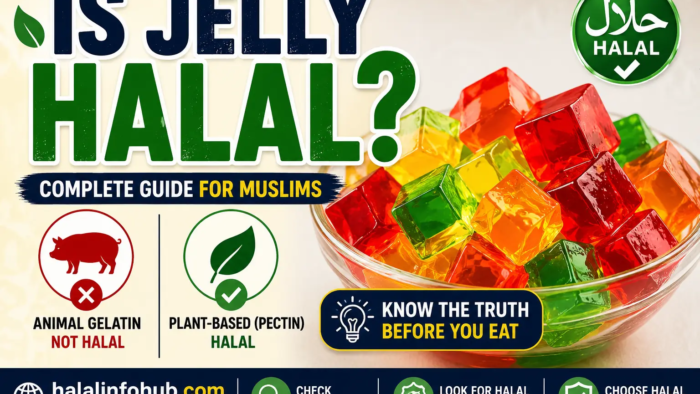
Jelly is only halal if it is made with halal-certified ingredients or plant-based gelatin like pectin. In most cases in the USA and UK, regular jelly is not halal because it contains animal-derived gelatin.”
If you are searching “is jelly halal”, you are not alone — this is one of the most searched halal food questions among Muslims in the United States and the United Kingdom in 2026.
Jelly is everywhere. From supermarket desserts to candies, cakes, and ready-made snacks, it is a common part of daily food. It looks simple, tastes sweet, and is enjoyed by both children and adults without hesitation.
But here is the truth most people overlook:
👉 Not all jelly is halal.
The real issue is not sugar, colour, or flavour — it is a hidden ingredient called gelatin.
Gelatin is what gives jelly its soft, bouncy texture. But its source is what decides everything. Some gelatin comes from halal-approved sources, while many types come from non-halal animals.
That is why one jelly product can be halal, while another looks identical but is not.
This is where confusion starts for many Muslims shopping in regular supermarkets.
Related Post: Is Haribo Halal
🍬 What Is Jelly?
Jelly is a soft, sweet, and wobbly dessert that is commonly eaten around the world, especially in the United States and the United Kingdom.
It is usually made by mixing a few basic ingredients that give it its taste, colour, and unique texture.
🧾 Main Ingredients in Jelly:
- Sugar (for sweetness)
- Flavouring (fruit or artificial taste)
- Colouring (to make it attractive)
- Gelling agent (this is the most important part)
👉 The gelling agent is what creates the soft, jelly-like texture — and it is usually either gelatin or pectin.
🍮 Where Jelly Is Commonly Used:
- Desserts and pudding cups
- Gummy sweets and candies
- Cakes and bakery fillings
- Packaged sweet snacks
⚠️ Important Insight:
The texture of jelly completely depends on the gelling agent used.
👉 If it is gelatin-based, it may not be halal.
👉 If it is pectin-based, it is usually halal-friendly.
🍮 Types of Jelly You Should Know
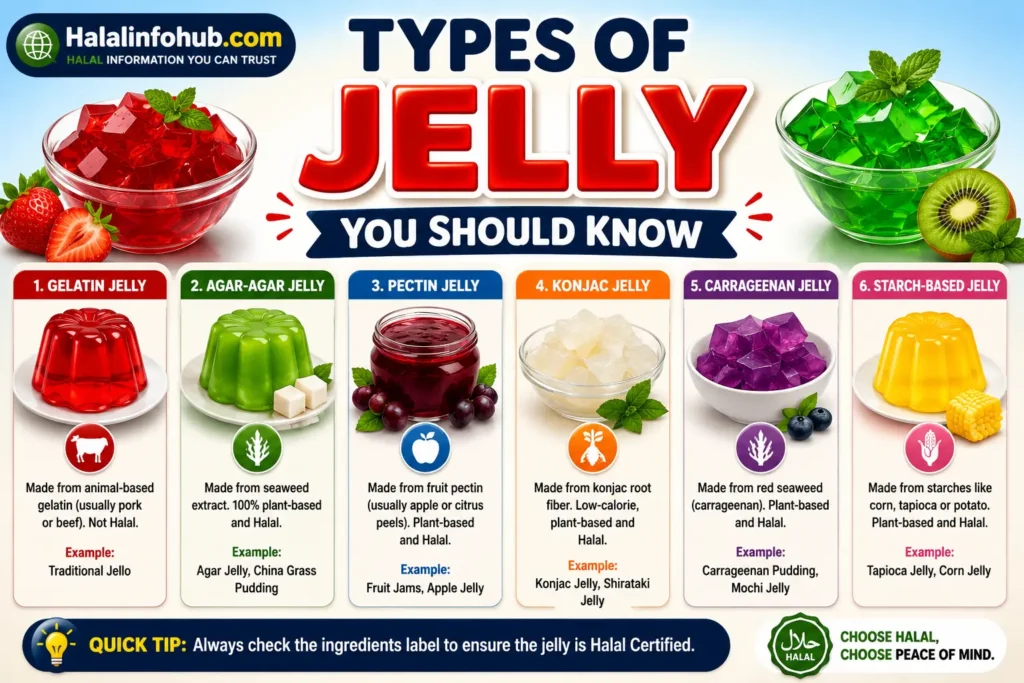
Not all jelly is the same. There are different types based on ingredients and usage.
1. Animal-Based Jelly
- Contains gelatin
- Made from pork or beef sources
- ❌ Usually not halal
2. Vegetarian Jelly
- Made with plant-based ingredients
- Uses pectin instead of gelatin
- ✔️ Usually halal
3. Vegan Jelly
- 100% plant-based
- No animal ingredients
- ✔️ Safe halal option
👉 Key Insight:
Most supermarket jelly falls into animal-based categories unless clearly labelled.
Where Jelly Is Commonly Found
📍 Placement:
👉 After “Ingredients Explained” section
🍰 Where You Find Jelly in Daily Life
Jelly is not just a dessert — it is used in many foods:
- Cakes and pastries
- Gummies and candies
- Cheesecakes
- Ice creams
- Dessert cups
- Bakery toppings
👉 This is why halal concern is very important — jelly is everywhere.
Why Gelatin Is Used in Jelly
📍 Placement:
👉 After “Why Gelatin Matters So Much”
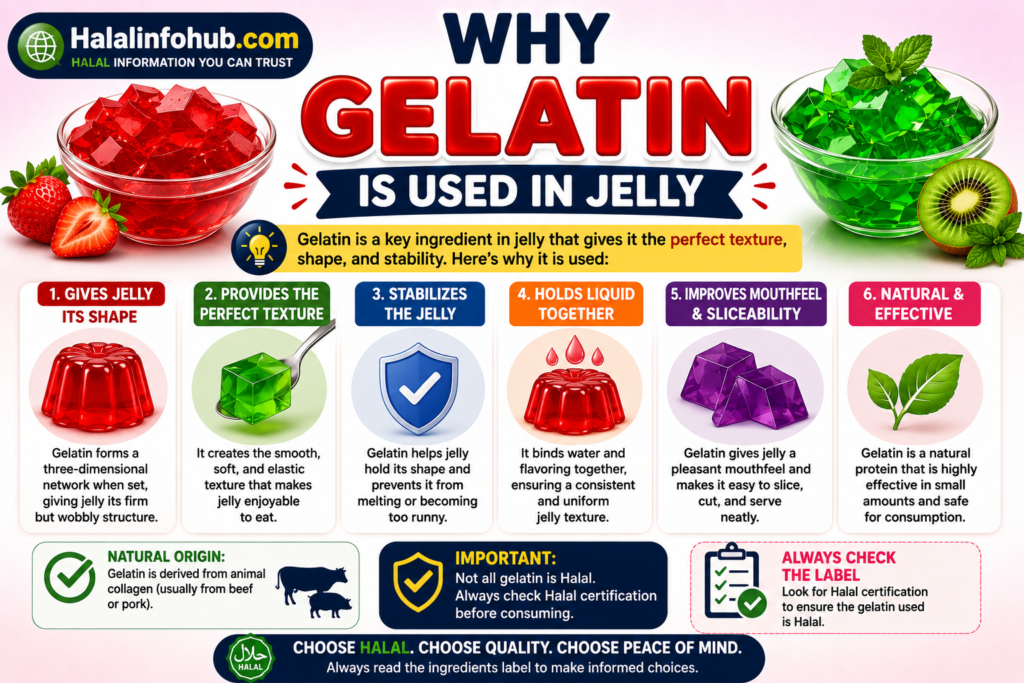
🧪 Why Companies Use Gelatin
Companies use gelatin because it:
- Gives jelly its shape
- Makes texture chewy
- Is cheap and widely available
- Extends shelf life
But the problem is:
👉 Cheap gelatin is often not halal-friendly.
Health vs Halal Confusion
📍 Placement:
👉 Before “Safe Halal Options”
⚠️ Health vs Halal – Common Confusion
Some people think:
👉 “If it is safe to eat, it must be halal.”
But this is incorrect.
- Health = nutrition safety
- Halal = ingredient source + Islamic rules
Even if jelly is healthy, it may still be not halal.
How to Identify Halal Jelly in Stores
📍 Placement:
👉 Before “Smart Buying Checklist”
🛒 How to Check If Jelly Is Halal
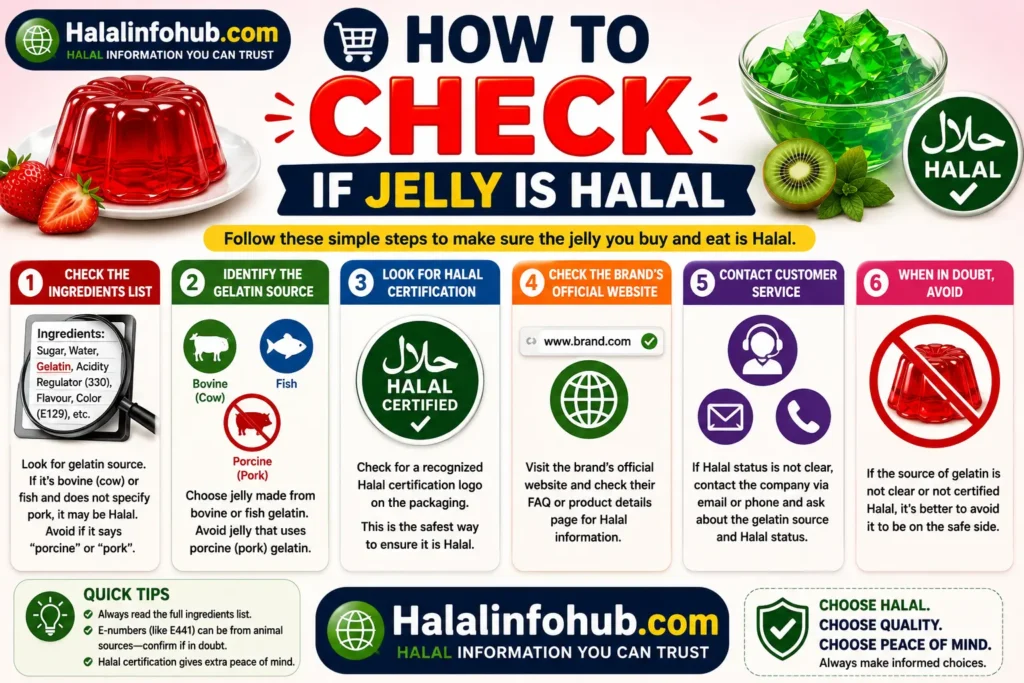
When buying jelly, always check:
✔️ Ingredient Label
Look for:
- gelatin (red flag)
- pectin (safe)
Halal Certification
- Look for halal logo
- If missing → be careful
“Suitable for Vegetarians” Label
- Usually safer option
- But still check ingredients
👉 This 10-second check can save you from doubtful food.
Global Jelly Market Differences
📍 Placement:
👉 Before “Conclusion”
🌍 Why Jelly Is Different Around the World
Jelly products are not the same globally.
- USA → mostly animal gelatin
- UK → mixed (vegetarian + gelatin)
- Middle East → more halal options
- Asia → varies by brand
👉 That is why confusion exists for Muslims worldwide.
⚖️ Is Jelly Halal or Haram?
The answer depends on one key ingredient:
👉 Gelatin
Simple Rule:
| Ingredient Type | Halal Status |
| Pork gelatin | ❌ Haram |
| Beef gelatin (non-halal) | ⚠️ Doubtful |
| Fish gelatin | ✔️ Halal |
| Pectin (plant-based) | ✔️ Halal |
| Halal-certified gelatin | ✔️ Halal |
👉 So jelly is not automatically halal or haram — it depends on how it is made.
🧪 Why Gelatin Matters So Much
Gelatin is made from animal collagen. It gives jelly its:
- shape
- bounce
- chewiness
But the source matters.
If gelatin comes from:
- pork → ❌ not halal
- non-halal slaughtered animals → ⚠️ doubtful
- halal-certified animals → ✔️ acceptable
That is why many standard jelly products are not suitable for Muslims.
Is Jelly Halal in the USA?
In the United States, most jelly products are not halal by default.
Why?
- Many brands use animal gelatin
- No halal certification on most products
- Ingredients are not clearly sourced
Result:
👉 ❌ Most jelly in USA is NOT halal
👉 ✔️ Only special halal or vegan jelly is safe
Is Jelly Halal in the UK?
In the United Kingdom, the situation is similar.
Key Points:
- Many desserts contain gelatin
- Some vegetarian jelly options exist
- Halal-certified jelly is limited
Result:
👉 ⚠️ Most jelly is NOT halal
👉 ✔️ Vegetarian jelly is safer option
🍮 Jelly vs Gelatin Confusion
Many people confuse jelly with gelatin.
Difference:
- Jelly = final product (dessert)
- Gelatin = ingredient used to make jelly
👉 Jelly becomes halal or haram based on gelatin source.
🚨 Hidden Problem in Jelly Products
Even if jelly looks harmless, it may contain:
- pork gelatin
- non-halal beef gelatin
- unclear flavouring sources
That is why checking ingredients is very important.
🟢 Safe Halal Jelly Options
You can safely eat jelly if it is:
- ✔️ labeled halal-certified
- ✔️ made with pectin (plant-based)
- ✔️ vegan-friendly
🔑 Golden Rule
👉 If jelly contains “gelatin” and has no halal label → avoid it.
🍓 Better Halal Alternatives
Instead of regular jelly, choose:
- vegan jelly desserts
- halal-certified sweets
- pectin-based gummies
- homemade fruit jelly
These are safer and widely available.
🧠 Why Muslims Should Be Careful
Jelly seems simple, but it can hide:
- non-halal ingredients
- unclear sourcing
- doubtful additives
Being careful ensures halal lifestyle is maintained properly.
🔗 See Also
- Is Haribo Halal in USA & UK? Full Guide
- Is Skittles Halal in USA & UK?
- Is Popeyes Halal
- Are McDonald’s Sauces Halal in USA & UK?
FAQs
Is jelly halal in the USA?
Most jelly in USA is not halal due to gelatin.
Is jelly halal in the UK?
Most jelly products are not halal unless vegetarian or certified.
What makes jelly haram?
Animal-derived gelatin, especially from pork.
Is all jelly haram?
No, only jelly with non-halal gelatin is haram.
Is vegan jelly halal?
Yes, vegan jelly made with plant-based ingredients is halal.
Is gelatin halal?
Only if it is from halal-certified sources.
Can Muslims eat jelly?
Yes, but only halal-certified or vegan jelly.
What is jelly made of?
Sugar, flavouring, and a gelling agent like gelatin or pectin.
Is pectin halal?
Yes, it is plant-based and halal.
How to check if jelly is halal?
Check ingredients and halal certification labels.
Conclusion
So, is jelly halal or not?
👉 The clear answer is:
Jelly is only halal if it is made with halal-certified ingredients or plant-based alternatives like pectin.
However, in most supermarket products across the United States and the United Kingdom, regular jelly is not halal because it usually contains gelatin derived from animal sources that are not halal-certified.
👉 This is the main reason why many jelly products are considered doubtful or non-halal for Muslims.