

Growth Navigate Funding is a name that appears in searches by startup founders who want help raising money, and the first question behind the search is usually a practical one: what kind of firm is this, and what does it actually offer. The firm presents itself as a fundraising advisory service for startups, with a process that runs from strategy and materials to investor outreach and closing. This article looks at that presentation in detail, separates what the firm says about itself from what independent evidence confirms, and explains the checks a founder can run before engaging it.
That separation matters because fundraising claims are easy to state and hard to verify from a website alone. Headline figures, office addresses and client counts can all appear on a firm’s own pages without any independent record behind them, and two similar websites can leave a reader unsure which one is the real operator. The sections below therefore treat the firm’s own pages as claims to be checked, not as conclusions, and they end with the questions and documents that make a first call more useful.
Direct answer
Growth Navigate Funding presents itself as a private fundraising advisory firm for startups. Its website, growthnavigatefunding.net, describes help with fundraising strategy, pitch materials, investor outreach, financial modeling, and preparation for due diligence, for companies from pre-seed to Series C.
Three points need care before any other detail. First, its headline results figures are the company’s own claims and have not been independently verified. Second, a near-identical website exists at growthnavigatefunding.com, and public sources do not establish whether it belongs to the same operator or is a separate copy. Third, the phrase “growth navigate funding” is also used generically online to describe matching growth capital to business milestones, which is a concept, not the firm.
This article explains what the firm says it offers, which claims can be checked, which cannot, and how a founder can verify the firm before engaging it. It is not a recommendation, and it does not judge the firm.
See Also: comparing verified and unverified claims about an unfamiliar platform
What Growth Navigate Funding says it offers

According to its own website, the firm partners with founders and startup teams to raise capital and plan growth. Its listed services cover fundraising strategy, pitch deck development, investor relations and access, financial modeling, growth advisory, and preparation for due diligence. Its described process runs in four steps: Discovery & Strategy, Materials & Positioning, Investor Outreach, and Close & Scale.
All of this description comes from the firm’s own site. No independent review of the quality of its services was found during research, and no government or regulator page describes the firm. Readers should therefore treat the service description as the firm’s own account of itself, not as an independently confirmed record.
The four steps deserve a plain reading. Discovery & Strategy means the firm studies the company and sets a fundraising plan. Materials & Positioning means it helps prepare the pitch deck and the story told to investors. Investor Outreach means it introduces the company to investors in its network. Close & Scale means it supports the final negotiation and the period after funding closes. A founder should ask, for each step, what exactly is delivered, who does the work, and how progress is reported, because a step label alone does not describe a deliverable.
What its headline claims do and do not prove
The firm’s website publishes four headline figures. Each one is reproduced below with its source and its verification status, so readers can see exactly how much weight each figure carries.
| Figure as published | Source | Verification status |
|---|---|---|
| Capital secured: $450M+ | Company website | Self-reported, not independently verified |
| Startups funded: 300+ | Company website | Self-reported, not independently verified |
| Funding success rate: 92% | Company website | Self-reported; the basis for the percentage was not established from public sources |
| Investor network: 1,000+ | Company website | Self-reported, not independently verified |
A figure published by a firm itself shows what the firm wants readers to believe, not what has been proven. A founder should ask what sits behind each figure: over what period, for which clients, and verified by whom. If those answers are not provided, the figures should be treated as marketing claims, not evidence.
Success-rate figures deserve particular care. A percentage can be calculated in many ways: over all clients or only over clients who completed the program, over one year or over the firm’s whole history, counting signed term sheets or counting money actually received. Without the definition, two firms with the same published percentage may mean very different things. The same applies to a capital total, which may combine different years, currencies, and deal types. None of this proves a figure wrong. It proves that a figure without its definition cannot be compared or relied on.
Two further details deserve a note, not a conclusion. The phone number listed on the site uses the 555 range commonly used for fictional numbers, and the sites’ blogs carry unrelated generic articles. Neither detail proves wrongdoing. Both are reasons to verify the firm through direct contact and independent references rather than through its website alone.
Related Post: how gamification and payments work together
Two similar websites, one unclear operator

Alongside growthnavigatefunding.net, a near-identical website exists at growthnavigatefunding.com, with the same branding, the same statistics, and the same services. Public sources do not establish whether one operator runs both domains, whether one is a rebrand of the other, or whether one copies the other.
Readers should therefore check which domain they are actually dealing with before sharing company materials or money: confirm the domain in every piece of correspondence, and do not assume that material on one domain speaks for the other. Until the operator question is resolved publicly, the two domains should be treated as separate until proven otherwise.
See Also: how to verify information before acting on it
Growth funding as a general idea
Separately from the firm, many guides use “growth funding” or “growth navigate funding” to mean the general practice of matching capital to growth milestones: raising at the right stage, in the right amount, and for a defined use. That concept is not a company, has no single provider, and should not be confused with the firm described above.
A reader searching the phrase may want either the firm or the concept. The direct answer covers both so the reader can tell which one they meant, and the rest of this article deals with the firm unless it says otherwise.
Related Post: how to read an ambiguous update when the facts are uncertain
How to check the firm before engaging it
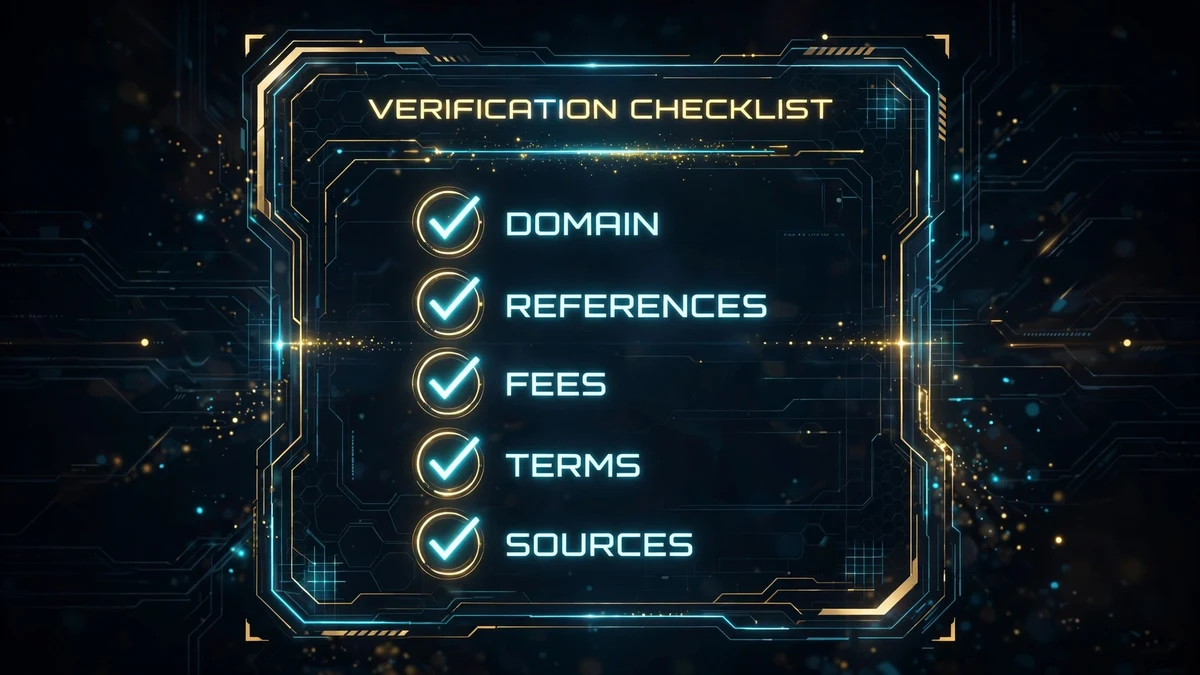
The following five checks apply to this firm and to any fundraising advisor. They cost little, and they separate what can be confirmed from what must be taken on trust.
- Confirm the exact domain. Deal only with the domain you verified, and check it again in contracts, invoices, and email addresses before responding.
- Ask for verifiable references. Request the names of funded companies and permission to contact them, then check those companies independently rather than accepting testimonials on the firm’s site.
- Ask for the fee structure in writing. Find out what is charged, when it is charged, and whether any fee depends on a successful raise, then compare it with at least one other advisory firm.
- Read the engagement terms before signing. Check the scope, duration, exclusivity, and what happens if no funding closes.
- Compare claims with independent sources. Look for company registry entries, professional profiles, and client evidence outside the firm’s own website.
The same discipline applies here as with any unfamiliar platform. A founder who checks the domain, the references, the fees and the terms before signing will know more about the firm than any website alone can show, and that knowledge is the real protection in a first engagement.
See Also: verifying software before downloading it
What a founder should ask on a first call
A first call with any advisory firm is a chance to test the claims before committing money or information. The following questions are reasonable for a founder to ask, and clear answers are a good sign; evasive answers are a reason to slow down.
- Which companies like mine have you helped, and may I contact two of them directly?
- What exactly will you deliver in the first 30 days, and who will do the work?
- What are your total fees, when are they payable, and is any part tied to a successful raise?
- How do you define your published success rate, and over what period and client group is it calculated?
- Which domain should I use for all correspondence, and who is the accountable person for my engagement?
A firm that answers these questions in writing, with specifics, is easier to verify than one that answers only in general terms. Written answers also give the founder something to compare against the engagement contract later.
When to get independent advice instead
A fundraising advisor is not a substitute for independent legal or financial advice. Before signing an engagement or sharing sensitive company information, a founder should consider having a lawyer review the contract and an accountant review the financial terms. This matters most where fees, exclusivity, or equity are involved, or where the founder is asked to pay significant sums before any funding closes.
Independent advice also helps where the advisor’s own material is the only source of information. A lawyer can check whether exclusivity clauses, success-fee triggers, and termination rights are fair. An accountant can check whether the fundraising plan fits the company’s actual cash position and valuation expectations. Neither professional needs to approve the advisor; their role is to protect the founder’s side of the agreement.
Conclusion
Growth Navigate Funding is a findable advisory website with a clear service description, unverified headline claims, and an unresolved twin-website question. A founder can use the checks above to separate what the firm says about itself from what can actually be confirmed, and should only engage after that separation is made.
Frequently asked questions
What is Growth Navigate Funding?
It is a private fundraising advisory firm for startups, covering companies from pre-seed to Series C. Its website is growthnavigatefunding.net, and it describes services including fundraising strategy, pitch materials, investor outreach, and financial modeling.
Is Growth Navigate Funding a government funding scheme?
No. It is a private advisory firm. No government or regulator page describes it, and nothing found during research connects it to a public funding program.
Does Growth Navigate Funding guarantee funding?
No guarantee is established. The firm describes a fundraising process, and its 92% success figure is self-reported. Any funding guarantee from any advisor should be treated with caution and checked against written terms.
Why are there two similar websites, .net and .com?
Both domains carry near-identical branding, statistics, and services. Public sources do not establish whether they share an operator, so readers should verify the exact domain they are dealing with before engaging.
What does Growth Navigate Funding cost?
No public pricing was found during research. A founder should ask the firm directly for its fee structure in writing, including what is charged, when, and whether any fee depends on a successful raise.
How can a founder check Growth Navigate Funding before engaging it?
Confirm the exact domain, ask for verifiable references and check them independently, get the fee structure in writing, read the engagement terms before signing, and compare the firm’s claims with independent sources outside its own website.