

Nerds Gummy Clusters are generally considered doubtful (mashbooh) for Muslims because they are not officially halal-certified in the United States or the United Kingdom. The biggest halal concerns include unclear gelatin sourcing, artificial flavour systems, industrial candy processing methods, and possible cross-contamination risks.
Most strict Muslim consumers classify Nerds Gummy Clusters as doubtful unless verified halal certification or transparent ingredient sourcing is available.
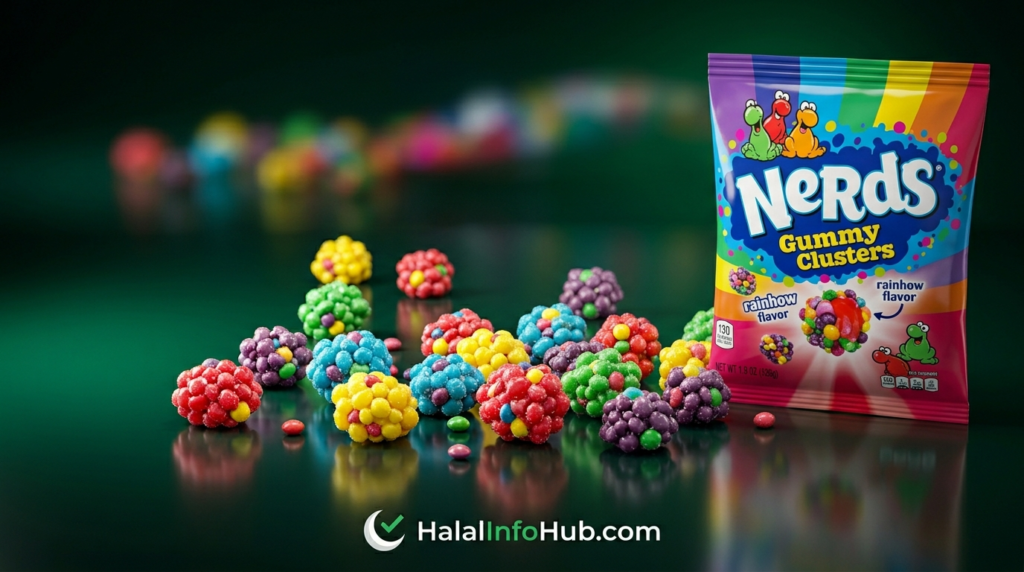
Nerds Gummy Clusters have become one of the most viral gummy candies in the United States and the United Kingdom, famous for their crunchy candy shell and chewy gummy centre. Their sweet-and-sour flavour combination and colourful texture have made them extremely popular among teenagers, candy lovers, and social media food trends.
However, for Muslim consumers, the real concern is not taste — it is whether these candies follow Islamic halal dietary rules.
Modern gummy candies are among the most complex sweets in the food industry because they may contain:
- gelatin or gummy stabilizers
- artificial flavour compounds
- emulsifiers and texture enhancers
- synthetic colour additives
- industrial processing ingredients
Many of these ingredients are processed through large-scale manufacturing systems where ingredient sourcing is not always fully transparent. This creates halal uncertainty, especially when products are not officially halal-certified.
👉 This is why thousands of Muslims search:
“Are Nerds Gummy Clusters halal or haram?”
Related Post: Are Pop-Tarts Halal or Haram?
What Are Nerds Gummy Clusters?
Nerds Gummy Clusters are candy pieces made from:
- gummy centres
- crunchy Nerds coating
- fruit flavour systems
Unlike standard hard candies, gummy products require additional ingredients to create texture and shelf stability.
These may include:
- gelatin
- pectin
- starch systems
- emulsifiers
- texture stabilizers
👉 This is where halal concerns usually begin.
Why Muslims Question Nerds Gummy Clusters

Muslims question gummy candies because hidden ingredients are common in modern candy manufacturing.
Main halal concerns include:
- gelatin origin
- flavour carriers
- artificial additives
- ingredient transparency
- industrial processing systems
In many cases, consumers cannot determine whether ingredients come from:
- halal animal sources
- non-halal animal sources
- plant-based systems
- synthetic chemical processing
This lack of transparency creates doubt for halal-conscious consumers.
Nerds Gummy Clusters Halal Risk Overview
| Factor | Status | Risk Level |
| Halal Certification | ❌ Not available | High |
| Gelatin Source | ⚠️ Unclear | High |
| Artificial Flavours | ⚠️ Uncertain | Medium |
| Colour Additives | ⚠️ Mixed opinions | Medium |
| Sugar Processing | ⚠️ Debated | Medium |
| Cross-Contamination | ⚠️ Possible | Medium |
| Overall Halal Status | ⚠️ Doubtful | High |
The Gelatin Problem in Gummy Candies
Gelatin is one of the biggest halal issues in the candy industry.
It may come from:
- pork skin
- pork bones
- non-zabiha beef
- fish collagen
- halal-certified beef
Under Islamic law:
- pork gelatin = haram
- Non-zabiha gelatin = doubtful or haram for many scholars
- halal-certified gelatin = permissible
The problem is that many candy brands do not clearly identify gelatin sources publicly.
👉 Without halal certification, consumers often cannot verify whether the gummy system is halal-compliant.
Artificial Flavour System Concerns
Modern candy flavours are highly engineered.
Artificial flavour systems may contain:
- alcohol-based carriers
- synthetic solvents
- emulsifiers
- flavour stabilizers
Even when flavours are legally approved for food use, halal status may still remain unclear due to ingredient sourcing.
This becomes especially important for strict halal consumers who avoid doubtful processed ingredients.
Food Colouring Debate
Nerds Gummy Clusters are famous for their bright colours and sour candy appearance.
Common colouring systems may include:
- Red 40
- Yellow 5
- Blue additives
- synthetic colour compounds
Most food colours today are synthetic, but some Muslims still question:
- manufacturing methods
- testing processes
- contamination risks
👉 Colouring systems alone may not make candy haram, but they contribute to overall uncertainty.
🧂 Sugar Processing Controversy
One topic many consumers never consider is sugar processing.
In some industrial systems, sugar may be filtered using:
- bone char systems
- industrial purification materials
Although this issue remains debated among scholars, stricter Muslims may still prefer fully halal-certified sugar systems.
This shows how even “simple candy ingredients” can become complicated in industrial food production.
📊 Ingredient Risk Breakdown Table
| Ingredient Type | Possible Halal Concern |
| Gelatin | Animal source uncertainty |
| Artificial Flavours | Processing uncertainty |
| Sugar | Bone char debate |
| Colourings | Manufacturing concerns |
| Emulsifiers | Animal-derived possibility |
Are Nerds Gummy Clusters Halal in the USA?
In the United States, Nerds Gummy Clusters are generally not officially halal-certified.
Main concerns include:
- no halal logo
- unclear gummy ingredient sourcing
- industrial candy production systems
- mixed manufacturing facilities
👉 Most strict Muslim consumers classify them as doubtful.
Are Nerds Gummy Clusters Halal in the UK?
In the United Kingdom, halal concerns remain similar.
Imported products may use slightly different formulas, but:
- Certification is still usually unavailable
- Ingredient sourcing remains unclear
👉 Muslims should always verify local packaging before consumption.
Hidden Ingredients Muslims Often Ignore
Many Muslims only check for pork or gelatin on candy labels, but modern sweets contain many other processed ingredients that can also create halal concerns.
These may include:
- emulsifiers
- glazing agents
- flavour carriers
- artificial acids
- stabilizers
In industrial candy production, ingredient labels often simplify complex processing systems, which means consumers cannot always identify whether ingredients are:
- plant-based
- synthetic
- animal-derived
👉 This is one reason why halal certification has become increasingly important for processed candies like Nerds Gummy Clusters.
🏭 How Candy Manufacturing Creates Halal Uncertainty
Modern candy factories are designed for mass production, not halal separation.
A single facility may produce:
- gummy candies
- marshmallows
- gelatin sweets
- dairy snacks
- non-halal confectionery
using the same machinery and production lines.
Possible contamination areas include:
- conveyor belts
- flavour tanks
- mixing containers
- packaging systems
👉 Even when ingredients appear safe individually, industrial processing environments can still create halal concerns for strict Muslim consumers.
📊 Why Gummy Candies Carry Higher Halal Risk Than Normal Sweets
| Candy Type | Halal Risk Level | Reason |
| Hard Candy | Low | Simpler ingredients |
| Chocolate Candy | Medium | Emulsifiers & flavour systems |
| Gummies | High | Gelatin & stabilizers |
| Marshmallows | Very High | Heavy gelatin use |
👉 Gummies are usually more problematic because texture creation requires additional processed ingredients.
Why Candy Ingredient Labels Can Be Misleading
Many consumers assume:
“If haram ingredients are not clearly listed, the product must be halal.”
But food labels do not always reveal:
- gelatin origin
- flavour processing methods
- alcohol-based carriers
- manufacturing contamination risks
This creates a major challenge for Muslims trying to follow halal dietary rules in modern processed food industries.
Why Halal Certification Matters More Than Ever
In the past, candy ingredients were simple:
- sugar
- fruit flavour
- colouring
Today, processed sweets use advanced industrial formulas with dozens of hidden additives and stabilizers.
This is why halal certification matters because it helps verify:
- ingredient sourcing
- manufacturing systems
- contamination control
- halal compliance standards
👉 Without certification, consumers often rely on assumptions rather than verified halal information.
Common Misconceptions About Halal Candy
Many people mistakenly believe:
“Vegetarian candy is automatically halal.”
“American candy must follow halal rules.”
“No pork listed means halal.”
“Artificial ingredients are always safe.”
In reality, halal verification depends on:
- ingredient origin
- processing methods
- manufacturing environment
- certification standards
Why Halal Candy Is More Difficult in Western Countries
In countries like the United States and United Kingdom, mainstream candy brands usually prioritize:
- mass production
- long shelf life
- cost efficiency
- industrial consistency
Dedicated halal production systems require:
- separate ingredient sourcing
- halal-certified suppliers
- contamination controls
- additional auditing systems
Many mainstream candy brands do not fully implement these systems, which creates ongoing halal uncertainty for Muslim consumers.
How Modern Candy Factories Create Halal Problems
Modern candy factories produce millions of products using:
- automated machines
- shared ingredient tanks
- high-speed production lines
- mixed product systems
Factories may process:
- gelatin candies
- pork-based sweets
- dairy products
- gummy snacks
inside the same manufacturing environment.
👉 This creates contamination concerns even when ingredients appear safe.
Cross-Contamination Risks
Possible contamination areas include:
- shared conveyor belts
- shared flavour tanks
- mixed storage systems
- packaging machinery
Strict halal consumers often consider this an important issue.
Why Gummy Candies Are More Complicated Than Normal Sweets
Hard candies are usually simpler because they mainly contain:
- sugar
- flavouring
- colouring
But gummy products require:
- texture stabilizers
- gelatin systems
- emulsifiers
- thickening agents
👉 This makes gummy candies much more difficult to verify for halal compliance
Hard Candy vs Gummy Candy Halal Risk
| Candy Type | Halal Risk |
| Hard Candy | Lower |
| Chocolate Candy | Medium |
| Gummies | High |
| Marshmallow Candy | Very High |
Are Nerds Gummy Clusters Vegetarian?
Some consumers assume gummy candies are vegetarian-friendly, but this depends entirely on gelatin source and formulation.
Without clear ingredient verification:
- vegetarian status may remain uncertain
- Halal status remains doubtful
Why Halal Certification Matters So Much
Halal certification solves multiple problems:
- ingredient verification
- gelatin sourcing confirmation
- contamination control
- manufacturing audits
Without certification, consumers often rely on assumptions rather than verified information.
Safer Halal Candy Alternatives
Instead of doubtful sweets, Muslims can choose:
- halal-certified gummies
- halal sour candies
- Muslim-owned candy brands
- vegetarian-certified sweets with transparent sourcing
These provide:
- better ingredient clarity
- lower contamination risk
- stronger halal confidence
Halal vs Doubtful Candy Comparison
| Feature | Halal Candy | Doubtful Candy |
| Halal Certification | ✅ Yes | ❌ No |
| Gelatin Verified | ✅ Yes | ⚠️ Unclear |
| Ingredient Transparency | ✅ Strong | ⚠️ Limited |
| Manufacturing Control | ✅ Better | ⚠️ Mixed |
- If You Found This Helpful, You May Also Like
FAQs
Are Nerds Gummy Clusters halal?
They are generally considered doubtful because halal certification is unavailable.
Do Nerds Gummy Clusters contain pork gelatin?
The exact gelatin source is not always publicly verified.
Are Nerds Gummy Clusters halal in the USA?
Most versions sold in the USA are considered doubtful for strict Muslims.
Are Nerds Gummy Clusters halal in the UK?
Certification is usually unavailable in the UK as well.
Can Muslims eat Nerds Gummy Clusters?
Some Muslims may consume them, while stricter consumers avoid doubtful candy products.
Why are gummy candies more problematic than normal candy?
Gummies require gelatin and texture systems that create halal uncertainty.
Conclusion
So, are Nerds Gummy Clusters halal or haram?
👉 The most accurate answer is:
Nerds Gummy Clusters are generally classified as doubtful (mashbooh) because they are not officially halal-certified and may contain ingredients or manufacturing systems that do not fully meet Islamic dietary standards.
The biggest halal concerns include:
- unclear gelatin sourcing
- artificial flavour systems
- industrial candy manufacturing
- cross-contamination risks
While some Muslims may personally choose to consume them, stricter halal-conscious consumers often prefer avoiding doubtful sweets without proper halal verification.
✅ The safest option is always:
- halal-certified candies
- verified gummy sweets
- transparent ingredient brands
This helps Muslims make safer halal food choices in modern processed candy markets.